



The US accuses the Chinese company Moonshot AI of stealing from Anthropic.
The American government claims that Moonshot AI illegally used Anthropic’s Fable model to develop Kimi K3 and circumvented Nvidia’s microchip restrictions. All the details.

All of the United States’ plans for offshore nuclear power plants
The United States wants to accelerate the development of floating nuclear power plants at sea: currently, however, there is only one such facility, in Russia. The initiative is part of the Trump administration’s plans to open federal waters to industrial activities.
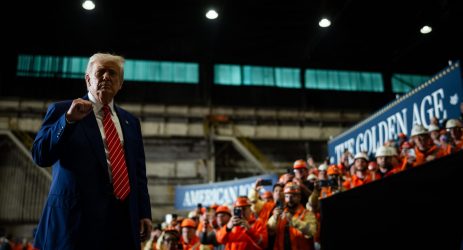
Aluminum, Trump eases tariffs to help the defense industry
The Trump administration halves the impact of tariffs for companies building aluminum foundries in the United States. The White House aims to strengthen the national defense supply chain: today, American production capacity is severely insufficient.

Agreement between the USA and Saudi Arabia on nuclear energy?
The Trump administration is about to announce a broad nuclear agreement with Saudi Arabia that will allow on-site fuel enrichment, promising economic benefits for the U.S. industry but raising serious concerns about potential proliferation.

Why Trump Hits Canada with 50% Tariffs
The Trump administration imposed 50% tariffs on a wide range of Canadian products as retaliation for alleged discrimination against American goods, reigniting the trade war and putting pressure on USMCA negotiations, while Ottawa declares itself ready to negotiate but threatens retaliation.

How global growth will fare amid geopolitics, AI, and market resilience
The macroeconomic outlook for the second half of the year by Darrell Spence, Economist at Capital Group
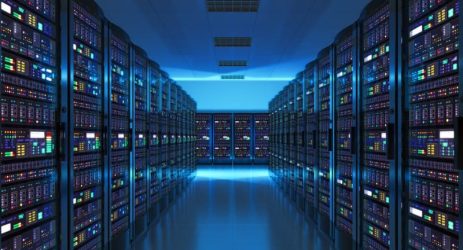
Data centers are driving up US bills. NYT report
The electricity demand of large data centers is driving prices up in the United States. Consumers and businesses will pay more, as a dispute heats up between the grid operator and the states over delays in connecting new plants.

Zhilin Yang, who is the Chinese drummer and creator of Kimi
Zhilin Yang envisioned the future of Moonshot AI as a combination of OpenAI’s technological idealism and ByteDance’s corporate philosophy. Aresu’s insight

Cyclosporiasis, what lies behind the intestinal infection that is spreading in the United States
Cyclosporiasis, an infection that causes gastrointestinal issues, has already affected 1,645 people in the United States since May 1, with over 5,100 cases under investigation in 34 states, 141 hospitalizations, and no reported deaths. Investigations are focusing on possible food sources, including lettuce and other fresh produce. Facts, figures, and comments.

Dubai wants to bypass the Strait of Hormuz with a new port.
The agreement between the United States and Iran has collapsed, and the two countries have resumed attacking each other: Tehran struck two Emirati oil tankers in the Strait of Hormuz, while Trump announced a naval blockade and a 20% toll. Meanwhile, the United Arab Emirates are working on the construction of a new port on the east coast to protect themselves from future crises.

Here are Toyota’s multibillion-dollar plans to avoid upsetting Trump.
Toyota is accelerating its investments in the US and is relocating part of its Mexican pickup production to Texas, six years after moves in the opposite direction.

Chip war, here are China’s plans and announcements. Economist report
The United States suspects that an ASML EUV machine has arrived in China, but the Dutch company denies it. In the background, the clash between Washington, Beijing, and Brussels over control of semiconductors is intensifying.

What is happening to the US economy between the Fed and employment?
Warsh brings a hawkish shift to the Fed. US labor market stable. Analysis by Blerina Uruci, Chief US Economist, T. Rowe Price.

The United States is preparing to ban Chinese cars: what will Mercedes do?
Next week, the U.S. Senate will vote on a law to ban Chinese vehicles and related components in the United States, considered a risk to national security. American and foreign car manufacturers are celebrating, but not Mercedes-Benz: the German company is at risk, as it is 20% owned by Chinese shareholders.

Purl, this is why Meloni and Crosetto rightly infuriate Trump and American companies
Crosetto reiterated that Italy will not participate in the Purl program and will not provide Ukraine with American weapons, but Italian or European ones. And Meloni considers Trump “unreasonable.” Facts, statements, and behind-the-scenes ahead of the NATO meeting in Ankara.

Why Advent is entering Avio (and what changes for Leonardo and Delfin)
Capital increase of 109.4 million, new shareholder with 7%, specialized in aerospace and defense, and a strategy increasingly focused on the United States. How Avio’s shareholding structure is changing and what the new funds will be used for.
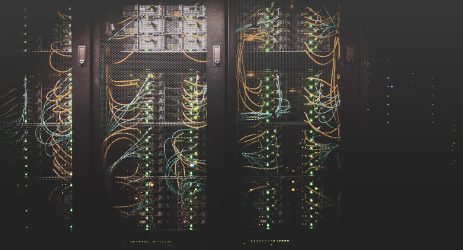
AI drives the US overtaking China in fossil energy investments
In a year marked by the AI boom, the US is set to surpass China in fossil fuel investments thanks to a surge in orders for gas turbines to power data centers, reversing a decade-long trend.

History repeats itself: the illusion of peace and the return of appeasement
From the US-Iran memorandum to the unfinished lessons of European history. Luca Longo’s analysis.

USMCA, why are the United States cutting Canada and Mexico out?
The United States has decided not to automatically renew the USMCA, the free trade agreement with Mexico and Canada, for another sixteen years. The Trump administration wants to reduce trade deficits and seeks to encourage the return of manufacturing to the homeland, rather than nearby. But the treaty is favored by companies and supports distancing from China.

Trump backtracks, the US lifts controls on Anthropic: Fable 5 and Mythos 5 become available again to the global public.
The Trump administration has lifted the bans on Anthropic’s models: Fable 5 and Mythos 5 are accessible again following an agreement between the company and the government on new security measures. All the details.

Why in America there is some grumbling against AI data centers
Technology companies are building massive data centers in rural areas of the United States, but they are facing strong and widespread public resistance due to the environmental, visual, and energy impact of the new facilities.

All about Pax Silica, the American anti-China alliance for artificial intelligence: members, goals, and initiatives
The European Union and 23 other countries, including Italy, have joined Pax Silica, the US-led initiative to create secure supply chains for AI and reduce dependence on China.

What is in Trump’s executive orders on quantum computing?
Trump signed two executive orders on quantum computing, a new technology that could have significant implications for national security and is therefore central to the competition with China. The American government has also directly invested in several quantum computing companies (IBM received $1 billion). Details and context.
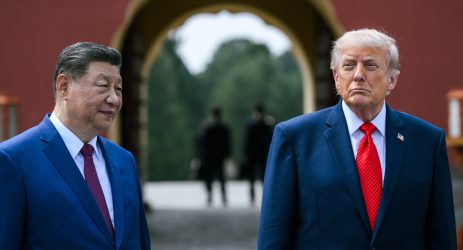
Drones, defense, and rare earths: here are the American companies sanctioned by China
In retaliation against the Pentagon, China has sanctioned ten American companies linked to the United States armed forces: the list includes drone manufacturers, aerospace component producers, and rare earth extractors. All the details.

Sunscreens, bemotrizinol will also protect the United States
After more than twenty years, the FDA has authorized a new ingredient for sunscreens for the first time, allowing the use of bemotrizinol, already widespread in other countries, and expanding protection options against UV rays in the United States. Facts and comments.

AI is starting to anger Americans.
As the daily use of artificial intelligence grows, dissent is also rising in the United States regarding the social, environmental, and employment costs of the technological revolution supported by Trump. Laura Turini’s contribution for Stefano Feltri’s Notes.
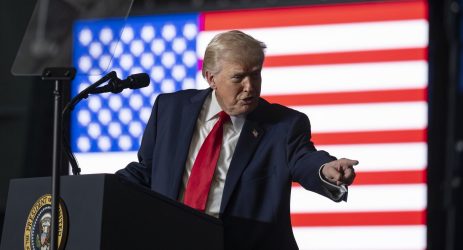
Trump threatens Germany with new tariffs over drug prices
The United States challenges Germany’s policy on innovative medicines and is considering possible trade measures, while Germany defends the healthcare reform to contain public spending and faces increasing pressure from major pharmaceutical companies. Facts and comments.

All the new clashes between the US and the EU over the Trump-ized NATO
Theses and controversies between the White House and EU countries on the present and future of NATO. What was discussed at the meeting of the Alliance’s Defense Ministers. Excerpt from the European Morning Brief.

Is Trump at risk of strengthening Iran?
The military offensive against Iran may have weakened the credibility of the United States and Israel, prompting Gulf countries to recalibrate their alliances. The analysis by Manlio Graziano taken from Stefano Feltri’s newsletter Appunti.

Who truly benefits from the agreement between the US and Iran?
The reasons for American satisfaction with the agreement with Iran are not understood. Cundari’s italics taken from the newsletter La Linea.

The US-Iran agreement as seen by the markets
The critical macro variable is the speed at which navigation through the Strait of Hormuz can normalize, easing the pressure on the global energy supply. Analysis by Anthony Willis, Investment Manager at Columbia Threadneedle Investments.

The race of ConocoPhillips, Exxon, and Chevron for Libya’s oil
The United States is pushing for reconciliation between rival Libyan factions through joint training exercises, aiming to stabilize the country and unlock its enormous oil potential for American majors, who have returned to the forefront despite deep divisions in Libya and ongoing risks of instability.

How Much the United States Spends Not Helping the Poorest Countries
Better to waste money and aid than to donate it. This is the policy chosen by the Trump administration, which, rather than sending contraceptives to low-income countries, prefers to pay $25,000 a month to keep them locked in a warehouse in Belgium, where in the meantime they have become unusable. Facts and figures.
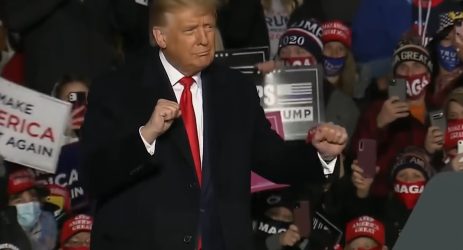
What really changes for oil and Hormuz after the US-Iran agreement?
Oil prices fell by more than 4 percent following the announcement of the agreement between the United States and Iran to end the war. However, the situation will not return to normal immediately: many energy facilities in the Persian Gulf have been damaged, and most ships remain waiting in the Strait of Hormuz.
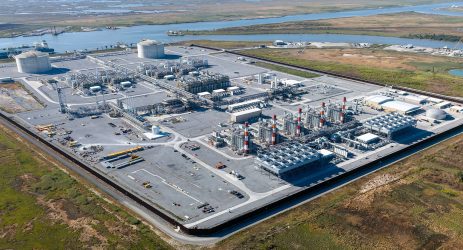
Why doesn’t Europe want to get too carried away with American LNG?
The United States expected Europe to sign many long-term LNG supply contracts to protect itself from the crisis in the Persian Gulf. Instead, the Europeans have other plans: distrust of Trump and decarbonization goals are involved.

What Threatens the Growth of the United States. Pimco Report
Present and future of growth in the United States. Analysis by Tiffany Wilding, Economist at Pimco

Trump courts the AI industry but voters remain skeptical
Between hypotheses of public investments, the absence of a federal strategy, and new state restrictions, AI is set to become one of the most divisive political issues in the coming years. Commentary by Libby Cantrill, Head of Public Policy at PIMCO.

Cross attacks between the United States and Iran, what is happening?
The United States and Iran exchange attacks in a new escalation that began after Tehran shot down a US Apache helicopter, with Trump using bombings to force an agreement while Iran targets American bases in the Gulf and threatens to close the Strait of Hormuz.

Why the Pentagon is (still) targeting Alibaba, Baidu, and Byd
The Pentagon has added Alibaba, Baidu, and Byd to the list of companies affiliated with the Chinese armed forces. The move comes less than a month after the meeting in Beijing between Trump and Xi, which evidently did not erase the political rivalry between the two nations. The details and context.

Trump wants the US government to take a stake in OpenAI, Anthropic, and xAI.
Trump proposes that the US government take equity stakes in AI giants like OpenAI, Anthropic, and xAI to share the benefits of the technological revolution with the American people, an idea that finds unexpected convergence among his Maga base, progressive Senator Bernie Sanders, and OpenAI CEO Sam Altman.

What is Pax Silica, the alliance promoted by the USA (and anti-China) on artificial intelligence. Ispi Report
The United States has launched Pax Silica, an ambitious State Department initiative to create, together with 15 selected allies, a resilient technological ecosystem for AI supply chains, reducing dependence on China through cooperation, shared investments, and a new form of state capitalism. An in-depth analysis by ISPI.

Why Are the United States Betting on Plutonium for Nuclear Power? NYT Report
The United States is seeking to supply weapons-grade plutonium to start-ups for fuel production. The New York Times article.

Why is there a return of cursive writing in schools?
Between the United States and Europe, awareness is growing about the limitations of an overly digital education, and the value of handwriting is reaffirmed as an essential tool for cognitive development, memory, and the formation of deeper and more conscious thinking. The contribution of Francesco Provinciali, member of the technical-scientific committee of the Varenna Foundation for Childhood and Adolescence.

What does Trump’s plan to save coal entail?
The Trump administration allocated nearly $700 million to support the construction of new coal plants, sustain existing ones, and build an export terminal in California. Behind the push for this fossil fuel are the race for artificial intelligence and the challenge with China.

Why Big Tech Praises Trump’s Executive Order on Artificial Intelligence
With an executive order, Trump has asked companies to deliver their artificial intelligence models to the government to test their impact on cybersecurity. Is the White House backtracking on the promised “deregulation”? Not exactly: here’s why.
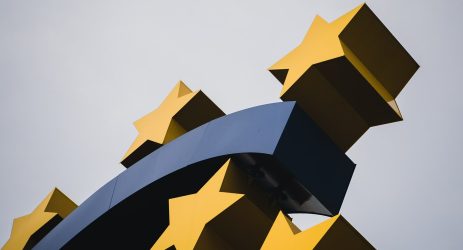
What will the ECB do with interest rates?
ECB towards 4 rate hikes if inflation reaches 4%. Here’s why. Analysis by Mauro Valle, Head of Fixed Income at Generali Asset Management.

The Pentagon will invest in drone companies (with a little help from Donald Trump Jr.)
After Intel, the US uses Rare Earth and more, the American government will also invest in three drone manufacturers. But Donald Trump Jr., the president’s son, is already a partner in one of these companies: is there a conflict of interest? All the details.

How and Why the White House Is Divided on AI
President Trump blocked an executive order on AI at the last minute, revealing deep divisions within the White House between those pushing for pro-industry deregulation, security hawks, and a middle ground of voluntary oversight by tech companies. The Politico article.

Italian extra-EU exports: boom towards China, USA, and Mercosur. Istat report
In April, Italian exports to non-EU countries grew by 11.3% year-on-year, with strong increases towards China, Switzerland, and the United States. Imports from Mercosur and OPEC countries also accelerated, while the trade surplus rose to 3.85 billion euros despite the impact of the energy deficit.
