

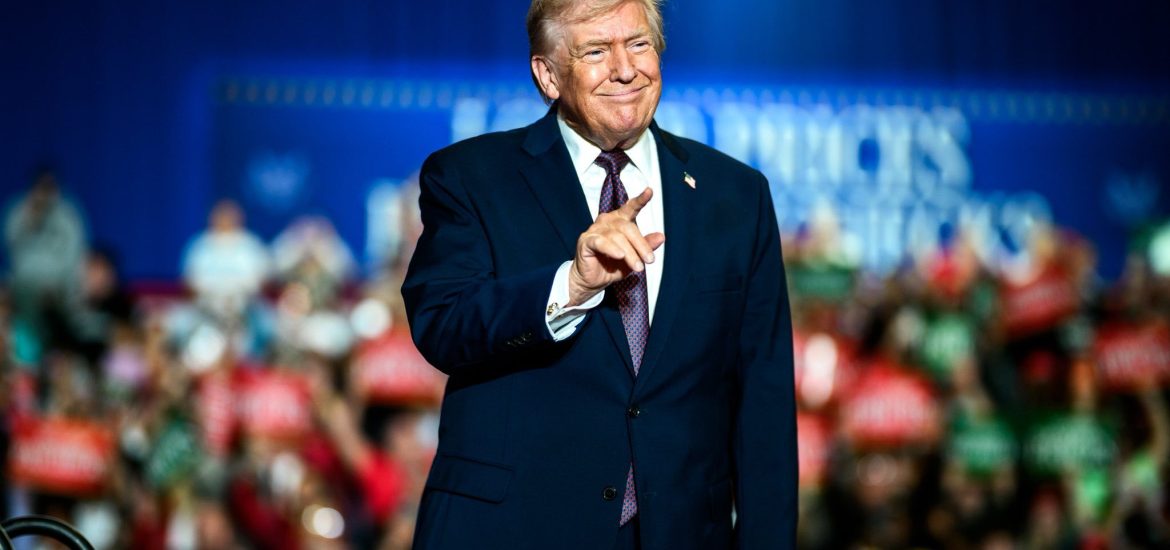

This week, President Donald Trump will meet with leaders of several companies operating in the artificial intelligence sector, after the White House issued an executive order establishing a predominantly voluntary procedure to allow these companies to share new models with the U.S. government before their market launch. It is also expected that the leaders will discuss the possibility of the U.S. government acquiring an equity stake in companies in the artificial intelligence sector.
It should be noted, however, that although Americans may be more favorable to AI if they believe they can gain an economic advantage, President Trump’s authority and ability to unilaterally invest in companies in the sector are limited. The previous investment in Intel, which was supposed to be a grant or a loan, came from funds authorized under the 2022 CHIPS Act. Other equity investments have used funds provided by Congress under the “One Big Beautiful Bill” (OB3), which provided the White House with about $8 billion to make direct equity investments in critical minerals companies and other technology-related companies essential to strengthening the U.S. supply chain.
Although Congress has become more familiar with state-driven capitalism, in light of high deficits and the increasingly tense political climate regarding AI, it is unlikely that Congress will authorize large equity investments in the AI sector in the near future.
Although his attempt to invest in companies operating in the artificial intelligence sector may not succeed, President Trump is right when he says that Americans do not like – nor do they appreciate – artificial intelligence. Polls show widespread concern that artificial intelligence may cause job losses, that the government will fail to protect citizens from risks, that data centers should not be built in local communities, and that artificial intelligence may compromise students’ critical thinking abilities.
Whether justified or not, perception is reality, and Americans have a predominantly negative opinion of artificial intelligence. Added to this are concerns about rising electricity and other resource costs related to AI development, as well as the general feeling that the federal government is not doing enough to ensure adequate protections; consequently, a growing number of states are moving forward with restrictions on the construction of data centers and/or the use of artificial intelligence.
Artificial intelligence and data centers will therefore likely be a central issue in the 2027 and 2028 general elections. Among Republicans, this is already creating contrasts between candidates adopting a more skeptical stance and those supporting a more libertarian approach. On the Democratic side, there is broad consensus on the need to introduce more rules and protections on artificial intelligence, but differences of opinion remain on the level of support for data centers and AI-dedicated hubs.
For the next two and a half years of the Trump 2.0 administration, it does not seem likely that we will see federal AI legislation. Consequently, we should expect an intensification of efforts at the state level. Although these have so far been mostly limited and fragmented, the risk is that, with growing concerns about rising costs related to data centers and job losses connected to AI proliferation, we could see a stronger political backlash and a patchwork of state and local laws. Furthermore, with Americans viewing AI skeptically – and largely in a bipartisan manner – we should expect AI to be a prominent campaign issue both in the mid-term elections and in 2028, regardless of everything else.


