



Bromo, what will be the outcome of the great European space reshuffle?
The space merger between Airbus, Leonardo, and Thales promises a continental champion. But behind the facade of propaganda remains a question: how much Italian space will truly remain Italian? The intervention of Alessandro Sannini, investor and member of the national Space Economy commission of Federmanager.

Why Advent is entering Avio (and what changes for Leonardo and Delfin)
Capital increase of 109.4 million, new shareholder with 7%, specialized in aerospace and defense, and a strategy increasingly focused on the United States. How Avio’s shareholding structure is changing and what the new funds will be used for.

What will the new Italian Hub for Cyber and Space (PiCS) do?
Cyber and space are no longer two separate worlds: today they represent a single strategic ecosystem on which security, innovation, and competitiveness depend. In the latest episode of Spaziale, we discuss the creation of the Italian Hub for Cyber and Space (PiCS), the initiative aimed at networking institutions, research, and industry to strengthen the skills and technological sovereignty of our country with Prof. Luigi Martino, director of PiCS and professor of Cybersecurity at the Universities of Bologna and Florence.

From NASA’s lesson to the Italian challenge: the capital missing in space
From the NASA model to the leadership of the North: without real investments, even the best industrial heritage risks remaining a glorious memory rather than a lever for the future. The contribution of Alessandro Sannini, investor and member of Federmanager’s National Space Economy Commission.

This is how France and Italy are revitalizing their partnership on space and defense.
The Antibes summit aims to strengthen the axis between Rome and Paris with seven government agreements and over 300 companies involved. Defense, space, nuclear, and infrastructure were at the center of the meeting between Prime Minister Giorgia Meloni and French President Emmanuel Macron. All the details.

The real challenges of investments in defense and space
Space, defense, and dual use: when the future becomes structure and when it becomes stance. The presentation by Alessandro Sannini (Investor) and Leonella Gori (SDA Bocconi), members of the national Space Economy commission Federmanager

How will we dress in the space of the future?
Conversation with Marcello Azzoni, Chief Designer of Spacewear, the Italian company that has just presented SFS3, the new generation of intravehicular suits designed for the ISS, future commercial space stations, and lunar missions. An interview to understand how space garments are evolving and what role Italy can play in the new space economy.

This is how the European space game also involves Bromo.
Who was present and what was discussed at the conference “Supra astra: the strategic challenge of space dominance between national security, industrial competitiveness, and the new space economy,” organized by CeSI (Center for International Studies) directed by Andrea Margelletti, in collaboration with the Italian Air Force and the Ministry of Foreign Affairs and International Cooperation.

“From Space to Earth: Data and Technologies Serving the Planet,” the webinar by Start Magazine
The webinar “From Space to Earth: Data and Technologies Serving the Planet,” organized by Start Magazine in collaboration with Eni, will be held on June 9 from 3:30 PM to 5:30 PM.

Aerospace, why the Bromo project (Airbus, Thales, and Leonardo) is strategic for Europe
Who was present and what was discussed at the conference titled “The Contribution of the Aerospace Sector to Italian and European Technological Sovereignty,” organized by the Istituto Affari Internazionali (IAI) and the National Aerospace Technology Cluster (CTNA), in collaboration with the Roma Foundation.

This is how Bezos accelerates with Blue Origin and aims for orbital data centers
While his aerospace company aims to expand its Florida headquarters with an investment of over half a billion dollars, Jeff Bezos also outlines Blue Origin’s plans to build data centers in space. All the details.

Why a coordination office is needed for the Italian space sector
The National Space Policy Strategic Document sets a course. Now the challenge is to turn it into capital, manufacturing, homogeneous districts, procurement, and measurable responsibilities. The intervention of Alessandro Sannini, advisor and member of the Space Economy Commission of Federmanager; author of Flying High. Supporting the growth of the aerospace industry in Italy, Nuova Cultura Editions.

Why Poland is increasingly focusing on space
An analysis by the Stiftung Wissenschaft und Politik (SWP), a German foundation specializing in foreign and security policy, reveals that Poland is expanding as a space actor in Europe, focusing on Earth observation and orbital monitoring.

What does the new National Space Policy Strategic Document entail?
During the meeting of the Comint (Interministerial Committee for policies related to space and aerospace), the Meloni government approved the National Space Policy Strategic Document. All the details
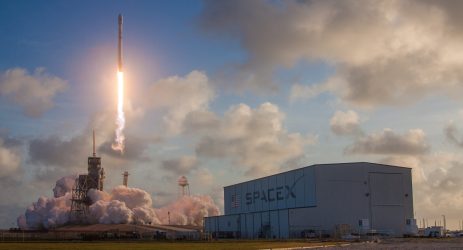
All of Google’s plans with SpaceX (and beyond) for data centers in space
Google is in talks with SpaceX to develop Project Suncatcher, a program focused on solar-powered orbital data centers. Musk’s company is working on a similar initiative with Anthropic. Bezos’s Blue Origin and Zuckerberg’s Meta are also looking to space.

EU Space Act, the first step towards international space governance
After the Italian law on the Space Economy, the challenge now shifts to the EU Space Act and Europe’s ability to build space governance that supports innovation, competitiveness, and technological sovereignty. Intervention by lawyers Dino Dima, Partner at DLA Piper, and Amedeo Barbato, DLA Piper.

Meta is betting on space solar power to fuel data centers.
Meta has announced a collaboration with the space startup Overview Energy to ensure the supply of solar energy to its data centers. The initiative is part of the growing energy demand, which is driving several companies (such as SpaceX) to focus on data centers in space.

This is how energy, space, and cloud computing will transform the German industry.
While on one hand global competition, especially from Asia and America, is fierce, on the other hand Germany can rely on know-how, infrastructure, and a network of tech startups that is proving to be increasingly dynamic. The article by Pierluigi Mennitti
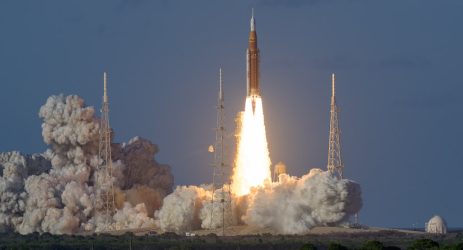
Artemis II launches: NASA returns to orbit the Moon after 50 years
Liftoff for Artemis II: NASA has sent four astronauts around the Moon for the first time in over 50 years. The mission will serve as a crucial stepping stone for a crewed lunar landing, currently planned for 2028.

Everything about Artemis II, the first human flight to the Moon in 50 years
NASA is preparing to launch the Artemis II mission, the first crewed flight to the Moon in over 50 years. Four astronauts will embark on a journey of about ten days around our satellite, marking a crucial milestone in the American program aimed at the human return to the lunar surface.

To the Moon with Artemis: Italy’s Key Role
After more than 50 years, humanity is once again looking closely at the Moon with Artemis II. But this time the scenario has changed profoundly: new technologies, new ambitions, and an increasingly central role for the European industry.
In this episode, we talk about the present and future of space exploration with Giampiero Di Paolo, CEO of Thales Alenia Space Italy, a key player in the development of modules and infrastructure essential for space missions.
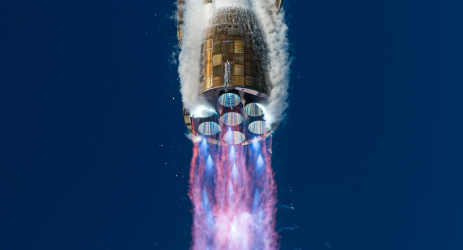
Blue Origin is also entering the race for orbital data centers.
Blue Origin, Jeff Bezos’s aerospace company, is seeking authorization to launch a constellation of nearly 52,000 satellites that would provide in-orbit computing services. It thus joins Musk’s SpaceX and the startup Starcloud in the race for satellites dedicated to artificial intelligence.
