


Unicredit: why Orcel cuts Amundi, while eyeing the Italian takeover battle and focusing on Commerzbank
The reduction of the partnership with the French manager is part of the strategy through which Unicredit aims to strengthen asset management and gain autonomy. Meanwhile, the German front remains open, and the Italian risk game is also unfolding in the background.

Oops Unicredit on Commerzbank, here’s who joined. Orlopp calls Bafin
From Nomura to Verto Capital, here are the entities that contributed shares to the Piazza Gae Aulenti offer. The CEO of Commerzbank requests clarifications from the German regulator and responds: dialogue is possible, but not under the current conditions.
All the latest clashes between Unicredit and Germany over Commerzbank
Surge in subscriptions to Unicredit’s OPS. The bank reaches 34.4% of the German institution’s capital and 37.6% including convertible instruments; considering derivatives as well, the exposure exceeds 50%. But Frankfurt disputes the figures and defends Commerzbank’s autonomy.

Commerzbank stands firm against Unicredit. But Orlopp leaves a door open.
Shareholders and employees of Commerzbank rally around the leadership of the German bank against Orcel’s takeover bid. Weidmann raises concerns about BTP and Russia risks, while Piazza Gae Aulenti rises to around 42% of the capital.

Why Commerzbank rejects Unicredit
Bettina Orlopp and Jens Weidmann urge shareholders to reject the Piazza Gae Aulenti offer: the focus is on the deemed insufficient premium, employment risks, the Russia issue, and Andrea Orcel’s strategy. Berlin remains defiant as Unicredit’s stake rises to 38.87%.
Unicredit, here is Orcel’s carrot and stick approach to the German Commerzbank
In the call with analysts, Unicredit CEO Orcel describes the German bank as “underperforming” and “unprepared,” but reiterates support for the merger: “It is what Europe needs.” Two scenarios on the table.
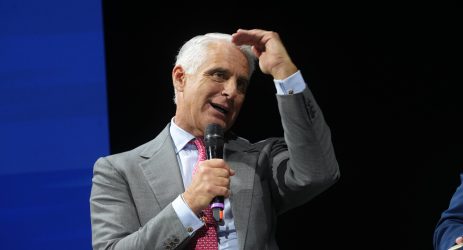
This is how Unicredit wants to gobble up Commerzbank.
Unicredit challenges Berlin: the takeover bid for Commerzbank is worth 35 billion and aims for 30%. Germany reiterates its ‘no’ to a hostile acquisition while Brussels looks favorably on the consolidation of the banking sector. Facts, figures, and insights.
