

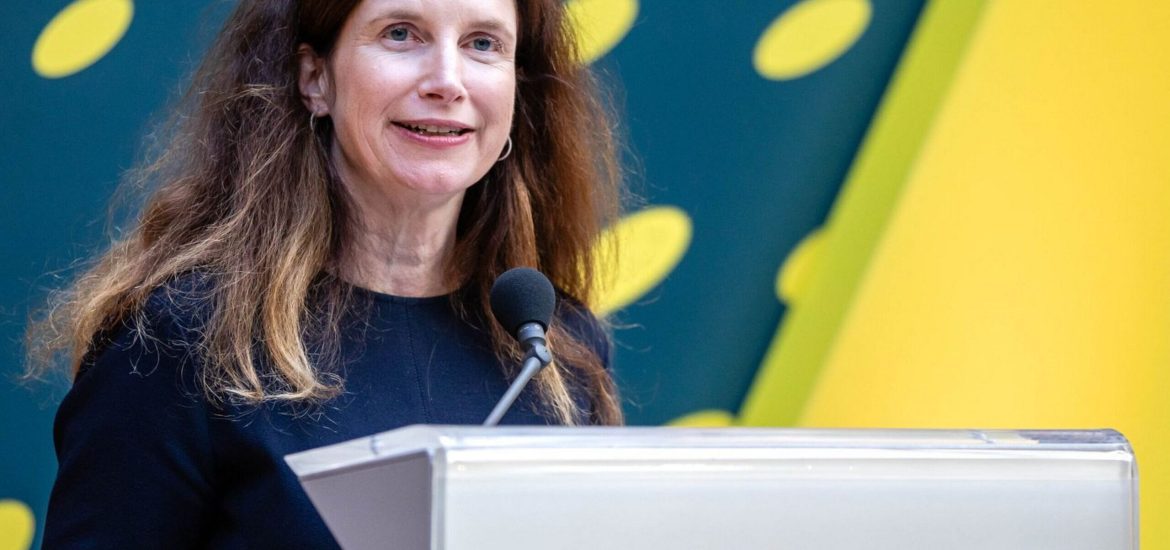

Commerzbank raises the wall against Unicredit. And it does so with a joint rejection from the board of directors and the supervisory board, black on white, accompanied by an explicit recommendation to German shareholders not to participate in the takeover bid launched by Andrea Orcel. For the Frankfurt bank, the Italian institution’s offer is insufficient financially, vague industrially, and dangerous operationally. But behind the no pronounced today by Bettina Orlopp and Jens Weidmann, there is much more: the fear that Orcel’s plan weakens Commerzbank’s support for the Mittelstand, the core of German manufacturing and exports, as well as the fear of thousands of layoffs, political resistance from Berlin, and growing irritation over Unicredit’s aggressive moves.
COMMERZBANK’S REJECTION OF ORCEL’S TAKEOVER BID
Commerzbank’s stance was expected, but the tone chosen by the German bank’s leadership was much harsher than anticipated. In the 137-page document released today, the board and supervisory board described Unicredit’s offer as an “opportunistic attempt” to take control of the bank without recognizing an adequate premium to shareholders.
The Italian institution offers 0.485 of its own shares for each Commerzbank share. A proposal valuing the German bank at about 37 billion euros, i.e., less than its market capitalization, which has risen to around 39 billion. This is the first argument Frankfurt used to dismantle Orcel’s proposal. Since the announcement of the offer, Commerzbank emphasized, the stock has always closed above the implied value of the takeover bid. Moreover, according to independent analysts cited by the bank, the median target price of the stock is already around 41.5 euros per share.
The board’s conclusion was clear: the consideration “does not reflect Commerzbank’s intrinsic value” and effectively limits itself to the minimum required by regulations. For this reason, the operation is considered an attempt to acquire control without paying a fair premium.
ORLOPP: “IT’S NOT A MERGER, IT’S A RESTRUCTURING”
For Bettina Orlopp, CEO of Commerzbank, Unicredit’s takeover bid is anything but a normal banking merger. “It is a restructuring proposal that would have a huge impact on our proven and profitable business model,” the manager stated, urging shareholders to reject the Italian offer.
Orlopp insisted that Commerzbank is currently in its strongest position in recent years. After a record 2025, the bank started 2026 “with great momentum” and believes its autonomous strategy, the “Momentum 2030” plan, can generate much more value than that projected by Orcel.
The numbers presented serve precisely to reinforce this thesis. According to the German bank’s industrial plan, by 2030 revenues should rise to 16.8 billion euros, net profit to 5.9 billion, with an expected tangible equity return of 21% and a cost-to-income ratio reduced to 41%. The plan also includes a large shareholder remuneration: dividends and buybacks worth about half of the bank’s current capitalization by 2030, with payout up to 100% of profits until the CET1 reaches 13.5%.
A direct response to Orcel’s accusations, who in recent weeks had defined Commerzbank as a “story of underperformance”, speaking of weak growth and limited investments.
WEIDMANN AND THE ISSUE OF TRUST
The tone used by Jens Weidmann, former Bundesbank president and now head of Commerzbank’s supervisory board, was even stronger.
Weidmann described Unicredit’s proposals as “speculative and risky,” arguing that the operation would endanger the relationships built over the years with customers and employees.
The central point of criticism concerns especially the credibility of the industrial plan presented by Piazza Gae Aulenti. According to the German board, Unicredit underestimates revenue losses, overestimates synergies, and assumes unrealistic integration timelines. Concerns focus particularly on staff reductions, IT system integration, and overlaps in corporate banking.
The document also challenges the reduction of Commerzbank’s international network planned by Unicredit. A choice that, according to Frankfurt, would weaken the bank’s ability to support German exporting SMEs abroad, one of Germany’s industrial pillars.
The issue of trust has become central in the clash. Commerzbank openly accuses Unicredit of having compromised the foundations of constructive cooperation through “uncoordinated actions” and “repeatedly misleading communications.” A direct reference to Orcel’s moves in recent months, considered aggressive and hostile in Germany.
FEAR OF LAYOFFS AND THE RUSSIA ISSUE
Behind the German no is also social fear. According to Reuters, Commerzbank’s internal analysis evokes the risk of up to 11,000 job cuts in case of integration with Unicredit.
This is one of the points that helped solidify the alliance between management, unions, and the German government against the Italian operation. Already in recent months, Berlin had expressed strong opposition to Orcel’s takeover attempt. Chancellor Friedrich Merz accused Unicredit of destroying the trust relationship with Commerzbank, and the federal government – still a shareholder with about 12% – continues to consider the institution a strategic asset for the German industrial system. Concerns relate not only to employment but also to the risk of losing a national financial decision-making center in favor of Milan.
Commerzbank also highlighted risks related to Unicredit’s exposure in Russia. According to the German bank, geopolitical uncertainties and possible operations linked to the Italian bank’s Russian activities could negatively affect Unicredit’s profitability and capital, thus influencing the value of shares offered to German shareholders in the exchange. It is true that just in recent days, the bank led by Orcel took a step to reduce its presence in the country, signing a non-binding agreement to sell part of its Russian activities.
ORCEL’S OFFENSIVE AND THE RISE TO 38.87%
Unicredit’s response was prompt. Piazza Gae Aulenti declared it “deeply disagrees” with many of Commerzbank’s arguments, judging them “unfounded and unsupported by data.” The Italian bank nevertheless specified that it will examine the German document in detail before replying comprehensively.
Almost simultaneously with Frankfurt’s no, another fact emerged destined to fuel tension: only from a filing submitted today to BaFin, the German securities regulator, it emerged that Unicredit’s potential exposure in Commerzbank has risen to 38.87%, well beyond what was previously known to the market.
The direct shareholding remains at 26.77%, to which is added 3.22% via total return swaps and a further 8.88% through derivatives settled exclusively in cash.
Formally, Orcel continues to maintain that the immediate goal is not necessarily full control. In recent weeks, he explained to analysts that reaching around 30% would already be compatible with Unicredit’s strategy. But in Germany, suspicion is growing that the Italian bank is proceeding step by step, gradually consolidating its grip on Commerzbank in anticipation of a future change in shareholder balance.
Not coincidentally, Klaus Nieding, president of the German association of small shareholders Dsw, warned that a stake close to 40% could be enough to allow Unicredit to profoundly influence the bank’s governance as early as the 2027 shareholders’ meeting.
THE CLASH BETWEEN TWO VISIONS OF EUROPE
The clash between Orcel and Commerzbank’s leadership now goes beyond the simple issue of price. At stake are two different ideas of a European bank.
On one side, Unicredit insists on the need to create large continental champions capable of withstanding global competition. Orcel continues to argue that Europe needs bigger, more efficient, and more integrated banks. The combination with Commerzbank, according to the CEO’s plans, should generate up to 21 billion in profits by 2030.
On the other hand, Germany sees the operation as an industrial and political threat. Commerzbank continues to present itself as a bank in full autonomous revival, while Berlin fears the integration will end up reducing financial support for German companies and transferring strategic levers abroad.




