



Electric cars, American manufacturers will not be able to escape China forever. Economist report
Protected by customs barriers, the Detroit giants continue to focus on profitable gasoline models. But the delay accumulated in electric vehicles risks being costly. An in-depth analysis by the weekly magazine The Economist.
Toyota backs the Made in EU initiative promoted by Brussels
Toyota reminds Europe that “Made in EU” could be a boomerang, driving away investments and creating new unemployment in a sector where the main car manufacturers of the Old Continent are facing serious difficulties. Meanwhile, the first cracks seem to be opening in the protectionist wall of the von der Leyen Commission.

Will Honda restart with hybrid technology?
The Series 0, which was supposed to represent its commitment to full electric from 2026 to 2030, has been canceled. Honda is restarting from the economic downturn of the past year caused by strategic mistakes in electric cars, focusing on hybrids and giving new life to the internal combustion engine. Total electrification of the lineup has been pushed far back, to 2050.
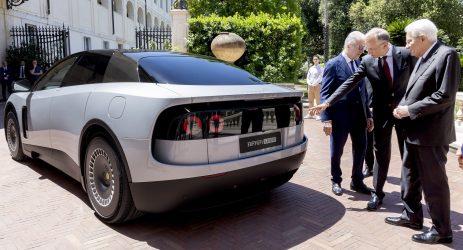
Ferrari Luce: all about Jony Ive and Marc Newson, the two artists behind the flop
Two artists, one British and the other Australian, famous for Apple devices, chairs, and household appliances, seem to fit little with the world of the Prancing Horse—or at least this is the harsh judgment expressed by social media and those who know the automotive world well. Who are Jony Ive and Marc Newson, and why did Maranello choose to entrust them with the fate of the Ferrari Luce, distancing itself significantly from the usual standards, almost as if to emphasize that this supercar will remain unique?

Ferrari Luce, Maranello’s first electric car, electrifies very few markets and fans.
Maranello’s first electric car makes a very noisy start: not because of the engine – which is absent – but due to the stock market crash and the social media jeers accompanying Ferrari Luce’s official posts. Facts and comments.

How electric are Ford’s plans for Europe?
While Ford aims to cut 2,900 jobs (14% of the total) in its European factories by 2027, the Blue Oval entrusts the recovery after the “full electric” binge to more realistic, multi-energy solutions. However, the partnership with Renault’s (defunct) Ampere survives.

Microcar, the very Chinese Bontu ready to surpass the European project on e-cars
The startup founded just six years ago in the Chinese city of Xintai is entering Europe with two electric microcars and an ape car determined to compete not only with the Fiat Topolino, the Opel Rocks, and the Citroen Ami but also with the E-Cars that Stellantis plans to produce in Pomigliano starting in 2028.

Japan turns off the electric car. Nissan and Subaru also backtrack.
Subaru has redirected the 8 billion planned for electrifying its lineup towards traditional engines and hybrid solutions, while Mazda has once again postponed the debut of its first electric car from 2027 to 2029. And the budget has been reduced from 11 to 5 billion.

Will Stellantis get engaged to Jaguar Land Rover?
Stellantis is not at the peak of its industrial power, and Jaguar Land Rover has survived a very dark year, also battered by a devastating hacker attack. The two European companies intend to explore possible synergies with a very specific geographic focus: Donald Trump’s USA.

Does Volvo have an engine problem?
The Swedish car manufacturer Volvo Car, controlled by the Chinese group Geely, is experiencing a paradox that seems to be the result of a managerial miscalculation: it still has diesel and gasoline models on its lineup but has already gotten rid of the plants to produce the old internal combustion engines, convinced that the future would be fully electric. Now it has to figure out how to move forward, especially in the U.S., which under Trump has become hostile to plug-in powertrains.

All Chinese brands onboarded by Stellantis
Stellantis’ strategy for Europe seems to be moving towards a two-pronged approach: city cars and SUVs from Leapmotor, and the higher segment with Voya alongside Dongfeng. Additionally, the group led by Filosa might turn to Jac and Huawei to revive the Maserati sports brand, which has been in severe crisis for at least two years.

What is Stellantis doing between Pomigliano and North Africa?
While Stellantis announces electric cars in Pomigliano, protests resume in Turin: after the excitement over new hires related to the hybrid 500, workers are questioning the future of Mirafiori. Meanwhile, the company misses an opportunity for a new meeting with about a hundred suppliers from the Piedmont automotive sector to increase production in Algeria.

Honda goes into the red and scraps the electric green.
Honda posts a loss for the first time since 1957. The results are weighed down by activities related to electric cars. CEO Toshihiro Mibe performs a deep “hansei,” bowing repeatedly. Full electric is postponed to 2050, and now the focus is on accelerating hybrid technology to try to recover.
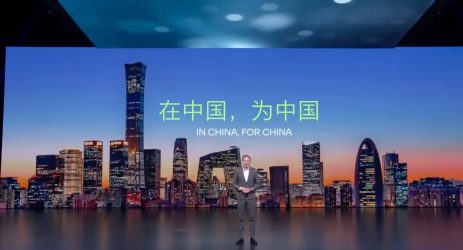
The Chinese products of Volkswagen, BMW, Toyota, and Nissan to keep up
Global car manufacturers want to become more Chinese, here’s how. An in-depth analysis by the weekly magazine The Economist

What is happening to electric cars in France? Le Figaro Report
The war in the Middle East and the sharp rise in fuel prices are driving the electric car market in France, but incentives and public support are needed due to consistently high list prices. Articles from the French daily Le Figaro taken from Liturri’s review.
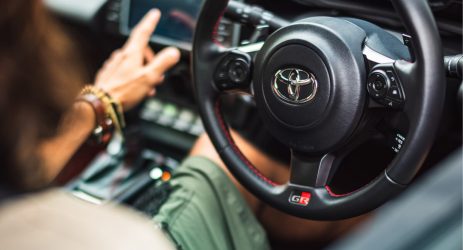
Tariffs, the Middle East, and China also cause Toyota to falter.
Trump’s tariffs weighed down Toyota’s results in North America without much surprise: revenues up 9.2% to 21.1 trillion yen, about 114.5 billion euros, but an operating loss of 193 billion yen. Sales of the world’s leading brand by volume are growing, but margins continue to shrink.
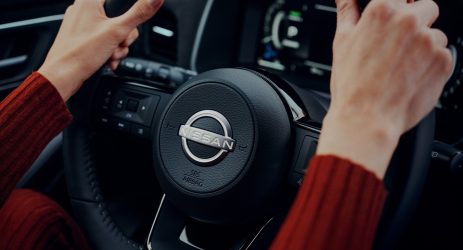
Nissan stakes its claim on the American electric car.
Recent global events and the need to revive the struggling Japanese brand have pushed Nissan to scrap its plans for American electric cars and focus entirely on traditional SUVs and pickups, which are definitely more appealing to the broader American audience.

After Byd and Mg, a new wave of Chinese brands is sweeping across Europe. Le Figaro Report
The strategies of new Chinese car brands to conquer the European market. The Le Figaro article taken from Liturri’s review.

All the gimmicks of BMW, Mercedes, and Volkswagen. Die Welt Report
The top executives of major German groups show a strong connection with Chinese partners: BMW, Mercedes, and Volkswagen were present in large numbers at the auto show in China. The article from Die Welt taken from Liturri’s review.

General Motors weighed down by electric cars
Double-digit sales collapse (-10%) for General Motors in the US, but on closer inspection, last year it was the fear of the arrival of Trump tariffs that drove an unnatural baby boom. And it is precisely the disappearance of the trade duties struck down by the American Supreme Court that allows the Detroit automaker to be particularly optimistic about its future.
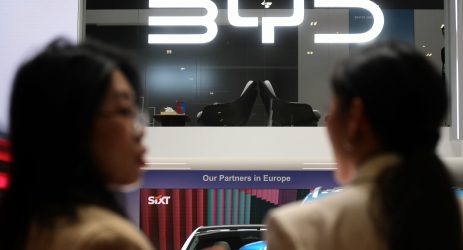
Bumper car collision in China between BYD and Geely, all the details
The sharp slowdown in Byd’s accounts (and also those of its main rival, Geely) should not at all please Western carmakers: if the Chinese market is now saturated, all efforts will be focused on capturing shares of the European market. Indeed, Beijing is outraged by the Industrial Accelerator Act, which could represent a protectionist obstacle in the race of Asian manufacturers for expansion.

Here are Xiaomi’s European plans
Xiaomi has opened its new Research and Development hub in Germany, in Munich, with the goal of taking over the streets of the Old Continent by 2027. The choice of the city does not seem at all random, given that many engineers and designers come precisely from BMW…

All of Elon Musk’s twists and turns at the helm of Tesla
Tesla’s financials are improving, but with Elon Musk at the helm, the electric car company seems ready to make a series of sharp turns and U-turns in its business. At the same time, the dream of full autonomous driving for models equipped with HW3 is fading, and the Roadster (which has been further delayed) could be the last model with a steering wheel for a company increasingly focused on producing robotaxis (and robots).
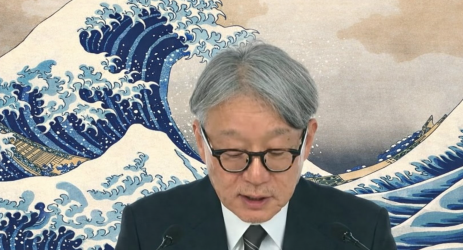
Honda withdraws from the shores of South Korea
Last year, it sold fewer than 2,000 cars in the country. The blame lies with local competition but especially with the arrival of the Chinese company BYD. And it is precisely in China that Honda has seen deliveries plummet by 60 percent over five years, so the withdrawal from South Korea could be just the beginning.
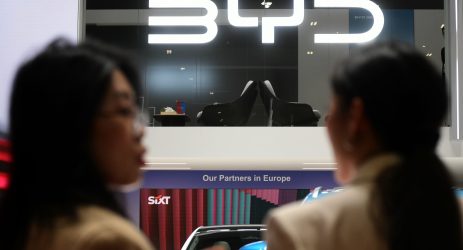
How much China will there be in the European Automobile Manufacturers Association ACEA?
The request from the main Chinese manufacturer Byd to join the leading European association in the automotive sector has raised some concerns. But in fact, there was already a more or less visible representation of China in Acea. And it is gradually gaining more and more space.
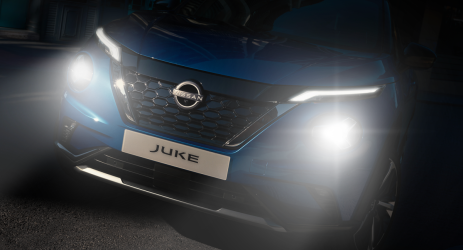
This is how Nissan tries to restart after the major setback of 2025.
After the closure of seven production plants, the cutting of 20,000 jobs, the cancellation of the 2025 Nismo Fest, and the sale of its main subsidiary in Yokohama to remain there as a tenant, Nissan is trying to restart: fewer models and more high-tech investments to compete with China.

Renault, after the U-turn on car sharing and electric vehicles, leaves engineers stranded.
Renault, which worldwide has about 12,000 engineering positions, intends to cut 15-20 percent of its departments, especially in emerging economies. All this comes after scrapping projects on electric micromobility, sharing, and permanently shutting down the Ampere battery car division. The company is restarting with a focus on savings, concentrating on France. However, for research and development, it is looking to China.
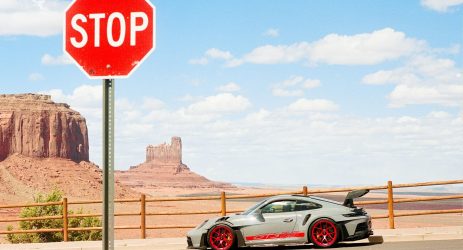
Porsche is having trouble getting back on track.
2026 risks being an uphill battle for Porsche, which has now lost appeal in China and faces the obstacles of Trump-era tariffs. The US president’s decision to scrap incentives for electric cars has reduced sales of the plug-in Macan and makes the launch of the Cayenne EV uncertain. Meanwhile, in Zuffenhausen, scissors are being sharpened as cuts no longer seem postponable.
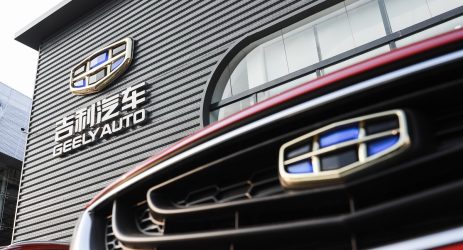
Geely’s European strategies to dominate the market (and prepare for Byd’s offensive)
Geely is consolidating to withstand the onslaught from Byd, which intends to expand rapidly in Europe, and is leveraging its presence in the Old Continent (it owns the brands Volvo, Lotus, Polestar, and 50% of Smart) to build a supply chain that allows it to increase the rate of commercial offers by halving the time it takes for products launched in China to arrive, with global platforms that enable it to save.

Entry of Chinese cars prohibited. The revolt of American manufacturers.
US automakers and others want Trump to ban the entry of Chinese cars even if they set up factories and value chains in the United States, bringing investment and jobs. So far, however, the American president has taken a completely different approach.
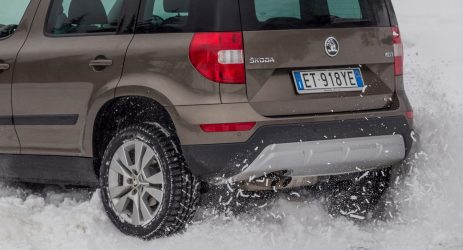
Skoda speeds away from China
Last summer, the Japanese company Mitsubishi announced it would leave the Chinese market after 30 years: now the Bohemian brand Skoda will also exit China, where it has been present since 2006 through the joint venture between its parent company VW and Saic. This is another sign of the difficulties Volkswagen is facing, squeezed by competition from the Dragon.
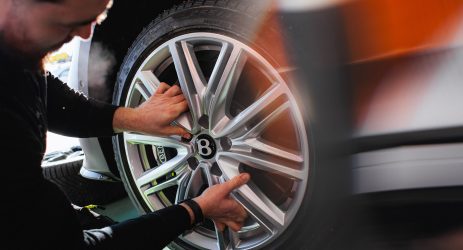
The car crisis also hits the luxury sector, Bentley lays off workers
Bentley pulls the handbrake on the plan that was supposed to lead it to a fully electric future by 2030 and, while increasingly focusing on hybrid solutions, announces hundreds of layoffs after a difficult 2025.
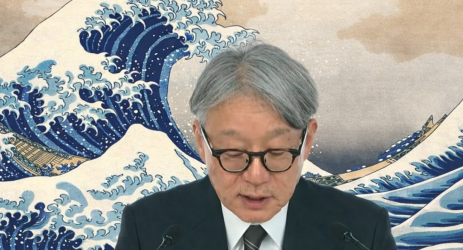
Honda’s financial tsunami
The need to thoroughly revise its industrial strategies related to electric cars, combined with the increasingly intense competition from nearby Chinese brands, has pushed Honda to lower its forecasts for the fiscal year. The Tokyo-based company expects the reorganization to incur costs of 16.7 billion. The new outlook for the 2026 fiscal year now indicates a net loss, compared to the previously estimated profit of 300 billion. The president and vice president will cut their salaries and forgo bonuses.
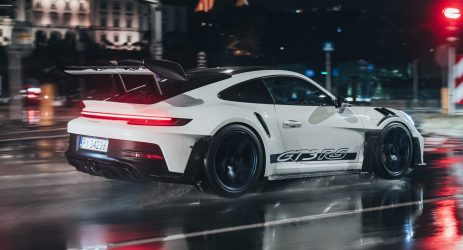
All Porsche cuts to shed ballast and try to restart
Porsche’s operating profit has effectively crumbled: a 92.7% collapse resulting in a drop to just 410 million from 5.64 billion in 2024 due to 3.9 billion in one-off charges. Deliveries have stalled mainly in China. And now Zuffenhausen must get back on track.

How much electric is there in Renault’s plans?
After the discontinuation of the Mobilize branch dedicated to electric micromobility, the halt of Zity car sharing, and the dismantling of the Ampere EV car division, Renault is preparing a new industrial plan that focuses not only on batteries but also on hybrid technologies, which are set to remain in the range of various brands even beyond 2030.

Chinese cars also brake hard. What is happening to Byd and the others?
Byd’s sales slow down for the fifth consecutive month, and its main rival Geely takes advantage to pull ahead. But most Chinese cars are noticeably slowing down: has the local market reached saturation?

Will Skoda be the one to electrify Volkswagen?
While all manufacturers, including Volkswagen, are stalling on electric car projects, Skoda (within the German Group’s portfolio) is pursuing the construction of its battery factory and aims to become the main internal producer for BEVs linked to Wolfsburg.

Do Ford and General Motors have a plan to survive?
Donald Trump has declared the war on internal combustion engines over. The Financial Times article taken from Liturri’s review.
