

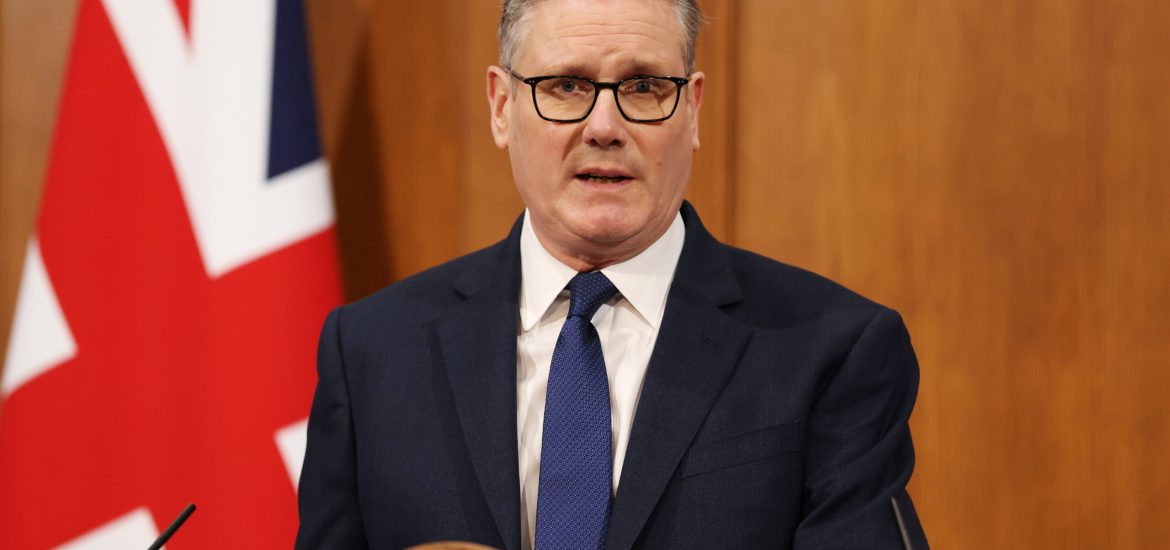

UK Prime Minister Keir Starmer has announced the nationalization of the steel company British Steel, long under special administration but significant because it owns the country’s last blast furnaces. The transfer to state ownership will happen soon: Starmer explained that this week a bill will be introduced to grant the executive the powers to acquire “full ownership”.
NEGOTIATIONS WITH JINGYE
The government, however, had already intervened in British Steel’s affairs and in April last year took control to prevent the closure of the Scunthorpe blast furnaces by the Chinese group Jingye, which acquired it in 2020.
On this matter, Starmer explained that the government negotiated with Jingye but “a commercial sale was not possible”: the Chinese company refused the £100 million offer presented by London, demanding compensation of over £1 billion.
WHAT IS THE PUBLIC INTEREST IN BRITISH STEEL?
“Public ownership [of British Steel, editor’s note] is in the public interest,” the prime minister added.
As mentioned, the Scunthorpe plant houses the UK’s last two active blast furnaces, highly significant because they produce primary steel, a variety obtained from iron ore that is qualitatively different from “secondary” steel, made from scrap. The site produces 95 percent of the steel used in the UK’s railway network.
THE STEEL INDUSTRY’S REACTION
Gareth Stace, CEO of the trade association UK Steel, welcomed positively the announcement of British Steel’s nationalization, stating it will provide “certainty” to workers (about 2,700) and customers. He added that “maintaining the domestic production capacity of British Steel’s products is essential not only for economic growth but also for our national security and resilience.”
Stace, however, believes that nationalization should not be seen as “an end goal,” but the starting point of “a clear and credible long-term plan,” accompanied by an investment strategy. In this regard, the government would like to encourage the electrification of British Steel’s processes to reduce emissions, but the transition would likely cause the loss of thousands of jobs.
MONEY SPENT SO FAR
The British government has been unable to find a private buyer for British Steel, also because profitable management of the Scunthorpe blast furnaces has proven complicated in the past. In 2016, in fact, the company was sold by the Indian group Tata Steel to the private equity fund Greybull Capital, which bought it for £1. Only a few years later – in 2019 – the company went bankrupt, then passing into Jingye’s hands.
Jingye, in turn, claims that the Scunthorpe steelworks is not economically sustainable and loses £700,000 a day. Since taking over, the government has spent over £200 million to keep it operational.
PARALLELS WITH ACCIAIERIE D’ITALIA
The British Steel case is very similar to that of Acciaierie d’Italia: the former Ilva is also under special administration, depends on government loans, loses about one million euros a day, and owns the last active blast furnaces in our country.
Moreover, English entrepreneur Michael Flacks – known for making a fortune by rescuing struggling companies and in negotiations to buy Acciaierie d’Italia – had said he was interested in buying British Steel to merge it with the former Ilva and create a large European steel conglomerate.




