


Getting rid of Anthropic is not so simple for Palantir.
To strike as many as 1,000 targets in the first 24 hours of the attack on Iran, the US military leveraged the most advanced artificial intelligence ever used in war, a tool that could be difficult for the Pentagon to abandon, even if it cuts ties with the company that created it, notes today the Washington Post.
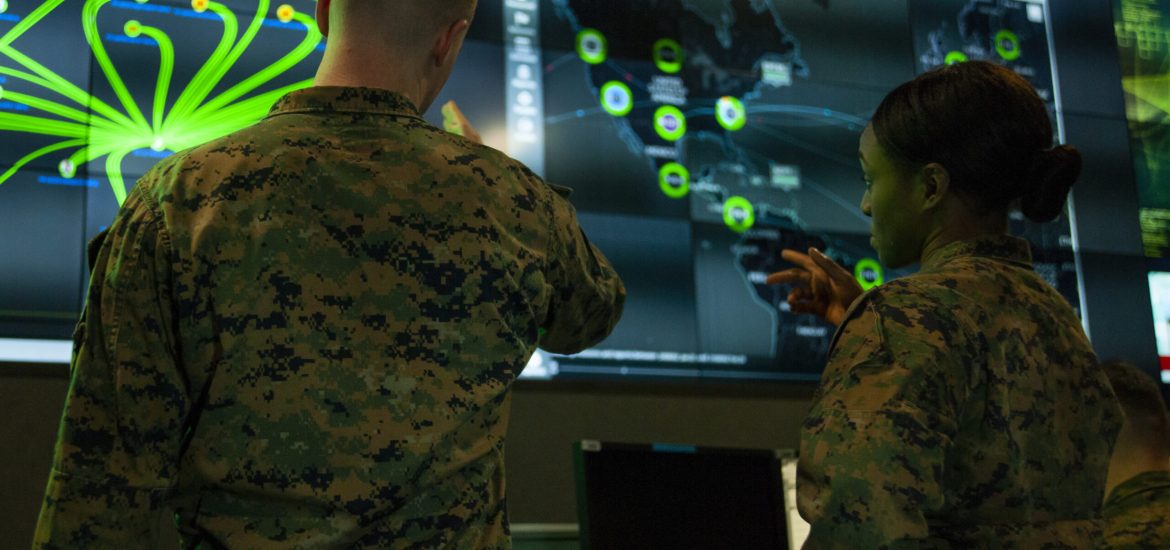
It is Palantir’s Maven Smart Systems, a software platform developed by the California data mining company that provides the US armed forces with intelligence analysis and weapons targeting, which uses multiple prompts and workflows developed using Anthropic’s Claude code, according to two sources cited by Reuters.
But now the recent decision by the US government to cut ties with the artificial intelligence company Anthropic is having immediate effects in the tech defense sector.
Palantir is indeed called upon to replace the Claude AI model used in its systems, including Maven, following the order issued by the Trump administration.
While Reuters clarifies that it cannot confirm the use of the software platform during the January raid in Venezuela or during recent attacks against Iran, it is undeniable that Palantir’s software has become deeply embedded in the Pentagon’s commitment to integrating artificial intelligence into military operations.
Therefore, the matter is raising questions about the operational and technical consequences for one of the most significant military analysis platforms of the US Department of Defense.
All the details
THE BREAK BETWEEN THE PENTAGON AND ANTHROPIC
Last week, US President Donald Trump ordered the government to end collaboration with Anthropic.
The break between the Pentagon and the AI company led by Dario Amodei came after the latter refused to grant the Department of Defense unrestricted use of the Claude AI developed by Anthropic, fearing risks such as mass surveillance and uncontrolled military use.
Although reaffirming his loyalty to the United States, Amodei considered the AI still too immature for such applications. In response to Anthropic’s reluctance to cross these red lines, Secretary of Defense Pete Hegseth threatened, among other things, to invoke the Defense Production Act to force the company to build a model for the purposes desired by the military.
This led to the alienation of the American company, a leader in the artificial intelligence sector.
OUT WITH CLAUDE, IN WITH OPENAI
Following the presidential decision, Hegseth also declared the intention to designate Anthropic as a national security risk in the supply chain, stating: “Effective immediately, no contractor, supplier, or partner doing business with the United States military will be allowed to conduct any business” with the company.
Afterwards, the Pentagon cut ties with Anthropic and turned to competitor OpenAI, the artificial intelligence company behind ChatGPT, which has shown willingness to collaborate with the government.
THE IMPACT ON THE MAVEN PROGRAM
But as highlighted in today’s Reuters report, the decision directly concerns Palantir’s Maven Smart Systems. According to two sources familiar with the matter, the system uses multiple prompts and workflows developed using Anthropic’s Claude code.
Palantir, which holds contracts related to Maven with the Department of Defense and other US national security agencies worth potentially over a billion dollars, will therefore have to replace Claude with another AI model and rebuild parts of its software. One of the sources cited by Reuters explained that the company will have to intervene on several components of the system, but the news agency was unable to determine how long this process will take.
ALEX KARP’S POSITION
Meanwhile, Palantir CEO Alex Karp addressed the controversy without directly mentioning Anthropic during a defense technology conference in Washington.
During his tirade on why tech companies should accept what the Trump administration asks of them, Karp explained: “The danger for our industry is that the famous horseshoe effect occurs, where there is only one thing people agree on, and that is that this doesn’t pay the bills and our industry should be nationalized.”
NOT ONLY PALANTIR FACING THE ANTHROPIC BAN
But the federal government’s break with Anthropic is raising broader questions for other companies involved in US military programs, not just Palantir.
Defense contractors, such as Lockheed Martin, are expected to follow the Pentagon’s order to eliminate the company’s AI tools from their supply chains.
THE REPERCUSSIONS FOR LOCKHEED MARTIN
“We will follow the guidance of the President and the Department of War,” the American defense giant said in a statement regarding the use of Anthropic following the Trump administration’s moves. “We expect minimal impacts,” Lockheed Martin added, noting that it does not rely on any single AI supplier “for any part of our work.”
The move has raised immediate legal questions. None of the authorities that the Trump administration could use to ban Anthropic allow it to also ban its general use by defense contractors, according to technology and contract law attorneys cited by Reuters.
What is certain at the moment is that Anthropic’s software highlights the complexity of technological decoupling from an AI supplier deeply integrated into public, including military, systems.




