The NATO Cold Response 2026 exercise has begun, designed to improve the defense and deterrence capabilities of the Allies in a harsh and demanding Arctic environment.
The biennial military exercises in the Arctic Circle will take place from March 9 to 19 in Norway. This time placing greater emphasis on the role of civilians in military support, at a time of high tension due to U.S. President Donald Trump’s request to take Greenland away from Denmark, another NATO member, notes Reuters.
As Defense News recalls, the exercise is part of “Arctic Sentry,” NATO’s ongoing mission to strengthen its presence in the region, launched in February to ease tensions over Greenland.
The Arctic has progressively become an area of strong geopolitical interest. This is mainly due to the effects of climate change, which are causing the melting of sea ice. The phenomenon makes the region more accessible and therefore more attractive both for shipping routes and for the exploitation of natural resources.
All the details.
THE NUMBERS
It will involve about 25,000 military personnel from 14 countries including Norway, United States, United Kingdom, Germany, Netherlands, France, Italy, Canada, Spain, Turkey, Sweden, Finland, Denmark, Belgium.
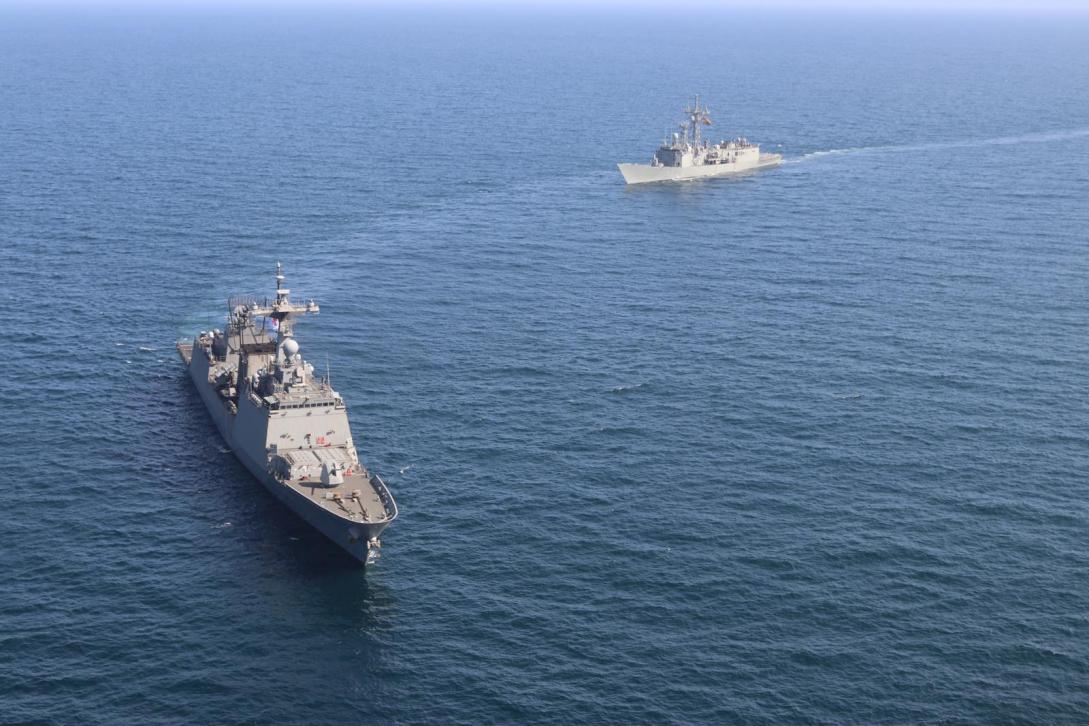
Cold Response 2026 is conducted as a multi-domain operation, with coordinated military effects across land, maritime, air, cyber, and space domains. Therefore, the exercise will include naval, ground, and air operations focused on Arctic defense. Maneuvers will mainly concentrate in northern Norway and Finland.
THE STAR-SPANGLED PARTICIPATION
The United States is expected to be present with about 4,000 military personnel.
In particular, as indicated by a note from the US Air Force, the F-35A Lightning II assigned to the 48th Fighter Wing at RAF Lakenheath, England, will fly from Ørland, Norway. The HH-60W Jolly Green II assigned to the 56th Rescue Squadron at Aviano Air Base, Italy, and the HC-130J Combat King II assigned to Moody Air Base, Georgia, will fly from Bardufoss, Norway, providing combat search and rescue services both in Norway and Sweden.
The KC-135 Stratotanker assigned to the 100th Air Refueling Wing at RAF Mildenhall, England, will provide aerial refueling to U.S. and allied aircraft. A C-17 Globemaster III assigned to March Air Reserve Base, California, will provide airlift capability. Both aircraft will operate from Sola, Norway. Before the start of Cold Response, the U.S. Army withdrew an F-35 fighter squadron from the exercise. It did not specify whether the war in the Middle East played a role in the decision.
FOCUS ON CIVILIAN READINESS
As Reuters notes, Norway has declared 2026 the “year of total defense,” thus aiming to strengthen the joint preparedness of citizens, businesses, and public institutions in the face of possible wars or crises. The goal is to ensure that civil society can effectively support the armed forces, whose operations depend on the normal functioning of civilian infrastructure. As part of this strategy, the support capabilities of civil services will also be tested: for example, the army will simulate the transfer of numerous wounded from a hypothetical front in Finland to verify the capacity of hospitals in northern Norway to handle a massive influx.
NOT JUST A MILITARY EXERCISE, BUT ALSO A SCENARIO SIMULATION
Alongside the live exercise, a large-scale simulation will be conducted. This will involve simulated forces significantly larger than those participating in the maneuvers. A research task force led by the United States and Norway will compile a report by 2029 titled “High North Scenarios for Wargaming and Analysis – Winter Storm 2030.”
Besides the leading nations, NATO countries so far engaged in participating in the Arctic security simulation include Canada, Czech Republic, France, Italy, Sweden, and Turkey.
ITALY’S PARTICIPATION IN THE 2024 EDITION
Regarding Italian participation, the Defense Ministry has not yet made public details about the national contribution, including deployed units, personnel strength, and platforms used.
In the 2024 edition of the Nordic Response exercise, held in Norway from March 3 to 14 as part of the broader NATO Steadfast Defender exercise, Italy participated with a significant naval and military contribution. The Navy deployed the helicopter carrier cruiser Garibaldi and the amphibious ship San Giorgio, with about 800 Italian soldiers on board. The San Marco Marine Brigade, specialized in amphibious operations, was also present.
The activities two years ago involved about 20,000 soldiers, 110 aircraft, and 50 naval units from 13 countries. As this year, the goal was to strengthen cooperation and response capabilities in crisis scenarios in the Arctic area. Italy also played a prominent role in the command chain, with Rear Admiral Valentino Rinaldi appointed Commander of the multinational Amphibious Force during the exercise.