


Italy will have to decide by the end of May whether to resort to European loans under the Security Action for Europe (Safe) program to finance defense and security expenses.
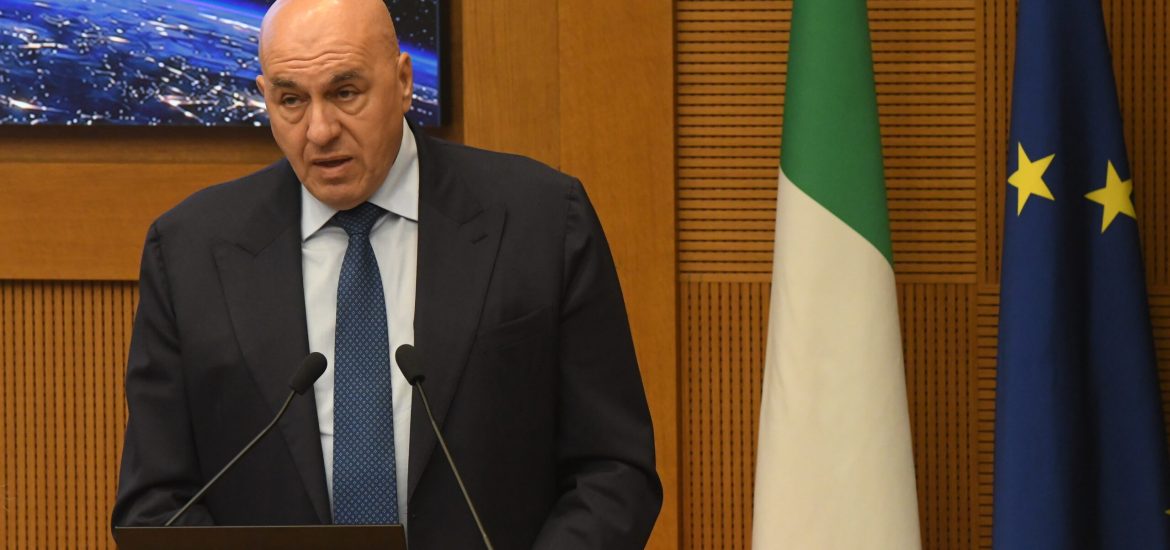
This is what Defense Minister Guido Crosetto indicated on the sidelines of the NATO Mediterranean and Middle East Special Group seminar at the Chamber, when asked about public spending prospects for Defense in light of Italy’s failure to exit the EU deficit infringement procedure, which has brought back to the center of political debate the issue of resources for Defense and their compatibility with public finance constraints.
Rome has already requested 14.9 billion euros under the European Safe instrument, while the government continues to discuss NATO commitments and the progressive increase of military spending.
All the details
THE SAFE DOSSIER AND THE END OF MAY DEADLINE
Crosetto explained that “Italy should join the Safe mechanism this year, we must respond by the end of May.” The minister specified that the final decision must come from the Treasury headed by Minister Giancarlo Giorgetti.
On February 17, EU finance ministers approved the national plans of eight other member states, including our country, for a total of 74 billion euros in funding, about half of the 150 billion euros available from the Safe program. With the final Ecofin approval of concessional loans for defense, Italy will benefit from an intervention of about 14.9 billion euros.
But on the use of European funds for defense and security, Crosetto reiterated that “We must respond by the end of May and the Ministry of Economy and Finance should provide the answer.”
ITALY’S COMMITMENTS ON DEFENSE SPENDING
Crosetto recalled that, as things stand, Italy’s commitments remain those approved by Parliament: an increase in Defense spending of 0.15% of GDP this year and two consecutive increases of 0.20% in the following two years.
“This is what I stand by as parliamentary commitments made by Italy,” the minister declared, specifying however that final decisions belong to other levels of the executive and to Parliament.
THE FINAL WORD BELONGS TO PARLIAMENT
Asked how to reconcile new Defense spending with economic prudence, Crosetto replied: “Ask Giancarlo Giorgetti, I await his decisions. As I have to take defense needs into account, he must consider economic needs. Everyone does their job, then Parliament decides.”
REGARDING TRANSATLANTIC RELATIONS
Afterward, the Defense Minister also addressed the topic of Italy’s commitments within NATO and the criticisms made by the Trump administration regarding Italy’s role in ongoing wars.
Crosetto ruled out the need for a mission to Washington, explaining that the discussion will take place at the upcoming NATO summit in Ankara: “There is no need for me to go to Washington because Ankara is coming soon where all NATO will meet, Trump will also be there, and so there each country will have to report and explain its commitment within NATO in the coming years.”
THE ISSUE OF NATO BASES
On the possibility that the United States might reduce the presence of NATO bases in Europe, the minister reiterated the strategic role of the Atlantic Alliance. “NATO bases in Italy or anywhere else in the world are not bases serving the nation in which they reside,” Crosetto stated, adding that these are facilities “that serve NATO, that is all the allies, therefore equally Italy, the United States, Germany, all those who are part of it. So I do not think it is in anyone’s interest at this moment to weaken the most powerful defense organization in the world, precisely at a time when the world is more unstable. So the first interest of the United States in my opinion is to keep them open.”
THE REPLY TO TRUMP ON IRAN
Crosetto also responded to the American president’s statements that Italy was not alongside the United States in the war with Iran.
“I didn’t understand what he means because we were there like all other nations in the world. No one asked us to be part of this war, no one knew this war with Iran would break out. It seems to me that we behaved well,” the minister said.
THE FUTURE OF LEONARDO’S MICHELANGELO DOME
Finally, during the meeting, Crosetto also addressed the Michelangelo Dome project. The interconnected multi-domain system based on artificial intelligence, considered central in Leonardo’s new strategy, announced last November by the group’s former CEO Roberto Cingolani. The Michelangelo Dome project was precisely indicated among the elements at the center of reports circulating in the press regarding the non-renewal of Roberto Cingolani as head of Leonardo. According to these rumors, the deterioration of relations with the Prime Minister and disagreements on the group’s industrial line, particularly on the development of the Michelangelo Dome project, weighed in.
Today, Defense Minister Crosetto told Radiocor that “Italy is interested in having a Dome, I don’t know if Leonardo has one to offer.” In recent months, the topic of air and missile defense shields has returned to the center of European security strategies, with governments and defense industries engaged in developing new integrated systems for the protection of airspace and critical infrastructure. In this context, the multi-domain system announced by Cingolani is not the only program in this direction. Thales is also working on SkyDefender.
Asked about the possibility that the Michelangelo project will continue, Crosetto replied: “That must be asked to the CEO” of the former Finmeccanica group. Last week, Leonardo’s shareholders’ meeting appointed Lorenzo Mariani as the new CEO replacing Roberto Cingolani. It will be up to the new leadership to define the project’s future.




