The case of 500 US flights from Italian bases: does NATO Secretary Rutte deny Rome?
The statements of NATO Secretary General Mark Rutte have sparked a political debate on Italy’s role in American military operations against Iran. Speaking today on Fox News, Rutte stated that about 500 US flights had departed from American bases in our country in support of Operation Epic Fury.
A reconstruction contested by the Ministry of Defense, which reiterated that Italy authorized exclusively technical and logistical activities, excluding any kinetic activity and denying approval whenever US requests exceeded the scope provided by bilateral agreements.
The incident has brought crucial issues back to the forefront: Italian control over allied bases on national territory and especially the state of relations between Italy and the US, also in light of recent statements by US President Donald Trump towards Italian Prime Minister Giorgia Meloni on the sidelines of the G7 in Evian.
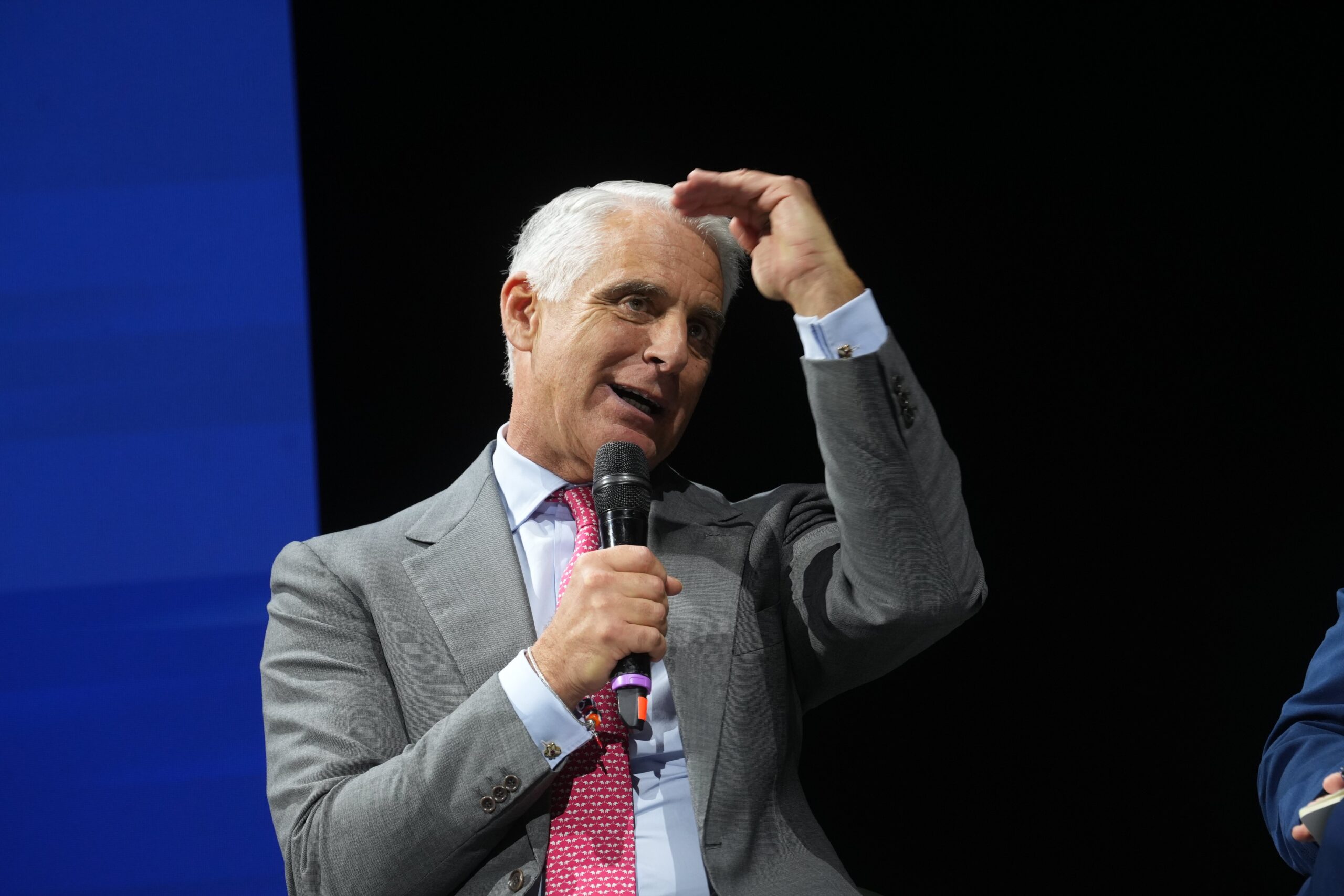
We discuss this with Professor Gregory Alegi, journalist, American history professor and aeronautical expert to understand the rules governing the use of bases in Italy and what implications Rutte’s words may have for the Italian government, NATO, and the balance between Rome and Washington.
Professor, how do you interpret the discrepancy between the statements of NATO Secretary General Mark Rutte, who spoke of about 500 US flights departing from Italian bases in support of Operation Epic Fury, and the subsequent clarification from the Ministry of Defense, according to which only technical and logistical activities were authorized, with no involvement in kinetic operations?
The bases from which US units operate in Italy are, in every respect, Italian bases granted to the United States within NATO. For this reason, missions that go beyond the framework of the Alliance require specific authorization from the Italian government. In other words, the American presence on our territory is regulated by precise agreements: everything that falls within NATO activities is routine, while anything outside constitutes an exception to be authorized case by case, because those bases remain Italian territory.
To understand the meaning of the figure cited by Rutte, one should first understand what those 500 flights include. They could have been logistical flights, transfers of materials to other operational theaters, training activities, or complementary support missions, such as maritime patrols, rescue operations, or cargo aircraft transfers. The first question, therefore, is what data contributed to forming that number. Rutte did not explain it.
There is also a second issue: that the United States declared a certain nature of the activities and then carried out others. This would be a choice that could offer advantages in the short term but that in the medium to long term would risk backfiring on Washington. A violation of the agreements could indeed lead to restrictions, limitations, or new operational conditions, precisely to protect Italian sovereignty over the bases present in the country.
Professor, is this a different interpretation of the same activities or is a deeper divergence emerging between the political and military levels?
I believe the core issue is another: American unilateralism, which should not be confused with isolationism. Isolationism means choosing to go it alone; unilateralism means acting without consulting allies. And it is a dimension that characterizes both Donald Trump as a political figure and his style of government.
If it emerged that some flights were carried out declaring a different nature from the real one, we would be facing an element destined to increase the distance between countries that have always been allies and, historically, have always had a very deep relationship.
It should be emphasized that this possible distance would not have been created by Italy. Those who request exceptions, more flexible interpretations, or exceptions to the rules have the duty to be fully transparent. Italy has not retaliated against the United States: it has merely called for respect of the agreements and treaties freely signed by both parties.
What do you think is reasonable to expect now, especially from the Italian government side?
In my opinion, there are now several signals indicating increasing pressure from the Trump administration towards Italy. The attacks aimed at Prime Minister Giorgia Meloni on the occasion of the G7 and this statement by Rutte seem to coincide not by chance.
It is worth remembering that Italy has historically been one of the closest and most reliable allies of the United States and has always guaranteed very wide room for maneuver. However, it seems that the current American administration increasingly resents the appeal to Italian national prerogatives.
In this scenario, the Meloni government must do nothing more than recall what is provided for in existing agreements. It would be the United States, eventually, that would have to explain why they consider it necessary to deviate from what was agreed. At the moment they explain it, the system would already rebalance because there would necessarily be a confrontation and there could even be an agreement.
We must not forget that the attack on Iran was not agreed upon with European allies. The United States acted autonomously and cannot then expect allies to comply; this is not the basis for an equal relationship, a relationship between allies. It seems rather a masterful dimension, and no Italian government, of any political position center-right-left, will ever accept that kind of subservience to the United States.
Finally, how do you judge the behavior of NATO Secretary General Mark Rutte?
Personally, I find it difficult to understand why the NATO Secretary General, instead of playing a mediating role between US and Italian interests, chose to further fuel the controversy. Italy is one of the key countries of the Alliance and, at this stage, also expresses the president of the NATO Military Committee.
So it is a mystery that Rutte decided to make public such a delicate figure without providing further explanations; he seems to behave more like an American than a European.