

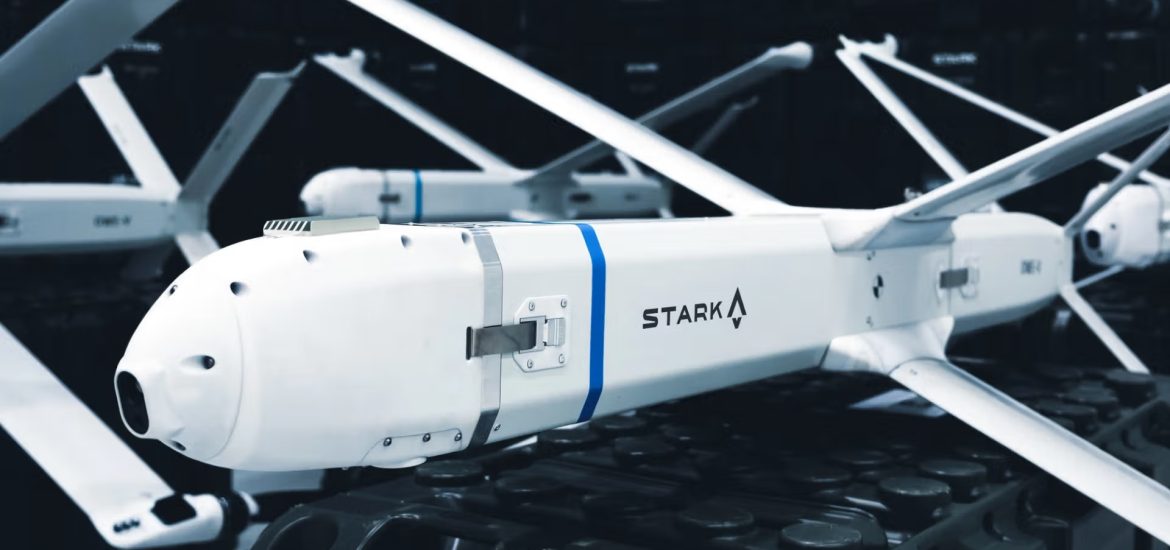

Stark, the startup supported by Peter Thiel (co-founder of Palantir), is expanding into the defensive drone sector.
Stark, a Berlin-based drone manufacturer, previously focused on attack drones, is now aiming to integrate new laser technologies to protect strategic infrastructures and plans to expand its presence among NATO clients, reports the Financial Times.
Recently, the German drone company also secured a contract to supply drones to the Bundeswehr, the German armed forces. On February 25, members of the German Parliament’s budget committee approved contracts worth 268 million euros each for the startups Stark Defence and Helsing, for the supply of the Virtus drones and the HX-2 autonomous guided munitions, respectively.
Meanwhile, Stark Defence managed to ease concerns among German lawmakers regarding the involvement of U.S. investor Peter Thiel – one of Silicon Valley’s most influential venture capitalists and a critical voice against liberal democracy – in the company, noted Defense News.
German parliamentarians raised fears that his minority stake might give him direct or indirect influence over company decisions or access to sensitive defense information. The case was addressed by Defense Minister Boris Pistorius, clarifying that Thiel’s shares in Stark amount to a single-digit percentage, meaning he has neither access to nor knowledge of the startup’s operational activities.
All the details.
NOT ONLY ATTACK, STARK ALSO FOCUSES ON ANTI-DRONE SYSTEMS
As reported this week by the British financial daily, Stark Defence is expanding into the anti-drone systems field, following the consequences of the war in Iran which have fueled demand for protection against unmanned weapons. The Berlin-based kamikaze drone manufacturer had previously focused mainly on attack drones designed to destroy targets.
PARTNERSHIP WITH INLEAP PHOTONICS
The company is now venturing into the defensive products sector, announcing a partnership with Inleap Photonics, a young company based in Hanover that develops high-precision lasers. On April 23, Stark stated that the technology will initially be integrated into a family of unmanned naval drones called Vanta, introduced last year.
GROWTH STRATEGIES
Stark plans to expand later with ground and aerial variants and hopes to sell the products to NATO clients, including Germany, which has the highest defense budget in the EU, emphasizes the FT.
The Berlin startup, valued at over 1 billion euros in a funding round this year, is one of several drone manufacturers that have expanded into the growing anti-drone product market. Its subsidiary Quantum Systems, a surveillance drone manufacturer, announced last month a partnership with the Ukrainian WIY Drones for the production of drone interceptors in Germany.
Although the Quantum and WIY agreement is initially intended to supply Kyiv to strengthen its defenses against Russia, the two companies also aim for future collaborations in Europe.
THE SPOTLIGHT ON PETER THIEL’S PARTICIPATION
Finally, as mentioned, Stark has come under scrutiny by some German parliamentarians for the support received from Thiel, who has close ties to U.S. President Donald Trump, and for doubts about its performance and pricing.
“The fact is that Peter Thiel openly rejects our democracy. We don’t know how much influence he has in Stark. And, even worse, the federal government is unable to explain it,” said Green Party MP Jeanne Dillschneider last February, quoted by Politico.
According to German law, any defense contract exceeding 25 million euros must receive explicit approval from the Parliament’s budget committee, meaning a vote is legally required for the agreement to proceed.
At the time, Stark refused to comment on the details of its shareholding structure but stated that any foreign investment exceeding the 10% threshold would require a mandatory review by the German Ministry of Economics. The same applies to smaller stakes if special rights exist, the company said, adding: “None of this applies.” It also stated that no shareholder holds information rights related to its products and that any transfer of technical details would be subject to approval by German export controls.
Finally, German Defense Minister Boris Pistorius put the controversies to rest by stating: “As far as I know, we are not talking about a key shareholder, but someone holding a stake between 3 and 4.5%.” He added that this means Peter Thiel does not play “a key role as a shareholder” and, although the issue must be taken seriously, “it does not represent a real obstacle to signing contracts with that company.”




