First expansion for the Global Combat Air Programme (Gcap): Canada has officially joined the program as the first “observer”.
On July 21, the Canadian government joined as the first observer the program of the United Kingdom, Italy, and Japan for the construction of the next generation stealth fighter jet that is expected to be operational by 2035.
“Gcap represents much more than an industrial and technological program for the development of the 6th generation combat aircraft: it is a strategic choice that looks to the future of security, defense, and competitiveness of our nations,” reads the joint statement on the sidelines of the meeting in London between the Gcap developing countries, namely Italy, the United Kingdom, and Japan, together with Canada, which has joined as an observer of the sixth-generation fighter project.
In this way, Ottawa has obtained “privileged access” to capability development, industrial cooperation, and long-term delivery plans, according to statements by the new British Defense Minister Wes Streeting.
As highlighted by Breaking Defense, currently Gcap is the only international program still active for a new generation fighter, which includes the creation of a sixth-generation stealth fighter and a series of interconnected systems, including support drones. The rival program for a sixth-generation fighter, the Franco-German-Spanish Future Combat Air System (Fcas), failed last month due to industrial disputes. On the other side of the Atlantic, the United States are advancing unilaterally their own new generation fighter, the F-47.
However, the official announcement only partially clarifies what Canada’s role as an observer will be and what effects it may have on the partnership between the three Gcap founding countries, leaving several questions open about the modalities of its participation.
All the details.
OTTAWA JOINS GCAP AS AN OBSERVER
Canadian Defense Minister David McGuinty stated that the new status “will offer us the opportunity to deepen our understanding of next-generation combat air capabilities, strengthen industrial collaboration, and contribute more closely to the partnerships that will define the future of air power.”
THE WORDS OF MINISTER CROSETTO
It is a program that “remains open to other nations as well,” highlighted Defense Minister Guido Crosetto, specifying that verifications on the accession procedures are underway and that the partners are willing to welcome “all skills.”
Crosetto also emphasized that Gcap “today represents the only European project for the development of a sixth-generation fighter and is therefore a central element to strengthen the technological autonomy of the continent,” explaining that if Europe wants to be competitive with the United States, it must equip itself with its own advanced technologies. The Defense Minister recalled that the previous Franco-German project “has ended” and that Gcap remains the only ongoing program. In this perspective, involvement of Germany appears simpler, while participation of France would be “a more complex matter,” according to the minister.
WHERE THE PROGRAM STANDS
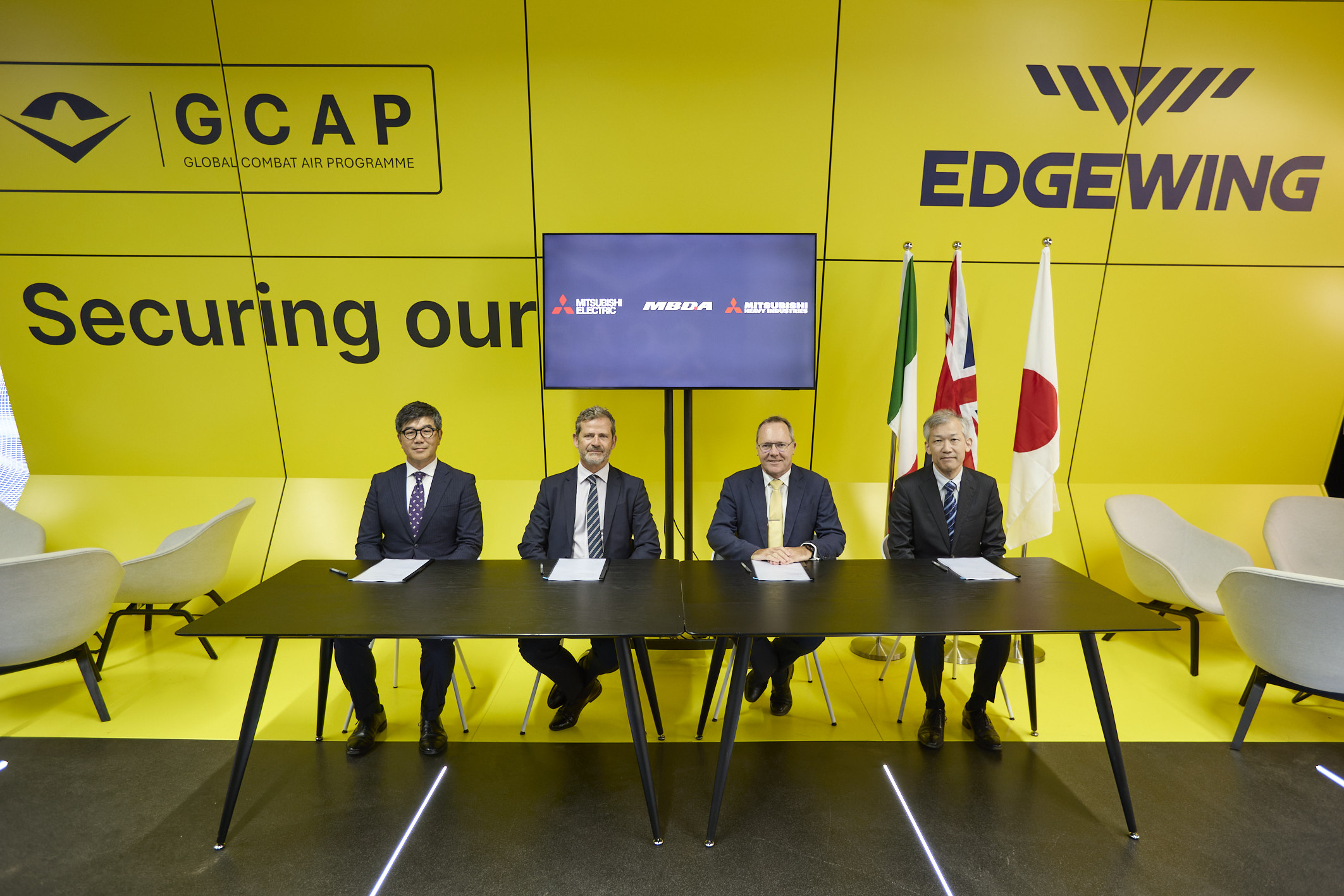
Just at the beginning of the month, the project took a new step forward with the awarding of the second joint international contract to Edgewing, the trinational industrial joint venture established to lead the design and development of the program among the lead companies (Leonardo for Italy, Bae Systems for the United Kingdom, and Mitsubishi Heavy Industries for Japan).
In fact, this is the second joint international contract awarded to Edgewing after the first, worth £686 million, awarded last April to start the initial activities of the program.
WHAT DOES OBSERVER STATUS IMPLY FOR CANADA?
Regarding the concrete meaning of observer status for Canada and the implications for the current partnership between Rome, London, and Tokyo, the official statement limits itself to providing general indications without going into details.
“Observer status will provide Canada with a deeper insight into Gcap and the opportunity to deepen understanding of the governance, capabilities, and industrial framework of the Program, as well as related security requirements and broader partnership opportunities,” the statement reads. “For Italy, Japan, and the United Kingdom, Canada’s involvement will also foster greater alignment of strategic priorities and a deeper mutual understanding of future ambitions in combat aviation, thus strengthening global security.”
Canada will have “privileged access” to Gcap, the British Ministry of Defense declared Tuesday, but will not be able to make any decisions on aircraft development, comments Newsweek.
Therefore, observer status will not entail any financial commitment, but Canada could formally join the program in the future, sharing the $1 billion development budget and potentially ordering the aircraft, notes Defense News.
MEANWHILE, RELATIONS WITH WASHINGTON BECOME MORE COMPLEX…
Finally, according to the American defense-specialized outlet, Canada is becoming an increasingly important partner for the defense of European nations, as it aims to diversify its defense spending, reducing dependence on the United States and forging closer ties with the continent.
Not to mention that the news of Ottawa’s entry into the international defense program comes at a time of growing tensions with Washington, supplier of its current most advanced fighter, the F-35, Breaking Defense further emphasizes. Overnight, U.S. President Donald Trump imposed 50% tariffs on a wide range of goods imported from Canada. However, McGuinty stated that Canada did not join Gcap because of ongoing negotiations with the United States to resolve the economic rift between the two long-time trading partners. Moreover, the Canadian Air Force is closely linked to the U.S. Air Force, especially through the North American Aerospace Defense Command (NORAD), staffed by personnel from both countries.
Meanwhile, Canada is also reviewing its acquisition program for U.S. F-35s. Although it confirmed in 2023 the order for up to 88 aircraft and the commitment to purchase an initial batch of 16 fighters, Ottawa continues to evaluate whether to complete the entire order or opt for a mixed fleet, pairing the F-35s with another model, such as the Swedish Gripen.