

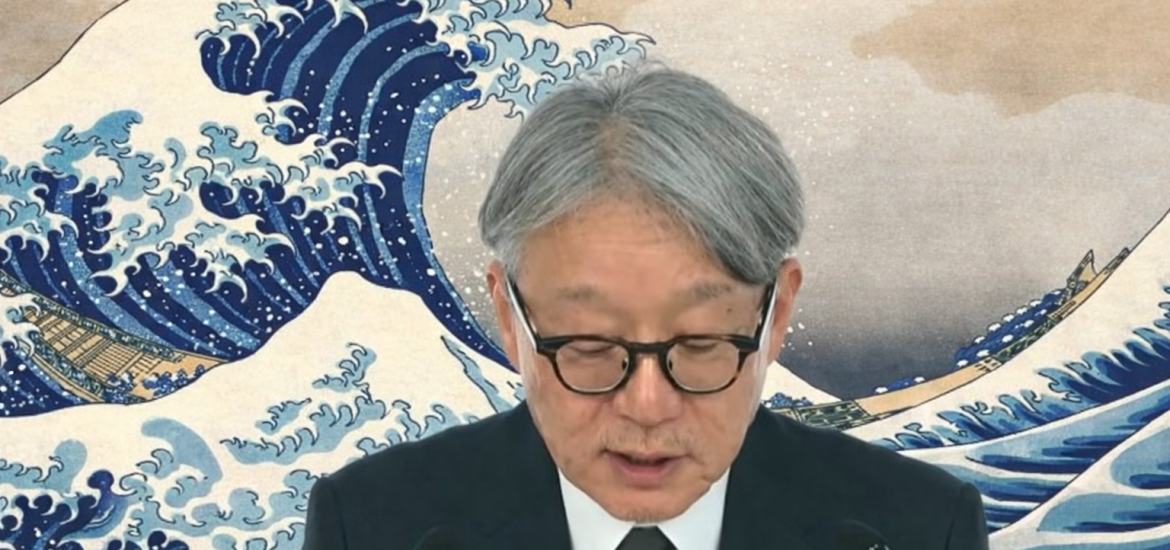

After the tsunami, it is known, the wave recedes. And after the financial tsunami that hit the car company led by Toshihiro Mibe (who even cut his salary to apologize to shareholders), Honda has decided to withdraw from South Korea.
Exactly one month ago, the Tokyo-based company’s executives, amid many bows, admitted that they need to deeply review their industrial strategies with costs amounting to 16.7 billion. An unexpected burden that has shifted the barometer for this year, namely the outlook for fiscal 2026, towards bad weather, factoring in a net loss instead of the previously estimated profit of 300 billion. And now the reorganization of the Japanese manufacturer is beginning to take shape.
WHY HONDA IS LEAVING SOUTH KOREA
It will start from a country very close to Japan. By 2026 Honda will dismantle its presence in South Korea, since it evidently can no longer withstand the competition from local players (Hyundai and Kia) and it would be pointless to stay given that the country is now targeted by brands from Beijing and surroundings, starting with Byd, which is expanding rapidly.
BYD HAS ARRIVED IN THE COUNTRY (TO DOMINATE IT)
The Chinese giant arrived during 2025 with the Atto 3 (Yuan Plus), Seal and Han models and quickly set up a network of 30 dealerships with the goal of transforming the Jeonju showroom into an integrated “one-stop” service center to offer complete facilities for sales, after-sales and maintenance. In short, Byd is in South Korea to stay. In fact, to dominate that market.
Since Honda Motor needs to hit the brakes on costs to recover from financial stumbles, the decision to withdraw from the country is not too surprising, although it must be considered that the experience in South Korea proved as brief as it was unsuccessful, given that the second largest Japanese automaker had only started its colonization in 2024.
HONDA’S NUMBERS AND OTHER MARKETS AT RISK
The numbers left little room for optimism. Last year, Honda sold less than 2,000 cars in the country, a decline of more than 20% on already tight figures from the previous year. Looking again at Southeast Asia, in the past year the Japanese manufacturer’s sales volumes also declined in Thailand, Malaysia and Indonesia, which could therefore represent the next areas to cut.
But what is most surprising is the loss of ground in China (where Honda has six plants): there retail sales fell to about 646,000 vehicles in 2025, a collapse of 60% compared to just five years earlier. For this reason Reuters claims that the Tokyo company is ready to halt operations at one of the two gasoline car production plants jointly operated with Guangzhou Automobile Group and a factory with Dongfeng Motor.




