


Stefano Pelaggi is a professor of International Relations at La Sapienza University of Rome and author, for Luiss University Press, of the essay The Suspended Island: Taiwan and the Balances of the World.
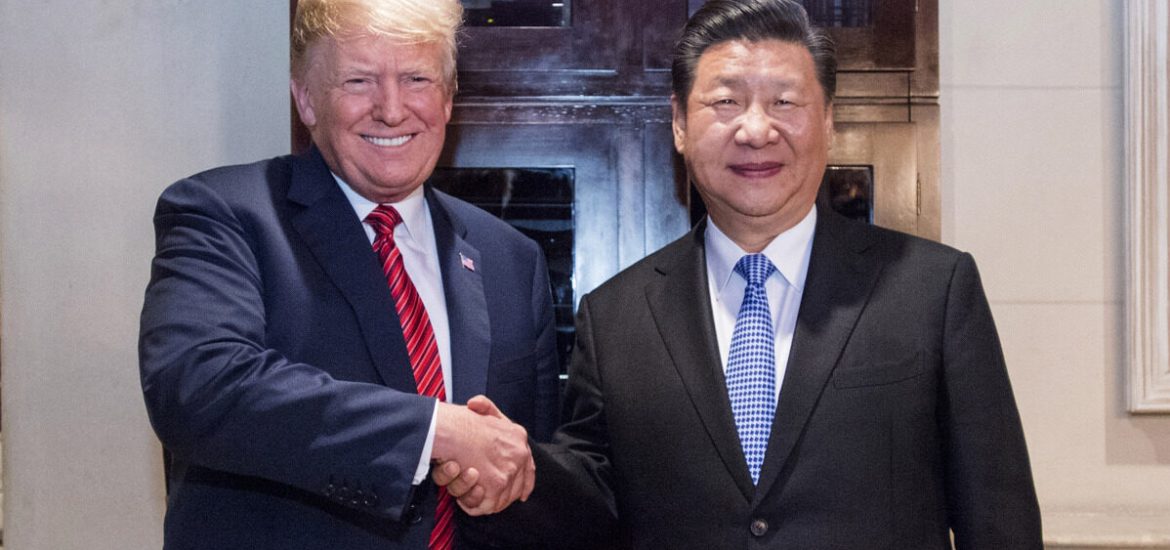
How significant is it that the two great powers — the declining hegemon and the rising one — are talking to each other amid geopolitical crises in which they always seem to be on opposing sides?
Historically, we find ourselves in uncharted territory. For the first time, two nuclear powers are also the two largest economies in the world and are deeply integrated with each other after thirty years of intensive globalization.
So this is not the Cold War. The United States and China are simultaneously competitors and economic partners, linked by supply chains, financial markets, and, above all, shared vulnerabilities. This makes dialogue not a favor granted to the adversary, but a condition of survival for both and, obviously, for everyone else.
The fact that China and the United States are talking, precisely while they are on opposing fronts — from Ukraine to the South China Sea, from Taiwan to the Middle East — is not a contradiction: it is precisely the point. Communication prevents catastrophe; history teaches us this. When channels close, every move becomes ambiguous. Every signal risks being read as an escalation.
There is also a new factor that raises the stakes: the technological revolution, particularly artificial intelligence, threatens to unpredictably alter the relative balance of capabilities between the two countries. That is, we do not know who will be ahead in five years.
This is not only an economic fact, but, as we have learned, above all a strategic one. In a world where nuclear deterrence combines with unprecedented economic interdependence and accelerated technological innovation, the value of dialogue is not measured in joint communiqués, but in wars that do not break out: that is, in the dialogue between the two global competitors.
How is the crisis of American hegemony viewed from Taiwan, and how much do the Taiwanese feel more insecure with Trump in the White House?
During my time in Taiwan, I perceived a change that polls clearly confirm: the narrative of American skepticism, the idea that Washington is no longer a reliable partner, is no longer marginal. It is taking root very quickly, and the numbers are impressive.
This year’s Brookings report shows that 40 percent of Taiwanese citizens today have a negative opinion of the United States. Last year, in 2024, it was just 24 percent.
But probably the most significant report is the American Portrait Survey conducted by Academia Sinica. We have also presented it here in Rome in previous years. The March 2025 edition finds that 60 percent no longer consider the United States a reliable partner, with an increase of almost 10 points in just one year. Over 40 percent of respondents consider it unlikely, or exclude, that the United States would intervene in the event of conflict in the Strait.
There are essentially three factors fueling this distrust.
The first is tariffs. Trump imposed tariffs that were considered deeply unfair by the vast majority of the Taiwanese population.
The second factor is Trump himself. 57 percent of the population considers the United States less reliable under his administration, and the idea of a sort of bullying practiced by the U.S. president toward Taiwan is increasingly deeply rooted.
The third factor is semiconductors. The TSMC issue, the decision to build plants in Arizona, is read by Taiwanese citizens as the result of American pressure.
But above all, it is the age demographic that worries the most: the younger population maintains a rate of skepticism toward the U.S. ally even higher than the middle classes and older groups.
China moves with great caution internationally and does not seem interested in proposing a new international order alternative to the American one, but rather in bending its rules to its advantage. Is this an effective strategy?
China presents itself as a new kind of power. A power unlike any previous hegemonic transitions. It has enormous material capacities — economic, infrastructural, and military — but lacks a corresponding normative leadership.
It is a structurally influential power, but normatively incoherent. It does not operate through setting rules or spreading a universal ideology, as the United States did in 1945 or, we might think, the Soviet Union throughout the postwar period. Instead, it acts through what we can call an infrastructural tangle: Belt and Road Initiative, submarine cables, digital platforms, dominance over critical materials.
And it does so through calculated strategic ambiguity. This stance has a name: it is the new order in the age of disorder.
For the Chinese leadership, the current world is not chaos to be regulated, but a jungle where the rules are already broken. And it is precisely for this reason that China feels legitimized to act with greater confidence, from Iran to the Pacific, while Europe appears, especially in Beijing’s narrative, paralyzed by its own crises.
Is it an effective strategy? Certainly, in the short term, yes. China gains influence without bearing the costs of hegemony. It does not have to guarantee security to all, does not have to support costly institutions, and does not have to defend universal principles.
But there are structural limits, and this is where the strategy probably shows its weaknesses. A power lacking normative coherence struggles to build stable coalitions. Other states use it, but do not follow it. Strategic ambiguity, which today is an advantage, becomes a cost when it is necessary to mobilize allies in a crisis.
You cannot lead the world only with infrastructure and contracts: a vision that others want to share is needed. And here China, for now, offers nothing comparable to what the United States offered, and still offers, after World War II.
The real question, then, is not whether this strategy works today, because it is working. The question is whether it will hold when the American order enters a true crisis. At that point, bending the rules will no longer be enough: new ones will have to be written. And it is by no means certain that Beijing, accustomed to operating in ambiguity, is ready for that leap.
(Excerpt from Appunti)




