
Peacekeeping missions are declining worldwide.
The number of military personnel deployed in multilateral peacekeeping operations fell in 2025 to the lowest level in the last twenty-five years. The alarm was raised by the Stockholm International Peace Research Institute (Sipri), which states that geopolitical tensions, United Nations funding crises, and divisions among major powers are jeopardizing the sustainability of peace missions.
The Swedish think tank’s report also highlights the growing use of regional coalitions and ad hoc agreements, while the UN’s role in conflict management appears increasingly diminished.
According to Sipri, multilateral conflict management and peace operations are under “severe pressure.” Russia’s involvement in conflicts in Africa is damaging security governance in the region, the United States under Donald Trump’s presidency is undermining multilateralism, and China and Europe are reluctant or unable to take on the task of supporting the multilateral system, the Stockholm think tank stated.
All the details.
SIPRI: PEACEKEEPING TROOP NUMBERS AT LOWEST SINCE 2000
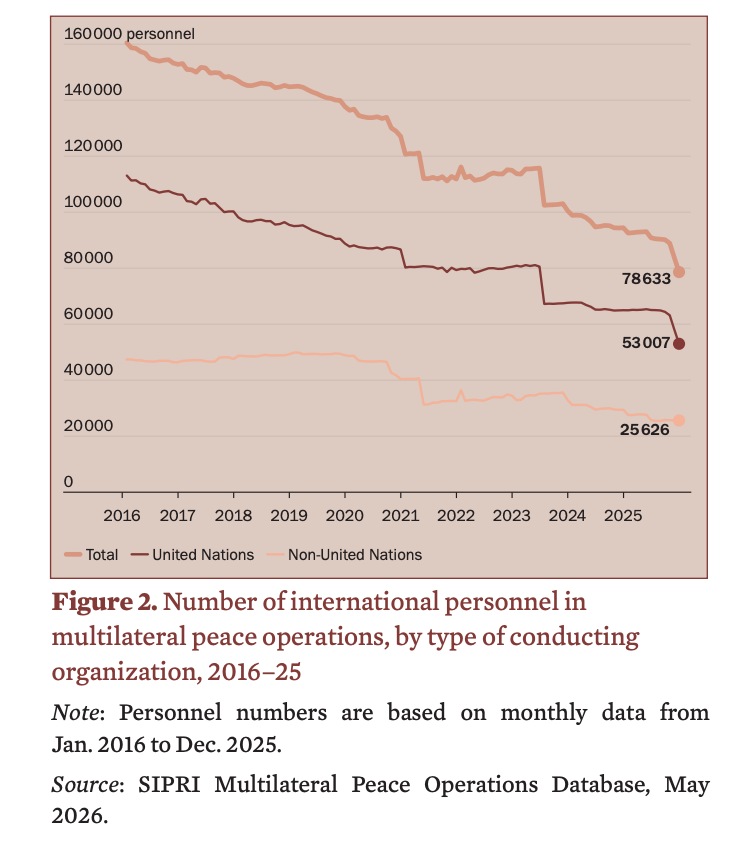
According to the Sipri report, as of December 31, 2025, 78,633 international military personnel were engaged in multilateral peace operations, a 17% decrease compared to the previous year. This is the lowest level at least since 2000 and a 49% reduction compared to 2016.
ACTIVE MISSIONS IN 2025
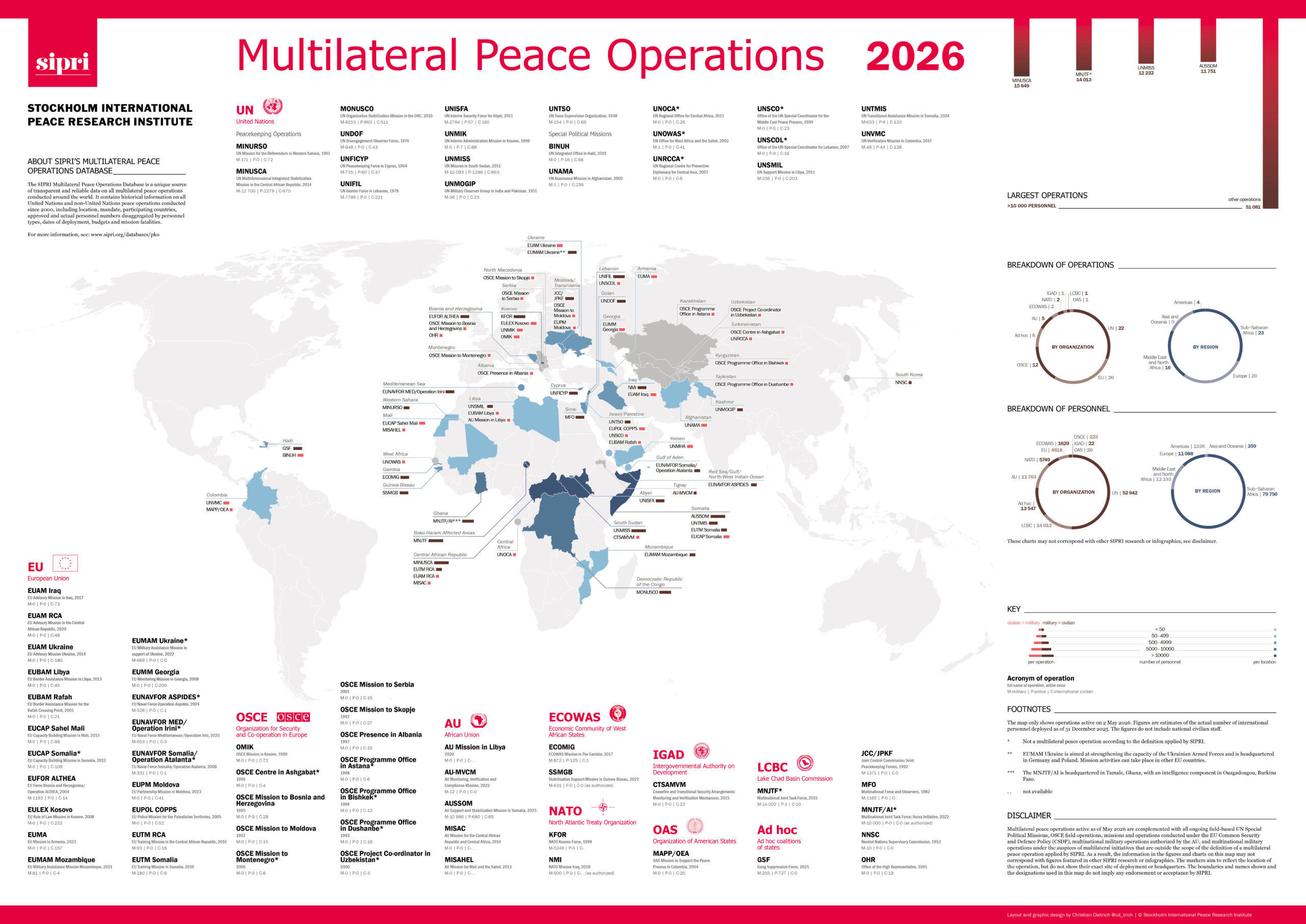
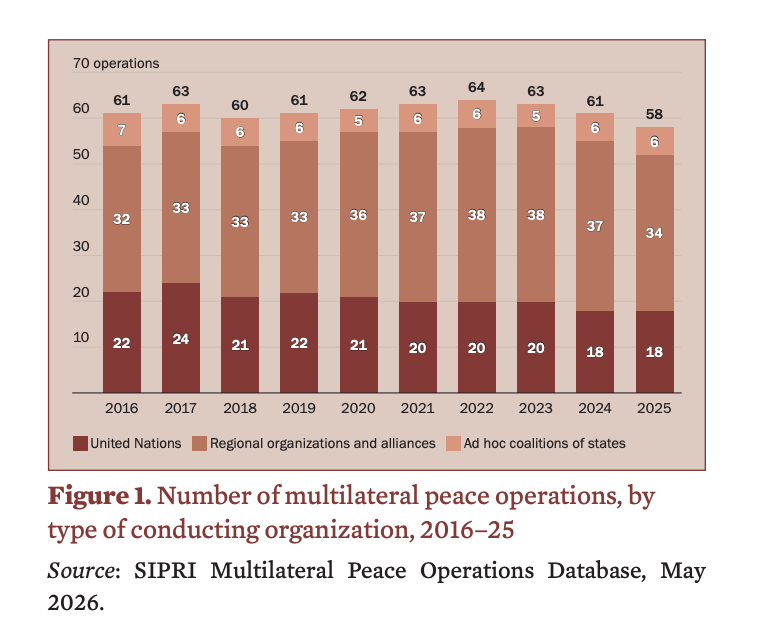
In 2025, 58 multilateral peace operations were active in 34 countries or territories, three fewer than in 2024. Sub-Saharan Africa and Europe each hosted 18 missions, followed by the Middle East and North Africa with 14 operations. Nearly three-quarters of the personnel deployed were concentrated in just five missions, four of which were in sub-Saharan Africa.
According to the Stockholm think tank, sub-Saharan Africa hosted 70% of the personnel deployed in peace missions, followed by the Middle East and North Africa with 15%, and Europe with 12%. The two largest multilateral operations last year were the United Nations Multidimensional Integrated Stabilization Mission in the Central African Republic (Minusca) and the United Nations Mission in South Sudan (Unmiss).
THE UNITED NATIONS FUNDING CRISIS
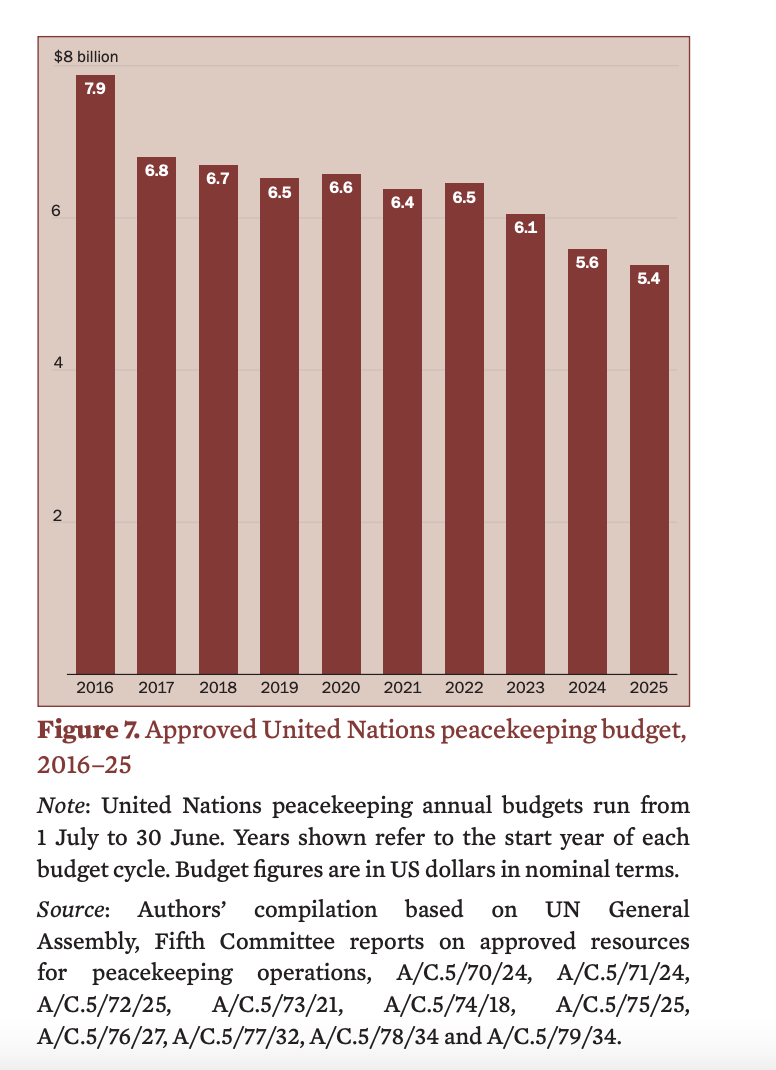
The downsizing of missions is mainly due to the financial crisis affecting the United Nations peacekeeping system.
In July 2025, UN peacekeeping operations faced a deficit of 2 billion dollars, equal to over 35% of their total budget of 5.6 billion dollars for the 2024-2025 biennium.
According to the report, personnel cuts affected several missions and contributed to the overall reduction of international presence in crisis areas.
SIPRI’S CONCERNS
“If things continue on this path, we could witness a dramatic weakening of multilateral conflict management and the near-total marginalization of institutions like the United Nations, due to a combination of financial, political, and geopolitical factors,” said Jaïr van der Lijn, director of the peace operations and conflict management program at Sipri. “The likely outcome will be an increase in conflicts, which will probably have an even more severe impact on civilian populations, as states abandon long-established norms.”
WASHINGTON’S ROLE
The report also highlights that in 2025 Washington took “significant actions” to withdraw, reduce funding, or challenge various United Nations bodies.
Under Donald Trump’s presidency, the United States drastically cut its aid programs and sought to scale back its commitments to international organizations and institutions such as the United Nations and the WHO, including attempts to end peace missions like the United Nations Interim Force in Lebanon (Unifil).
THE UNIFIL CASE AND DIVISIONS IN THE SECURITY COUNCIL
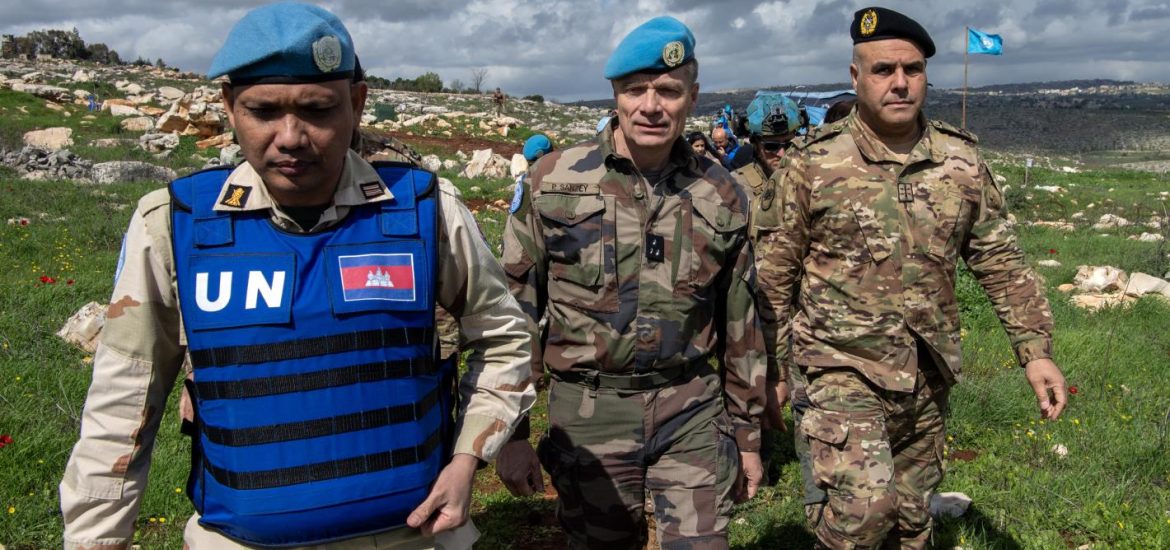
For example, Sipri explains in its report, despite frequent violations of the 2024 ceasefire agreement between Israel and Lebanon, the United States requested the termination of the United Nations Interim Force in Lebanon (Unifil) during negotiations for the mandate renewal in August 2025. In a compromise move, the Security Council voted to renew the mission for the last time until December 2026.
According to Sipri, the funding cuts and difficulties in reaching an agreement on Unifil’s closure “indicate an increasingly marginal role for the United Nations in conflict management.”
LIMITS OF REGIONALLY-LED MISSIONS
While remaining the main organizer of peace operations with 18 missions and 67% of deployed personnel, the United Nations has been joined by a growing number of operations led by regional organizations, which totaled 34 missions in 2025.
Although no new UN-led peacekeeping operations have been established since 2014, regional organizations have launched several. However, developments in 2025 highlighted the limits of regionally-led missions, the Swedish think tank further notes.
Like the United Nations, regional organizations such as the African Union, the Economic Community of West African States (Ecowas), and the Organization for Security and Co-operation in Europe (OSCE) have had to face underfunding and decision-making deadlocks on peace operations, for example in Sudan and Ukraine, due to geopolitical rivalries.
“Regional organizations lack fundamental capacities for integrated and effective peacebuilding, and are also afflicted by funding shortages and an inability to reach agreements,” explained Claudia Pfeifer Cruz, senior researcher of the peace operations and conflict management program. “With the progressive downsizing of UN-led conflict management, a growing vacuum is being created that alternative models are unable to fill.”