


There is a peculiarity that stands out even before the numbers: Space Exploration Technologies Corp. arrives at the SEC with an industrial code for IT services, not aerospace. This is more than a formality. It tells the market that SpaceX does not want to be seen only as the company of Falcon and Starship. It wants to be bought as an integrated platform: launches, satellite broadband, social networks, generative models, data centers and – in the most ambitious version – orbital computing.
The preliminary prospectus of May 20, 2026 is therefore a dual document. It shows the real economic engine, Starlink, and builds a much more aggressive narrative, shifted towards artificial intelligence and assets that today look more like an option than a mature income statement. The result is an unusual financial object: a public company with the margins of a satellite utility, the capital hunger of a hyperscaler, and the governance of a personal empire.
The consolidated numbers explain the tension. In 2025 revenues reach $18.7 billion, but the net loss is $4.9 billion. Capex, $20.7 billion, exceeds revenue. In the first quarter of 2026 alone, the company produces $4.7 billion in revenue and a net loss of $4.3 billion; in the same period it invests over $10 billion. This is not the profile of a company going public to monetize maturity. It is the profile of a machine that needs capital to fuel a still vertical technology curve.
The paradox is that the most solid part is not the most told. Starlink, in the Connectivity segment, generates $11.4 billion in 2025 revenues, $4.4 billion in operating profit, and $7.2 billion in adjusted EBITDA. It is the cash engine. It has 10.3 million subscribers in 164 countries as of March 31, 2026 and a constellation of over 9,600 satellites. But even here the anomaly is evident: the monthly ARPU falls from $99 in 2023 to $81 in 2025, down to $66 in the first quarter of 2026. Growth, yes. But growth also bought with lower prices.
This data is central. Starlink can continue to expand revenues if the customer base grows faster than the ARPU decline. But the prospectus suggests an uncomfortable question: is the market valuing a premium network or a network that progressively becomes more mass market, thus more exposed to competitive and regulatory pressure? The decline in average revenue is not an accounting detail. It is the price paid to gain scale before other constellations come online.
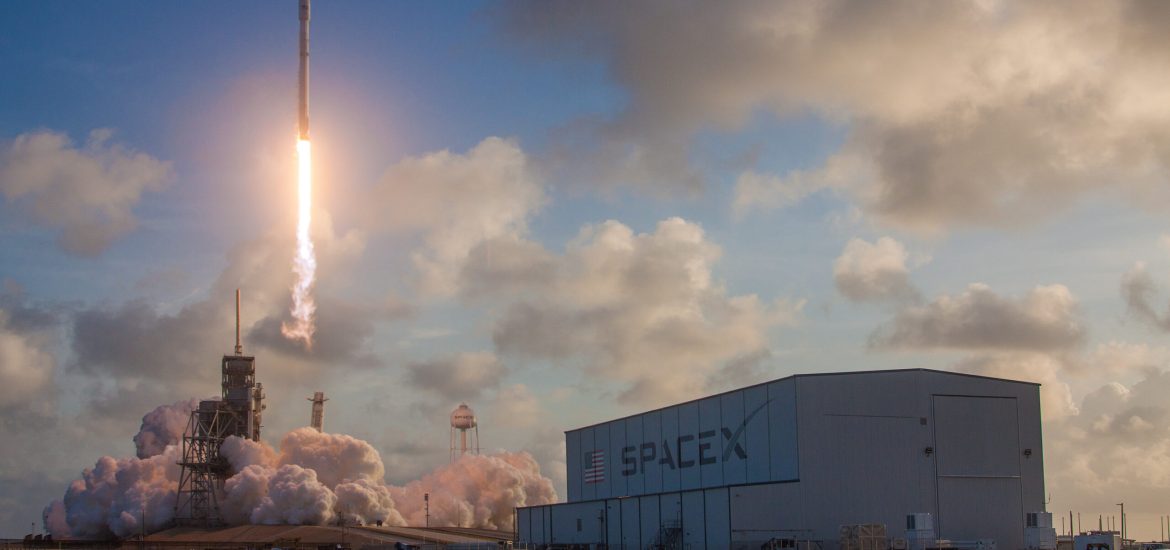
The Space segment remains impressive operationally. In 2025 SpaceX carries out 170 launches and puts 2,213 tons into orbit, after 98 launches in 2023 and 138 in 2024. Yet, inside the income statement, the launch is no longer the absolute protagonist. The segment produces $4.1 billion in revenue and $653 million in adjusted EBITDA, but also an operating loss, weighed down by Starship development. In other words: the rocket is the group’s logistics factory; Starlink is the cash; AI is the bet.
And this is where the filing becomes bizarre economically. SpaceX has absorbed xAI, which had already absorbed X. Thus a company born to lower the cost of access to space presents itself to the market with an AI segment with $3.2 billion in 2025 revenues, but with $6.4 billion in operating loss and $12.7 billion in capex. In the first quarter of 2026 AI capex alone is $7.7 billion. It is a change of nature: no longer just reusable hardware and satellites, but GPUs, electric power, data centers, models, users, content, distribution.
The line that best captures the leap is the agreement with Anthropic. The filing indicates a cloud services contract worth $1.25 billion per month until May 2029 for capacity on Colossus and Colossus II, with an initial discounted rate phase and a 90-day exit clause. Economically it is huge; strategically it is curious: an AI competitor buys computing capacity from the Musk ecosystem. Financially it is fragile: hard and very expensive assets are built, but a significant share of potential revenue can disappear with three months’ notice.
Then there is governance. Class A shares have one vote, Class B ten, Class C none except legal obligations. The structure is clear: the public is offered economics, not control. Musk remains the industrial and political pivot of the operation. For some investors it is the prize: the ability to force impossible industries. For others it is the risk: decision concentration, related parties, gigantic incentives, dependence on a founder who is both an asset and a volatility factor.
The real anomaly of the prospectus, therefore, is not that SpaceX loses money while growing. This, in an investment phase, can be normal. The anomaly is the mix: an operational monopoly on launches, a profitable satellite network, a social network, an AI lab and a data center plan aiming to transform compute into an almost energy-like infrastructure. The market will have to decide whether to apply multiples from telecom, defense, software, cloud or venture capital. No category alone suffices.
The final point is simple: buying SpaceX, if and when the stock arrives on Nasdaq, will not mean buying a space company. It will mean buying a thesis. That the marginal cost of launch continues to fall; that Starlink holds up even with lower ARPU; that AI justifies capex exceeding revenues; that demand for compute is desperate enough to fill terrestrial and, tomorrow, orbital data centers; that Musk’s control is more value than risk. It is a grand story. But precisely for this it requires the least spectacular thing of all: economic discipline.




