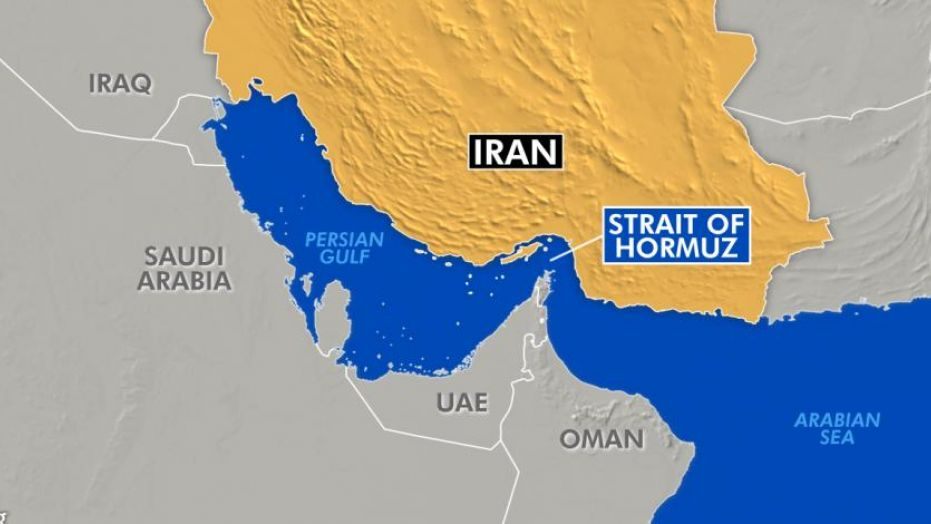

Tehran has announced a significant expansion of its military control area around the Strait of Hormuz, extending even into the territorial waters of Oman and the United Arab Emirates and establishing the new “Persian Gulf Strait Authority.”
At the same time, negotiations are underway with Muscat to introduce a permanent toll system on maritime traffic. A move that Washington considers unacceptable and potentially fatal to any diplomatic agreement.
HERE ARE IRAN’S MOVES ON HORMUZ
As reported by the BBC, Iran has released a map through the newly created “Persian Gulf Strait Authority” claiming military oversight over more than 22,000 square kilometers around the strait.
The area extends beyond national borders, reaching into the territorial waters of Oman and the United Arab Emirates.
Tehran has established that every transit now requires coordination and explicit authorization from the new authority.
The Emirates’ reaction was immediate and harsh: the president’s diplomatic advisor, Anwar Gargash, dismissed Iran’s claims as “fragments of dreams” born from an “obvious military defeat” that Tehran is trying to turn into a new reality.
THE TOLL SYSTEM STUDIED BY IRAN WITH OMAN
According to Bloomberg, Iran is discussing with Oman the creation of a permanent toll mechanism to formalize its control over traffic.
Iran’s ambassador to France, Mohammad Amin-Nejad, explained that security and navigation management involve costs that “those who benefit from this traffic must contribute to supporting.”
The New York Times confirms the existence of these talks between Tehran and Muscat, highlighting that they are trying to define a “service fee” formula rather than a pure toll, in an attempt to make it more acceptable internationally.
Oman, a longtime U.S. ally, initially rejected the idea but is now considering a share of the revenues, offering its influence over Gulf countries and Washington.
THE AMERICAN OUTBURSTS
Secretary of State Marco Rubio was categorical, as reported by the Times of Israel: a toll system would make any diplomatic deal with Iran “unfeasible.” “It is unacceptable, it is a threat to the world and it is completely illegal,” Rubio declared.
Trump also strongly rejected the idea. “We want it to be open, we want it to be free, we don’t want tolls,” reiterated the U.S. president, emphasizing that the Strait of Hormuz is an international waterway.
The New York Times notes, however, that the White House chief has oscillated between threats and unusual proposals, even suggesting a joint venture between the United States and Iran to manage the strait.
REACTIONS IN THE GULF
The United Arab Emirates and Saudi Arabia fear a dangerous precedent.
The president of the main Emirati oil company, Sultan Al Jaber, warned that accepting a single country “holding hostage the world’s most important waterway would mean the end of freedom of navigation as we know it.”
While Oman attempts mediation, Pakistani Chief of Staff Asim Munir is expected in Tehran to facilitate a U.S.-Iran dialogue. The two sides continue to exchange indirect messages about a possible peace agreement, but the issue of the Strait of Hormuz risks becoming the decisive obstacle.