


The expression “energy diplomacy” highlights the goals and merits of this “geopolitics of action,” aimed at seizing opportunities and prospects useful to the national interest, compared to international diplomacy understood as ceremonial minuet or ideological chatter. Giorgia Meloni’s missions abroad have perhaps been the main leitmotif of her presidency and have succeeded in clearing the premier and government from prejudice against their populist origins and in accrediting Italian stability as a global reference, also with respect to financial markets, a nice advantage for a heavily indebted country like ours.
In short, Meloni is not Orban, even if she has maintained cordial and unrenounced relations and if she is flanked by a vice president who shares some positions of the former Hungarian premier, she cannot be reduced to a sovereigntist and the antifascist rhetoric of the opposition is an annoying but ineffective background noise. However, Meloni is neither Macron nor Merz nor Starmer nor Sanchez; her governmental solidity, although shaken by the referendum and some mishaps, is incomparable with the substantial instability of France, Germany, the UK, and Spain (we sum up very different situations, but united by weaknesses and strains in the relationship between leaderships and their respective “real countries”).
In this journey, starting from Garbatella and Colle Oppio to cover much of the globe, Meloni, especially in recent months, has touched some stages of economic-energy diplomacy, which has become the axis of bilateral relations after global crises related to natural resources, rare earths, hydrocarbons, navigability, and trade. Venezuela and Cuba, Greenland and the Arctic, Indo-Pacific and Africa, Iran and Russia ultimately fall within this “great money game,” to put it in the words of the Trilussa Lullaby.
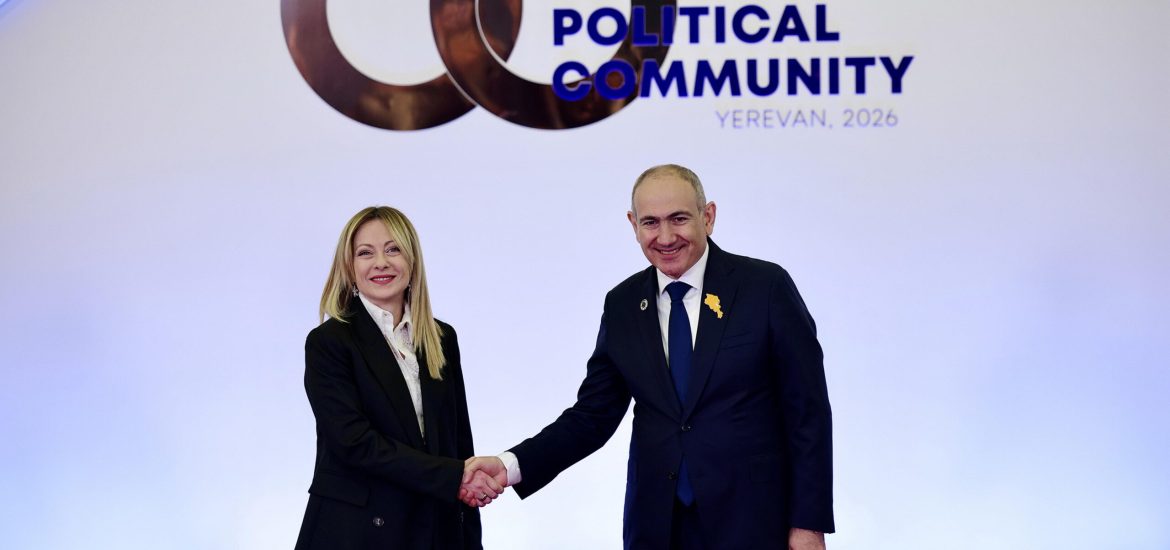
That is why alongside the major summits – like the CPE in Yerevan, where bilaterals intertwine (including the Italy-Switzerland one on payment of bills for the treatment of burn and poisoning victims from Crans Montana), the inevitably Trump-centric geopolitical statements, the “when you see Rubio” (a relevant curiosity after the Donald-style attacks on Prevost and the premier and the announcements of US disengagement) – less flash-targeted stops such as Algeria, Oman, or Azerbaijan with the Meloni-Aliyev bilateral just yesterday become pivotal. Because they are fundamental energy suppliers and/or “bridge” countries that maintain broad and moderate relations useful for hoped-for tables to sit at to calm things down. Because they are countries very rich in something but scarce in others that we possess – imagination, creativity, culture, entrepreneurial genius, artisanal experience, techno-scientific know-how – and taking from them can accompany giving something of ours.
These are nations that often do not correspond to the splendid image of the shining Western liberal-parliamentary democracies, but rather moderate familial autocracies with decided but cautious reform processes. A reflection of this aspect was seen yesterday, when President Aliyev connected to the CPE, a very positive fact, but accusing the European Parliament of sabotaging the peace process for Nagorno-Karabakh with resolutions on human rights violations by Azerbaijan against Armenian separatists.
Considering the poor performance that creators, producers, and exporters of democracy and freedom are giving – US, EU and member states, international organizations from the UN to the ECB, etc. – even on this aspect a compromise is a tactical strength to reduce the uncertainty that undermines, with supranational strategies, the life of those who must refuel, grocery shop, invest savings. In this sense, the commitment of Meloni and Aliyev to “increase volumes” of the already significant energy supplies is strategic. To the politics of action, which we discuss to lament the abstractness of Italian polarizations, a diplomacy of action is needed.




