

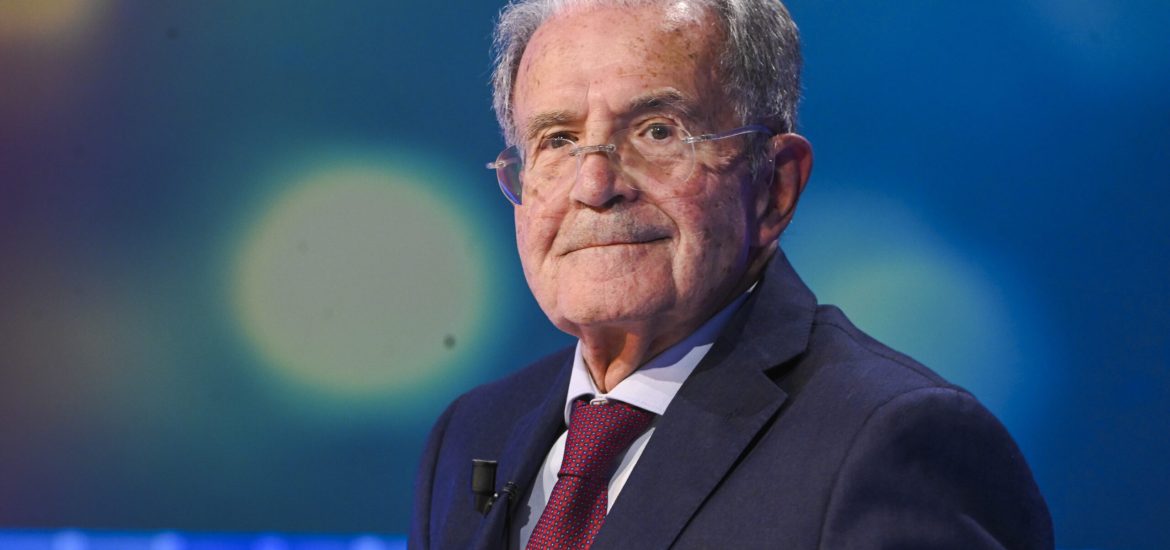

April 21, that is tomorrow, will not only be the 2,769th birthday of Rome, founded in 743 BC. It will also be – but especially for Romano Prodi and still friends and admirers – the 30th anniversary, exactly, of the electoral victory of the Ulivo, symbol of the first center-left coalition of the second Republic, over Silvio Berlusconi’s center-right. Who had won two years earlier but quickly lost his majority due to Umberto Bossi’s departure.
Winning under those conditions of division and collapse of the opposing camp was frankly not difficult. Although Romano Prodi, crowned head of the alternative to Berlusconi by Massimo D’Alema, tried yesterday to make readers of La Stampa believe, in a self-celebratory interview, that the feat was almost desperate. At the beginning, he felt his was a simple “little boat,” which gradually became during the electoral campaign “a fleet,” but always of little boats. And the victory came, according to him, due to a wave of emotions and participation spreading among the people. A wave that today – the former premier lamented – is missing among those aspiring to be the alternative to Giorgia Meloni’s center-right, even after the referendum victory against the constitutional reform of the judiciary, because there is still no trace of a common program. Instead, there are too many aspiring leaders for the coalition.
All the ambitious ones – Prodi practically said and warned – should do what he did, that is, put together a program to motivate voters on concrete things to do or achieve, and they too can aspire to win.
In the euphoria of recalling his adventure, also visually supported by La Stampa, Prodi forgot to give due importance to a circumstance common to his two experiences at Palazzo Chigi: in 1996, thirty years ago, and in 2006, ten years later, with the Union replacing the somewhat withered Ulivo. The circumstance is the short duration of those two governments. The first of which, as Prodi’s interviewer Fabio Martini recalled, although composed of ministers including “two former premiers, a former governor of the Bank of Italy, two future Heads of State,” fell in a year and a half, replaced by three other short-lived governments chaired twice by D’Alema and once by Giuliano Amato thanks to the help of Francesco Cossiga and some defectors from the center-right.
That first Prodi government fell not because it had governed badly but because Fausto Bertinotti withdrew support after losing votes along the way or, worse, fearing to lose more. Why couldn’t the same happen to Meloni’s possible successor heading a coalition of parties all essential for the majority’s stability?
The fall of the second Prodi government, in 2008, was caused by Clemente Mastella, formerly of the center-right, resigning as Minister of Justice after he and his entire family came under investigation by the Public Prosecutor’s Office of Santa Maria Capua Vetere. But also because the birth of the PD, into which post-communists, post-Christian Democrats, and various “majority”-oriented factions merged, as the first secretary Walter Veltroni said, entailed the risk that in the next elections Mastella’s 500,000 votes in Campania would no longer be decisive for the majority. It was another crisis due to non-programmatic but temperamental failures. Always possible, even today and tomorrow.




