

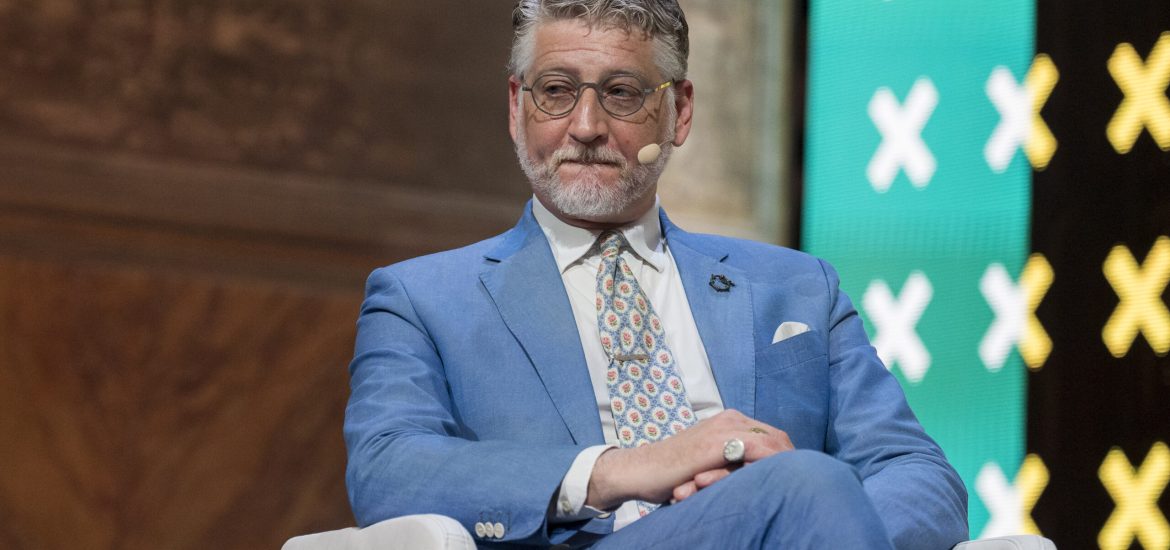

“Voices and journalistic reconstructions… unfounded reconstructions… aimed at questioning the credibility of the Executive’s actions… alleged differences of opinion between Minister Giuli, the Prime Minister, and other Government members.” This is how the sources from Palazzo Chigi read after the meeting between Giorgia Meloni and Alessandro Giuli. There is some truth; the affair has been exaggerated to ride the hugely overstated difficulty of the executive after the referendum, but not everything, because the MIC is indeed the source of many ailments. Almost more than Adolfo Urso’s Mimit, about which deep dissatisfaction would be felt, the MIM, where Beppe Valditara blunders between Manzoni and Mattarella (Piersanti), the Interior Ministry, where Matteo Piantedosi maintained ambiguous relations with an ambitious journalist, and the Foreign Ministry, where Antonio Tajani’s verbal and expressive naiveties delight social media.
We had exemplified the difficulties of this ministry by citing Biennale and Fenice, while the dismissal of Emanuele Merlino would derive from the lack of funding for the film on Giulio Regeni, confirmed by the collaborator without informing the minister, relying on the denial already opposed when Gennaro Sangiuliano was in office. He, along with Daniela Santanchè, remains the only minister changed in almost four years (Raffaele Fitto was replaced due to his promotion to European Commissioner). The other one removed by Giuli, Elena Proietti, would instead be guilty of a missed flight boarding, which she justified for health reasons, of course.
Exaggerated but not unfounded, in short, is the malevolent flood overwhelming the Giuli crisis. Under the sky of Culture, great confusion but not exactly an excellent situation. The prevailing thesis is a fratricidal war within Brothers of Italy, with the minister who would have accepted the post only out of friendship and would be happy to leave it, joining the ranks of misunderstood intellectuals. In parallel, the chaos is taken by many commentators as proof of the conservative government’s incapacity and the coarseness of the right, which would therefore be subordinate to progressive hegemony due to obvious inferiority.
The cultural specter fits into the broader issue of the right’s ineptitude and inadequacy. Incapable government and coarse right, trivializing security in a pan-penal law & order approach, nurturing the police-movie myth, preferring crime news to geopolitics, all repression, no prevention, and black patrols against immigrants and marginalized people. They simplify because they do not grasp the complexity of reality. This is the leftist reading. Oh dear, a certain impression of narrowness arises, for example when Francesco Giubilei, “the right-wing intellectual” scientific director of the National Alliance Foundation, says: “A dialogue workshop with the world of culture is needed.” But if compared with the giants of progressive thought dominating talk shows, the proportions rebalance.
The stale debate reignites as the cultural and media, hopefully not health, issue of hantavirus breaks out. How will the denialist right – no lockdowns, vaccines, masks – behave if faced with epidemics, infections, and pathogenic vectors? For now, the word is left to a few statements from the Ministry of Health, the Institute, and the Higher Health Council, clear and simple concepts: very little contagious but very dangerous, the opposite of Covid. All that remains is to hope.




