

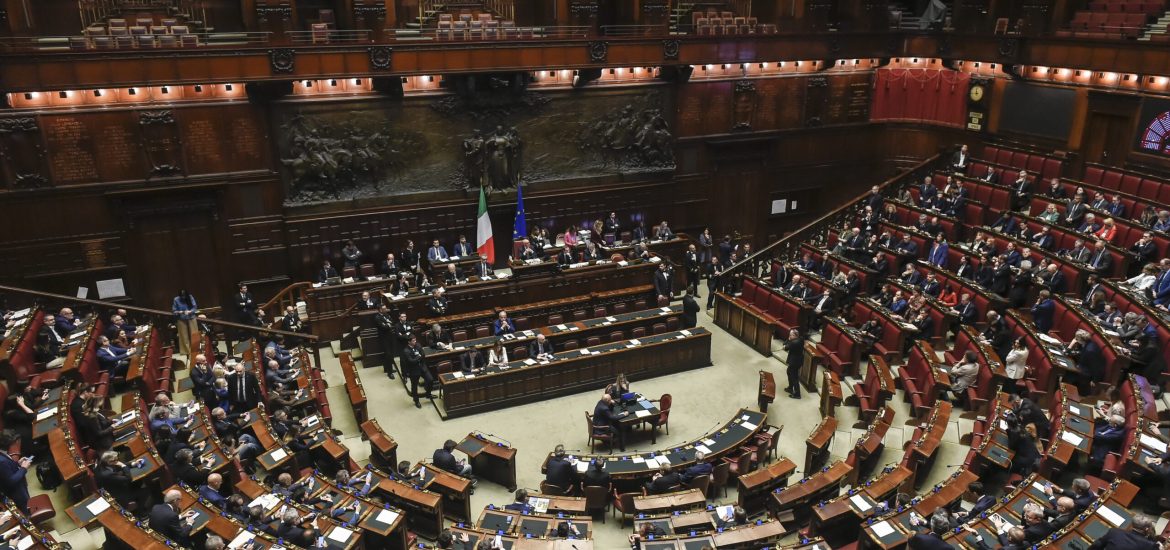

Parliamentary hearings are underway at the Chamber’s Constitutional Affairs Committee, a broad cycle of consultations involving about 70 experts to examine the electoral law proposals. It will continue throughout May, with the debate essentially revolving around the governability bonus, the proposal of 70 additional seats for those who exceed 40% of the votes, the runoff, and how to harmonize the electoral system and the premiership.
Last night Giancarlo Loquenzi, a competent, pragmatic, and liberal journalist, argued that the series of hearings with constitutionalists is ridiculous, as these topics are already overflowing with studies and essays in both paper and digital libraries. We already know everything. And no one will tackle the bull by the horns, no one is interested in delving into deeper and more complex issues: the mandate constraint that would prevent parliamentarians from switching sides, the bicameralism that unnecessarily slows down and complicates legislative processes, the separation between legislative and executive powers that leadership has made obsolete. The world, at least the one we live in, demands swift and effective decision-making processes, has shelved Montesquieu’s separation of powers, and democracies, the so-called lesser evil, need vigorous updates to avoid spilling over into autocracies: disturbing signs in this regard are not lacking.
But no, we will witness exhausting parochial quarrels. Polls say that the center-right and current opposition are substantially balanced, the infamous deadlock awaits us and, therefore, it would become essential to change even just a small rule, allowing with a codicil the winner, even by a single vote, to have a solid majority and govern peacefully for the entire legislature. A frantic debate conditioned by the Vannacci unknown on the right, the moderate spectrum in the center including Lupi, Calenda, and Renzi, today divided on opposing fronts, the unresolved debate on how to transform the PD and M5S into a broad field, primaries or no primaries, the unknown of Forza Italia… We have summarized brutally but, we believe, correctly.
The best electoral law is the most convenient one, as is known. Every party and even the individual member make calculations hypothesizing different regulatory scenarios and simply support what offers them the greatest probability of confirming their seat and power. This is not a simplification from a bar or social media, it is the inevitable attitude of politics, since even the most intellectually honest and well-intentioned formation and person must tactically prioritize their own success over common interest objectives: the former is the logical premise to achieve the latter.
This politics we have just described, in short, is not a science, lamented decades ago the good old Domenico Fisichella (who is not among the Chamber’s hearing participants). It is a practice, a laborious succession and interlocking of rules that determine the behavior of the ruling classes and the results they achieve for all of us. Very poor results, the gap with electoral promises and commitments made to citizens is always vast. Even in the case of decent governments like the current one which, for example, has allowed Italy good performances in health, exports, public hiring, contract renewals, and above all in the spread, very important for a country indebted like ours. But, wait a moment: does Italy really achieve these performances thanks to Giorgia Meloni and her ministers or, conversely, do they benefit from the capabilities of the country system and us working citizens? And if the second interpretation were true, however, then many Italian limits, starting with the debt, are our fault, the common people’s, and not of those who lead and govern us?
Be careful, here the question becomes even more vexed and concerns not the rules of politics but its usefulness, its deep meaning. It too, it seems, has been surpassed by financial, economic, and technological powers far superior to those of democratically regulated states.




