


In one of the most contested and polarized elections of recent decades, Colombia has turned the page.
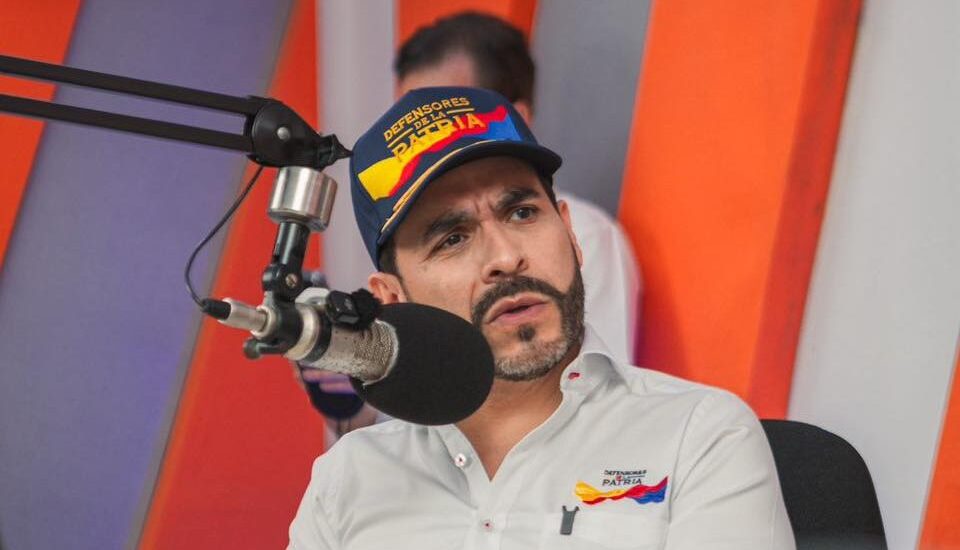
Abelardo De La Espriella, a criminal lawyer with no political experience, right-wing populist and staunch supporter of Donald Trump, has won the presidency by a very narrow margin, ending the leftist experience led by Gustavo Petro.
As reported by the New York Times, with over 99% of the ballots counted, De La Espriella obtained 49.7% of the votes against 48.7% for Iván Cepeda, the candidate representing continuity with the outgoing government.
A narrow but clear victory in political terms: Colombia returns to a conservative line and fully joins the large right-wing wave sweeping Latin America in this historical phase.
Meanwhile, Petro and Cepeda have challenged the preliminary runoff counts, requesting more thorough verifications, but the outcome now appears clear. A nation divided in half prepares for a new era, between hopes for security and growth on one side and fears of authoritarian drift on the other.
Runoff results in the Colombian elections
According to preliminary data released by the national registry and reported by the BBC, De La Espriella prevailed by just over 250,000 votes over Iván Cepeda. This is one of the narrowest margins in Colombian history with the two-round system, accompanied by record turnout.
De La Espriella immediately claimed victory speaking of a “new era” for the country and promising to govern for all Colombians, including those who did not choose him.
He did so from the stage in Barranquilla, his adopted city on the Caribbean coast, always protected by bulletproof glass as throughout the electoral campaign.
“My government will be absolutely democratic and a guarantor of freedom and institutional order,” said De La Espriella, adding that he will be “president for all Colombians,” as reported by Deutsche Welle.
His challenger Cepeda acknowledged the indicative value of the quick count but announced appeals on thousands of polling stations, while President Petro spoke of possible irregularities, though calling for calm, as reported by the Guardian.
Who is Abelardo De La Espriella
A 47-year-old born in Bogotá but raised on the Caribbean coast, De La Espriella represents an unprecedented profile for Colombian politics.
As highlighted by the New York Times, he transformed from a stylish Miami lawyer, always in jacket and tie, into a populist who wears the national jersey and straw hats to speak directly to ordinary people. He chose an eloquent nickname: “El Tigre.”
A prominent criminal lawyer who obtained American citizenship in 2023, he built his reputation – and much of his fortune – defending very controversial clients: right-wing paramilitaries, figures linked to corruption and drug trafficking scandals, up to Alex Saab, a close collaborator of Maduro later charged in the United States. He has always maintained that he acted only in the exercise of his profession, choosing cases that gave him “vertigo.”
At the same time, he developed several entrepreneurial activities including real estate, a luxury fashion line called De La Espriella Style, and even a rum company.
He likes to appear in glossy videos singing covers of Frank Sinatra or Andrea Bocelli on private jets, or showing off luxury watches and cars.
Until a few months ago he was practically unknown to the general public. He announced his candidacy as an outsider, bypassing traditional power centers and relying entirely on social media and direct contact with people.
The choice of Vice President José Manuel Restrepo, a respected economist and former minister, reassured many moderate voters worried about his aggressive style.
The electoral campaign
De La Espriella’s campaign was explosive, modern, and highly media-driven. The New York Times describes it as a high-tension spectacle: AI-generated videos showing roaring tigers and digital flames paired with fierce attacks against the left.
The candidate promised to “gut” the opposition – a phrase later toned down as a metaphor – and openly called for the Trump administration’s intervention against his opponents.
With a style reminiscent of Nayib Bukele and Javier Milei, he rode a fiery nationalism, waving the flag, wearing the Colombia jersey, and adopting the slogan “Sign for the homeland!”. He put God, family, and order at the center, avoiding talking too much about his years in Florida.
He always marched wearing a bulletproof vest, denouncing the violence that also affected members of his staff, and turned rallies into real stadium-like events.
The electoral program
De La Espriella’s program revolves around two main pillars: security and economic recovery.
On security, he promises a radical change from Petro’s “total peace.” As Bloomberg points out, he wants to build ten mega-prisons in the jungle, launch large-scale military offensives against guerrillas and narcos, bomb their camps, and intensify cooperation with the United States to destroy coca plantations and trafficking routes. He intends to halt all negotiations with armed groups and return to a military force approach.
On the economic front, reports the Financial Times, he aims to drastically reduce the size of the state, by up to 40%, through cuts to unnecessary spending and fighting bureaucracy and clientelism.
He wants to reopen the country to fracking, lift the moratorium on new oil and mining concessions, lower taxes, and attract massive foreign investments.
He promises to manage the inherited public deficit with rigor, while maintaining some popular social measures introduced by Petro, such as the minimum wage increase.
On values, he intends to oppose what he calls “gender ideology” and put God and the traditional family at the center.
He has also spoken of reforming the healthcare system, considered worsened after the outgoing government’s attempts at nationalization.
All under the banner of a strategic alliance with the United States, the main commercial partner and ally in the fight against organized crime.
Reactions in the US
Donald Trump celebrated on Truth Social with a blunt “He Won, BIG!” and personally called De La Espriella to congratulate him.
Secretary of State Marco Rubio wrote on X that the Trump administration is ready to work closely with the new government to strengthen regional security, combat illegal immigration, and boost economic ties. “The best days for Colombia are ahead of us,” he added.
Continuity with the right-wing shift in Latin America
This victory does not come in isolation. As Reuters points out, it is part of a broad conservative and right-wing populist wave that has already brought leaders like Milei in Argentina, Bukele in El Salvador, Kast in Chile, and others in Honduras, Ecuador, and Costa Rica to power. Also in Peru, where vote counting is still ongoing, Keiko Fujimori appears favored.
Voters in these countries, tired of insecurity, economic problems, and disappointments from leftist governments, have chosen a firm hand, pragmatism, and alliances with Trump. Colombia thus aligns itself with this regional trend.
De La Espriella faces enormous challenges in a divided country, but the message from the polls is clear: after four years of leftist rule, many Colombians want order, security, and a prospect of concrete recovery.




