

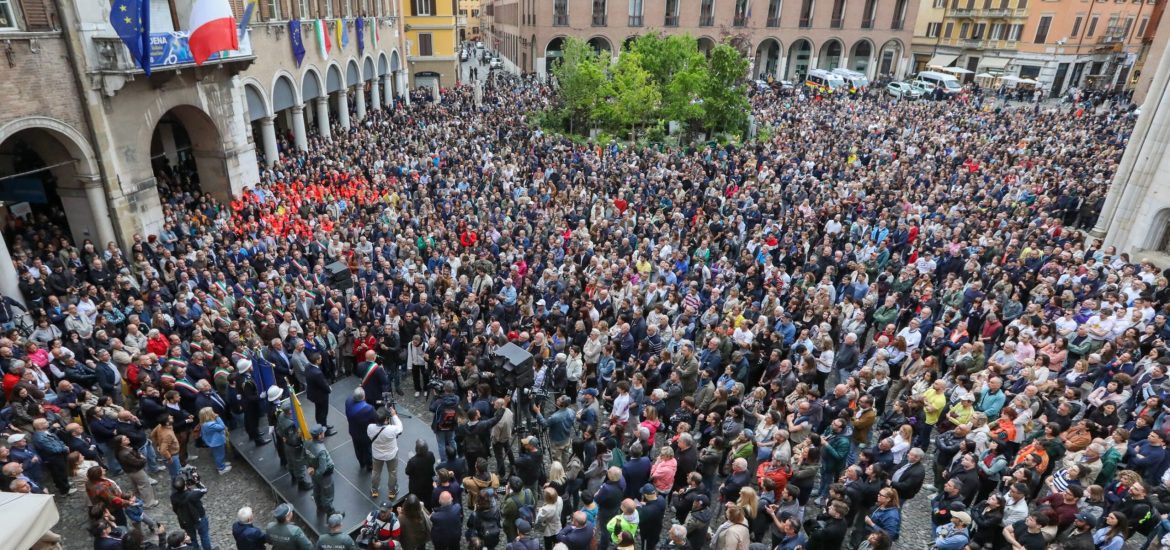

Let’s keep this in mind when we reduce Matteo Salvini’s remarks about revoking citizenship from foreigners who commit crimes to low-level populism (or Lega) and overwhelm him with criticism, even from the majority, to point out that foreigners also include people who intervened to stop the attacker in Modena. And that there are Italians without foreign ancestors who do horrible things but remain citizens.
We know a little more about our brain, but we still know very little. Images make it clear to us how, whatever we feel and do, everything boils down to chemical-physical mechanisms, activation of certain areas, neurons firing, synapses, connections… Everything is basically reduced to an organicist view, even emotions and irrationality that we once attributed to something else, to an undefined and metaphysical psyche. Also because in our cranial box at least two brains coexist, one atavistic and primordial, which decides instantly based on the prey-predator mechanism, and one calm and thoughtful that reasons before speaking, let alone acting.
The madness clearly behind the car launched against the crowd is not entirely distinct from the Muslim immigrant cultural world from which the unemployed graduate comes, born in Bergamo but the child of foreigners. A mix, his minimal bio, of academic integration and social isolation. Like that of the rescuers dubbed heroes, although much less than Luca who shook hands with Mattarella and Meloni in favor of cameras. Requests not from him, of course.
In extreme summary: those who lose their mind still remain in the world they know and, if they have to adopt a model to commit madness, they replicate it from what is around them, for example the attack with a car launched against the crowd. But also the stabbing, the violence seen a thousand times in virtual dimension, the easy sexual relationship with the always consenting and lustful woman, the murder of the now unbearable spouse that we have heard reported a thousand times in the news. It is called imitation but it is not a simple copy, it is a narrative and cultural scenario where we place a crash, a crack, a beep of our brain.
This applies to Modena, to the maranza and to the hikikomori, just to mention two youth deviations where Italians of various generations mix in a disheartening melting pot. But let’s also reconsider the qualification of hero, a badge attributed for many more or less well-meaning reasons, because the instinct to throw oneself against a man to prevent him from causing harm can trigger in anyone, unearthing from laziness and caution an instinct fortunately survived and aimed at saving the group, not just oneself. And so it works both for those who speak perfect Italian and for those who barely manage it, when they are complimented and the always diligent, profound journalists ask “why”.
This applies to Modena, applies to the Maldives, extreme sports, the experts who die more than novices when they venture into something risky. The brain is a complex and mysterious organ, even though we know a little more about it, somewhat like space. Two infinities to which we peek through a very narrow gap of knowledge and understanding.




