


“Italy is the European country with the highest number of Limited Traffic Zones and accounts for more than half of the traffic restrictions recorded in Europe decided locally and outside of an organic national strategy.” This is not said by the Minister of Infrastructure, Matteo Salvini, who has always been critical of ZTLs and 30 Zones, but the research “Cars and Cities, Beyond the Ban” by the Luiss Business School Auto and Mobility Observatory, of which Honda is a partner and which Honda is currently distributing to the press.
WHAT THE RESEARCH SAYS ABOUT ZTLs
According to the study, out of about 500 active ZTLs in Europe, as many as 446 are located in Italy. More generally, the report states, our country concentrates 485 access restriction measures – including ZTLs, Low Emission Zones (LEZs), and congestion charge systems – more than half of the European total (56.2%) which amounts to 863 interventions.
The authors of the paper emphasize: “In the Italian debate, the term ZTL is often used as a general definition of access restriction, but in reality it represents only one of the possible forms of urban mobility regulation.” Thus, they criticize these “tools designed mainly to limit access to historic centers and protect urban heritage, but which often do not directly impact environmental quality, as they do not take into account the emission characteristics of vehicles.”
FEWER ZTLs, MORE LEZs?
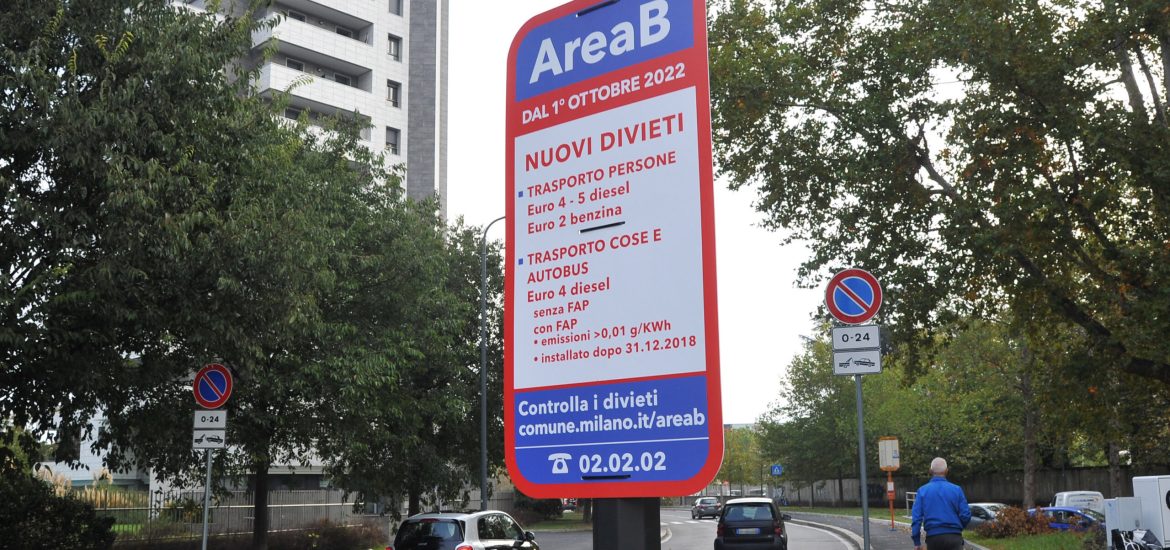
Conversely, the study seems to push for the creation of Low Emission Zones, that is, areas where only vehicles that meet certain environmental criteria and standards can enter. “Different – it is stated – is the case of Low Emission Zones, designed to reduce pollution through selective restrictions based on propulsion technologies. In Europe, there are 338 LEZs: Spain leads with 82 active zones, followed by France (63), Germany (57), and the Netherlands (40). Italy, with 37 LEZs, ranks fifth, but with a highly heterogeneous system.” The manufacturer’s preference for LEZs is not surprising: these are obligations that favor the latest technologies and, therefore, car replacement.
ITALIAN SHORTCOMINGS THAT THE JAPANESE DO NOT LIKE
The research “indeed highlights the absence of national standards: criteria, access rules, and application methods vary significantly from city to city, with marked differences even between North and South. A fragmentation that makes understanding the regulations complex for citizens and operators.”
And again: “In Italy, there is a lack of a unified regulatory infrastructure. The Observatory’s analysis underlines the need to introduce standardized tools: homogeneous criteria for LEZs, a coherent signage system, and above all a single national digital platform capable of collecting and integrating information on all UVAR (Urban Vehicle Access Regulation) measures, supporting citizens, businesses, and intelligent mobility systems.”
WHAT HONDA THINKS
Since the Japanese company is a partner of the Luiss Observatory, it is interesting to see what it thinks about the study on the sidelines. “As Honda – said Simone Mattogno, Head of Automobile Division of Honda Motor Europe Ltd. – Italy & Switzerland – we closely observe the transformation in the way people move in urban areas. We believe that innovation must have a concrete goal: to simplify people’s lives, making it easier to navigate an evolving context and promoting access to sustainable solutions. In this process, dialogue between institutions, industry, and the research world is crucial to support an effective, inclusive, and future-oriented transition.”




