



So far, it has been the Chinese brand that has kept the lowest profile compared to the competition, which is instead intensifying the invasion of the Old Continent (also because, as the quarterly reports of Byd and Geely reveal, the domestic market is now saturated). And it is also the one with the most difficult name to pronounce: Hongqi. A name that the Chinese regime cares a lot about since it means “red flag.”
STELLANTIS AND HONGQI TOWARDS A PARTNERSHIP?
Few Western journalists have so far reviewed a Hongqi. For more details, we refer you to the sharp but effective review by the ironic British presenter Jeremy Clarkson from the BBC automotive program Top Gear.
According to Reuters, the brand, which in China is mainly known for focusing on the production of premium cars for local leadership (not by chance Mao Zedong, father of the current People’s Republic of China, sat satisfied in its flagships), would like to enter Europe not through ports but through the plants that Stellantis already owns, thus avoiding the tariffs imposed by Brussels and not incurring the extra costs related to building new production sites from scratch.
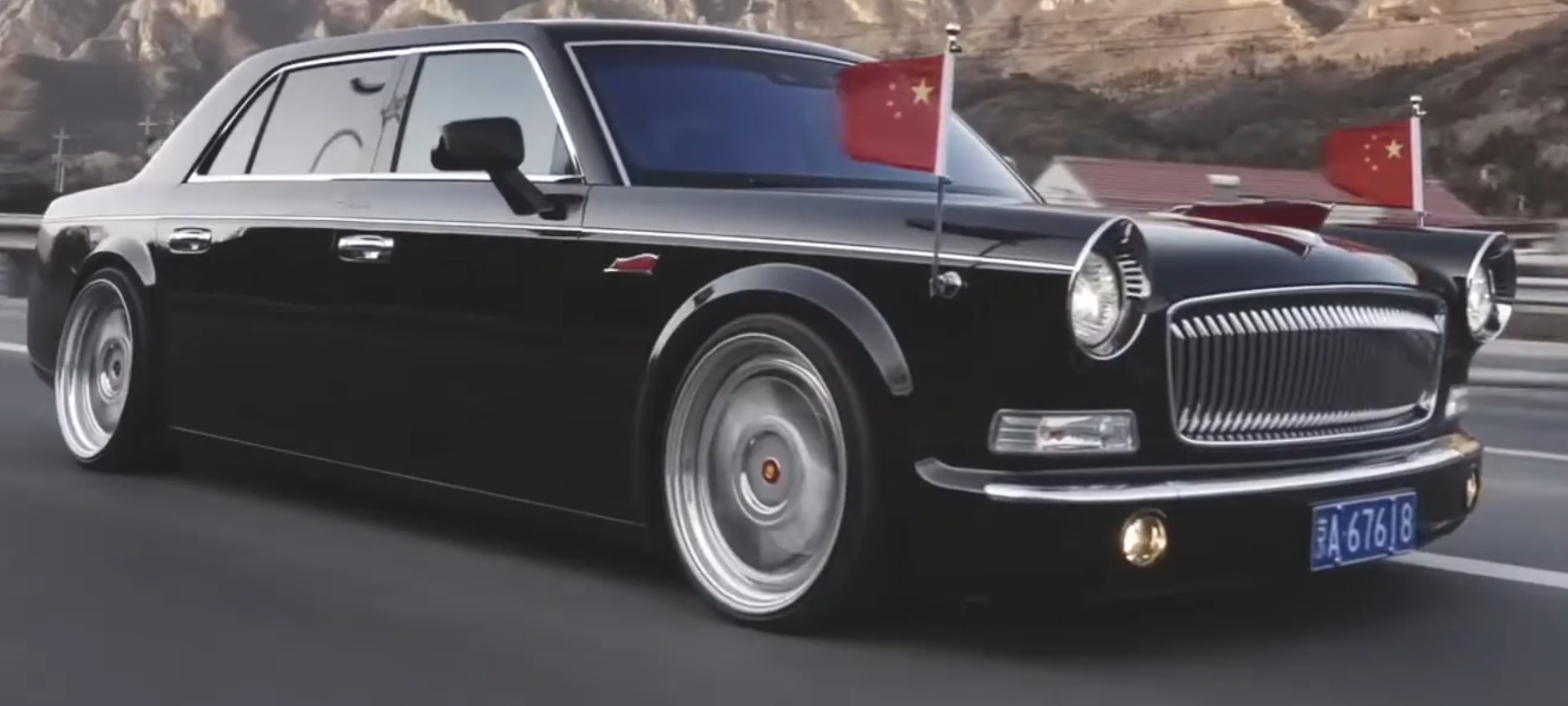
STELLANTIS AND FAW HAVE SOMETHING IN COMMON…
According to press rumors, negotiations are underway between Stellantis and Faw, a Chinese state-owned company founded in 1953 in the northeastern city of Changchun (at the time producing trucks) which, in addition to Hongqi, also owns the Jiefang and Besturn brands (today renamed Bestune to sound better to Western ears).
It is not the first time that Faw and Stellantis have met, as both are investors in Leapmotor, the Chinese electric car startup that the Italian-French Group intends to market in Europe and South America – perhaps even in Canada to make amends for its sudden shift in favor of the States.
Hongqi’s internationalization plan foresees the launch of 15 electric and plug-in hybrid vehicles by 2028 in 25 different markets, and the factories Stellantis has in Europe, starting with those in Spain, represent the shortest (and most economical) way to begin its expansion.
Similarly, the Italian-French Group, having promised Donald Trump investments of 13 billion dollars on American soil, is unlikely with the new industrial plan, which will finally be presented in a few weeks, to fill the production lines of Old Continent factories again (starting with the Italian one in Cassino, while the fate of Poissy, on the outskirts of Paris, has been decided: it will no longer produce cars but will recover used models) and thus, according to rumors, it would be looking for Chinese carmakers interested in cohabitation.
MADRID AHEAD OF ROME?
Spain is at the forefront and risks being the favorite because Italy might be penalized by the fact that Rome voted “yes” to Brussels’ tariffs against Chinese electric cars. Poland did the same and in fact saw Leapmotor production taken away in favor of the Iberian Peninsula. China does not forget so easily, as nostalgic brands like Hongqi demonstrate.




