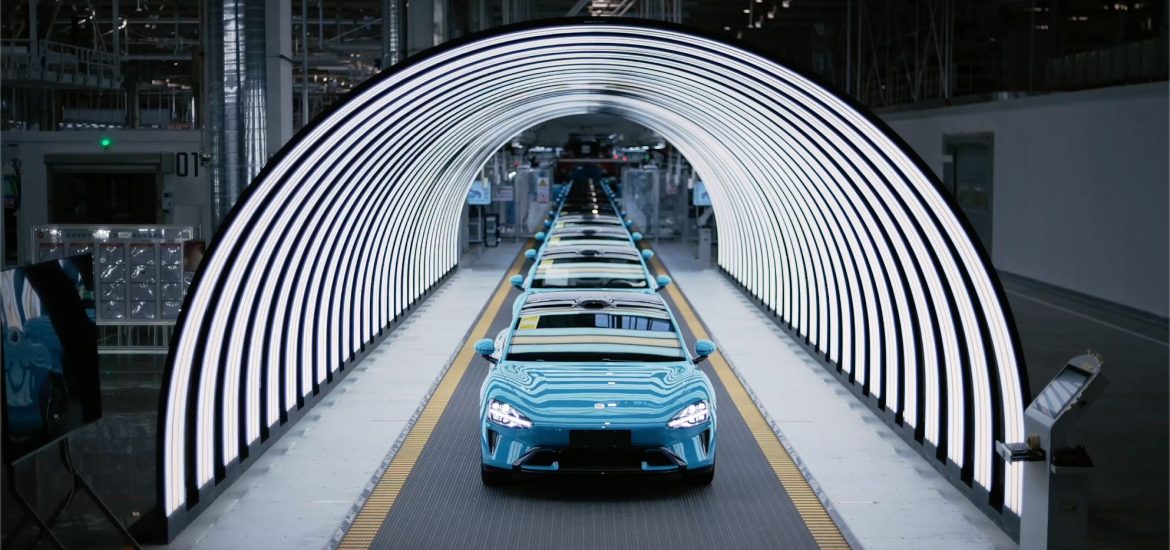

Xiaomi’s debut in the automotive world, the Chinese Big Tech known until recently only for producing smartphones and tablets, has shown that the automotive industry might still have room for new players, also because pre-orders in China have surprised the company itself which struggled to keep up with user demand. Just consider that the YU7 reached 232,000 cumulative deliveries in just ten months while the SU7, launched in March 2026, has already gathered over 80,000 confirmed orders.
THE COST OF POSITIONING IN A SATURATING MARKET
A very respectable start, also helped by the almost immediate flourishing of a well-established sales network (490 points of sale distributed in 143 Chinese cities) that could only be implemented with the necessary capital. As the industry publication CarsNewChina points out, in order to keep price lists competitive (the average price of its electric cars is around 235,000 yuan, equivalent to about 34,600 dollars), Xiaomi lost 5,600 dollars for every car sold in the first quarter. From January to March, it delivered 80,856 electric vehicles, up 6.6% compared to 75,869 units in the same quarter of 2025.
Only apparently good news, since in the first quarter of 2025 Xiaomi sold fewer cars, but the loss per car was “only” 900 dollars. Meanwhile, the Dragon’s Big Tech recorded a retreat in gross margin, down from 23.2% to 20.1%, with a consequent increase in electronic component costs, starting with memory costs that are also impacting its main business related to smartphones and tablets.
XIAOMI TRIES TO SQUEEZE BETWEEN BYD AND GEELY
Returning to the automotive division, the current strategy of keeping prices low to get known by users and act as a third wheel between Byd and Geely (which have unleashed a commercial war at home that is also affecting their financials) obviously reflects on Xiaomi’s accounts: despite the excellent positioning in the domestic market which yielded revenues of 19.9 billion yuan, about 2.9 billion dollars, the balance sheet is weighed down by an operating loss of 3.1 billion yuan.
THE UNCERTAINTY OF THE SMARTPHONE MARKET
The goal for Xiaomi is therefore to run flat out to reach that breaking point that will allow it to start earning or, at least, change strategy by adopting less aggressive policies. A milestone that can only be reached by entering other markets, since the domestic one is beginning to show signs of saturation, also due to excessive competition (currently there are about a hundred players in China, mostly startups funded by Beijing).
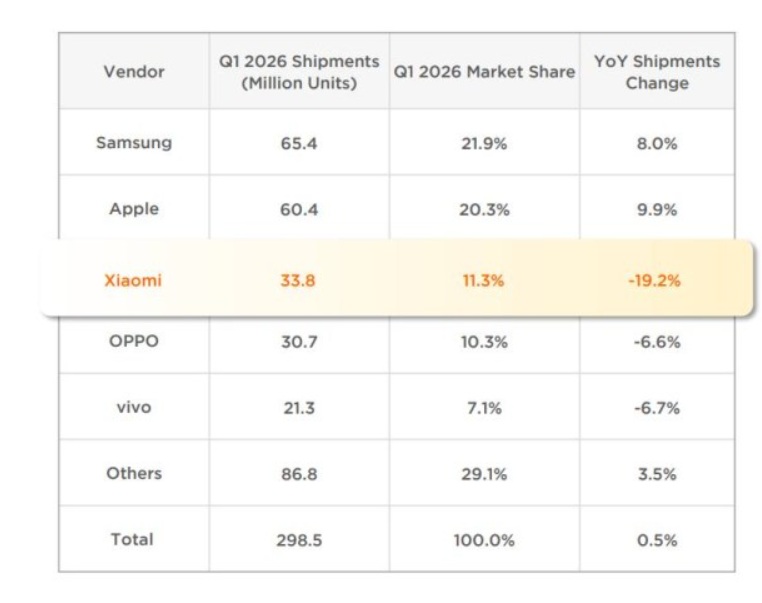
Loss-making sales in the automotive sector have apparently so far been funded by the portable device business, which could start to falter if, due to the RAM crisis, fewer tablets and smartphones are sold or margins decrease. A factor that seems to have begun to materialize: between January and March, the Chinese giant shipped 33.8 million devices, 19.2% less than the same period in 2025: a considerable collapse that still allows the tech company to remain firmly behind South Korean Samsung and American Apple thanks to the gap created with domestic rivals Oppo and Vivo, in fourth and fifth place among the most widespread brands.
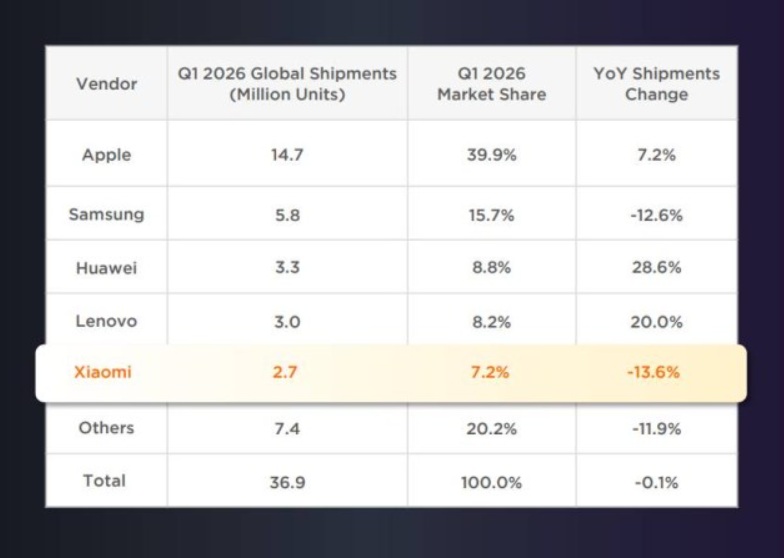
However, it has not been as fortunate in the tablet rankings where Xiaomi slipped from third to fifth globally following a slowdown of over 13 percentage points, overtaken by two other Dragon brands, Huawei and Lenovo. Never before has the slowdown in the sector where Xiaomi is strongest been more likely to lead to a revision of its automotive plans.