

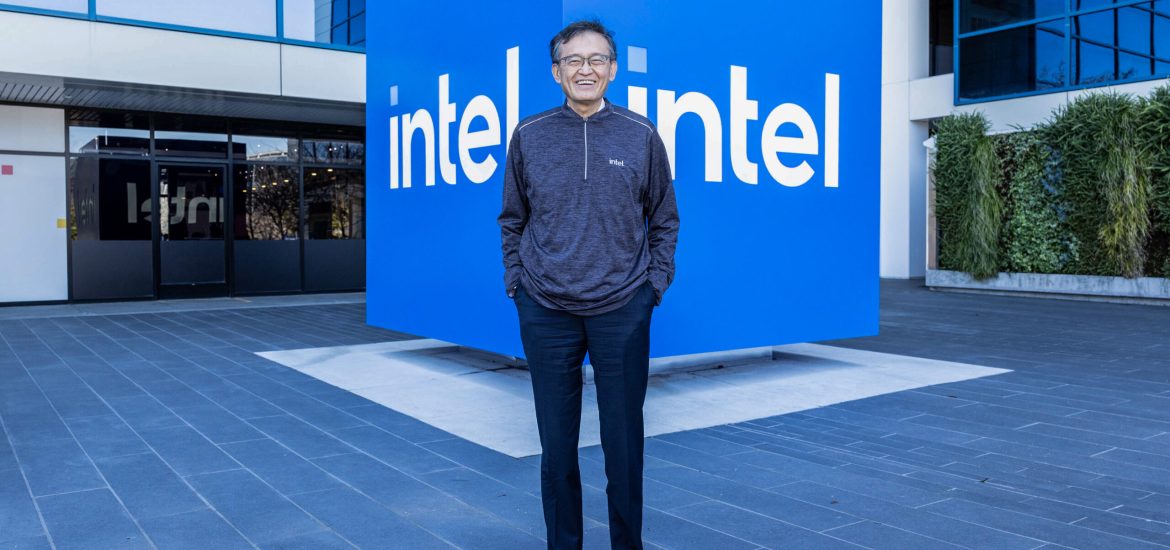

Google has ordered a large quantity of microchips from Intel: over three million TPUs – Tensor Processing Units, a type of microprocessor designed to quickly perform calculations in artificial intelligence models – by 2028. This is significant news because Intel, once the undisputed giant in the semiconductor sector, is trying to recover from an internal crisis that prevented it from evolving its manufacturing technologies or riding the wave of artificial intelligence, which instead has made other chipmakers successful.
EVEN NVIDIA IS WATCHING INTEL
Moreover, Nvidia itself – the clearly dominant company in the AI processor market, with a market capitalization of about 5 trillion dollars – is examining Intel’s new manufacturing technology: it wants to understand if it is suitable for building a new processor that combines four graphics chips within a single unit.
INTEL’S RECOVERY
Intel’s recovery is also evident from its stock performance, which has risen by almost 169 percent since the beginning of the year. The credit seems to go to the new CEO Lip-Bu Tan, in office since March last year, who after a phase of cost-cutting – including significant layoffs and cancellations of plans – has managed to close important contracts.
Intel, in fact, will provide its new 14A manufacturing process to Tesla, Elon Musk’s car company that is heavily investing in autonomous driving and intends to open an advanced microchip factory in Texas, called Terafab. The company could also produce processors for Apple, which generally relies on the Taiwanese company TSMC for the production of systems-on-a-chip found in iPhones and Macs.
Intel has also received investments from the U.S. government (9 billion dollars), the Japanese holding SoftBank (2 billion), and the aforementioned Nvidia (5 billion).
WHAT’S HAPPENING WITH TSMC?
Just as Apple might rely on Intel instead of TSMC to reduce exposure to Taiwan – China does not consider it a separate country but a province of its territory and wants to control it even by force – Google could do something similar.
The Alphabet group company, in fact, has turned to Intel because it wants to diversify its supply chain, which is extremely dependent on Taiwan. But also because TSMC is struggling to keep up with all the manufacturing orders for microchips that tech companies need to continue developing artificial intelligence.
GOOGLE’S GOAL
Google wants to become less dependent on Nvidia as well, which currently designs the most powerful and sought-after processors by AI companies.
With a view to greater self-sufficiency and cost containment, given Nvidia’s chip prices, Google has started developing its own internal alternatives: the aforementioned TPUs, of which in April it presented two new versions, one dedicated to training language models and the other to inference.
THE DOUBTS
The moment therefore seems favorable to Intel, but doubts remain. Replacing TSMC, first of all, is extremely difficult and currently there are no companies capable of guaranteeing the same levels of technological quality and production scale as the Taiwanese company. Moreover, an order of three million microchips, although substantial, is not enough to restore Intel’s manufacturing division, which is still in loss.




