

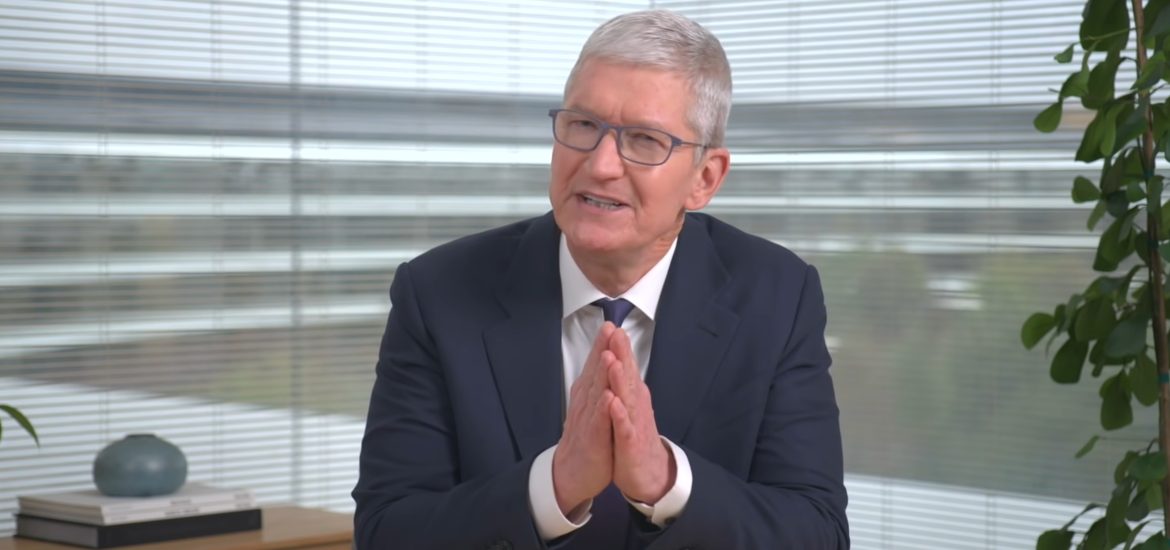

Apple’s resurgence, which allowed the company led (at least until next August 31) by Tim Cook to rank among the most capitalized entities in the world, is known to have also passed through a formula of loud announcements carefully crafted to be delivered to the public in grand style, through real live events with a Hollywood flair (with epic music, light shows, displays of advanced graphics…) where technical information is fused with spectacle so as to be accessible not only to industry journalists and investors but especially to a general audience.
THE STUMBLE WITH APPLE INTELLIGENCE
In recent decades, the ability to continuously update devices remotely, via software rather than hardware, has pushed many players to dare more with promises of dazzling upcoming features: futuristic-sounding capabilities that at the time of the devices’ market debut are not available but would arrive soon through substantial firmware patches. But what happens if this does not occur? Cupertino is about to find out at its own expense.
With a formula reminiscent of some class actions that have formed around Tesla’s autopilot – which plaintiffs claimed was presented as a true autopilot rather than a driver assistance option – several US buyers of iPhones purchased between June 10, 2024, and March 29, 2025, have sued Apple, claiming Cupertino “promoted AI capabilities that did not exist at the time, do not exist now, and will not exist for another two or more years.”
To support their claims, the plaintiffs also brought to court Apple’s commercials which, according to their argument, constitute textbook cases of misleading advertising since the Apple Intelligence features are still absent in practice. Based on this, several who purchased an iPhone 16, as well as an iPhone 16e, iPhone 16 Plus, iPhone 16 Pro, iPhone 16 Pro Max, or an iPhone 15 Pro (including the iPhone 15 Pro Max) have now decided to fight the manufacturer.
To extricate itself, Apple has decided to pay a total of 250 million dollars to the plaintiffs, reports the Financial Times. Net of legal expenses, this is rather little (estimated around 50 dollars per device) for those who claim to have bought that device precisely because they wanted access to Apple Intelligence. Moreover, through the agreement, Cupertino wanted to put in writing that the payment does not constitute any admission of liability as the US tech giant continues to assert it acted in good faith.
A TWIN LAWSUIT COMING FROM BRAZIL
While, on an individual level, the compensation Cupertino offered US users may be considered small (usually one can obtain more by suing individually but faces all the risks of a solitary action against an economic giant), in absolute terms the delays of Apple Intelligence could weigh heavily. Because those disappointed plaintiffs certainly do not exhaust the number of people who, for the same reason, might want to sue the company led by Cook.
Although Apple has admitted nothing precisely to avoid encouraging the emergence of similar class actions, an investigation is already brewing in Brazil that could lead to a twin lawsuit. Tecnoblog “has exclusively learned that the consumer protection agency of Rio de Janeiro (Procon Carioca) has notified the company requesting clarifications regarding alleged misleading advertisements directed at buyers of iPhones launched from 2023 onwards. At the time, the company had promised AI features that were never introduced to the market.”
A HAILSTORM OF CLASS ACTIONS?
If similar national authorities in the various markets where devices boasting Apple Intelligence’s futuristic features were sold follow suit, a difficult period would open for the US Big Tech, especially following the agreement reached in the US.
WERE CONSUMERS REALLY INFORMED?
We might conclude jokingly that these are cases where the consumer was really poorly informed about the product they purchased. Indeed, it would have sufficed to browse the web, searching among the right outlets, to discover that Apple’s delays in the crucial field of artificial intelligence have long been highlighted with embarrassing and at times surprising delays of Apple in the sector. And that the very Apple Intelligence presented with great fanfare as a saving solution had left more room for questions than enthusiasm, at least from experts. A web check would have avoided a rash purchase: this is what happens when, out of laziness, you ask everything to Siri…




