

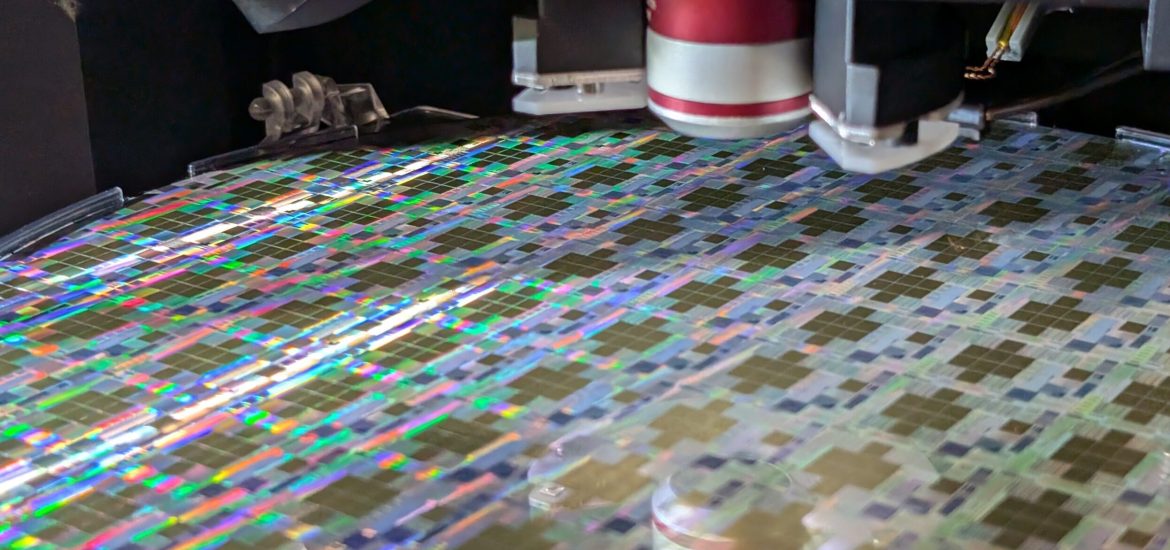

On Tuesday, the European Commission approved a state aid of 76 million euros to Germany: the funds will be spent to support QuantumDiamonds, a German semiconductor company, in the construction of an advanced testing factory in Munich.
Testing, or validation, is one of the final stages of the microchip supply chain and is used to identify any errors present in the devices. According to Brussels, the state aid “will help strengthen the position and autonomy of the European Union in the semiconductor value chain,” specifically, “in line with the objectives defined in the European Chips Act.”
THE OBJECTIVES OF THE CHIPS ACT 2.0
At the beginning of June, the Commission presented a package dedicated to “technological sovereignty” structured in four proposals: one of these is the so-called Chips Act 2.0, arriving three years after the entry into force of the previous (and homonymous) European regulation on microchips. With this new regulation, Brussels explained it wanted to reduce the authorization times for production plants, strengthen cooperation with the Union’s partner countries, and better support the internal demand for semiconductors.
WHAT WE KNOW ABOUT THE QUANTUMDIAMONDS FACTORY
The QuantumDiamonds project in Munich, known as Ipf-Atest, concerns the development and production of advanced semiconductor metrology and inspection systems based on quantum sensors (also the subject of recent executive orders by American President Donald Trump). This technology should allow high-resolution and 3D testing on microchips, thus ensuring greater effectiveness in the validation process: the QuantumDiamonds factory will be the first of its kind at the community level.
Among other things, QuantumDiamonds has agreed to collaborate with universities, research institutions, and small and medium-sized enterprises, as well as to “share with Germany the potential profits deriving from the project.”
OTHER STATE AIDS FOR SEMICONDUCTORS AUTHORIZED BY THE EU TO GERMANY (AND ITALY)
Last month, Germany had already obtained – also within the Chips Act framework – the Commission’s authorization for aid to Zeiss (222 million euros) and Zadient (66 million), related to plants in Oberkochen and Bitterfeld. In December, Brussels had also approved aid to GlobalFoundries (495 million euros) and X-Fab (128 million).
As for Italy, last April our government obtained the Commission’s authorization for aid of 211 million euros to CamGraphic for the development of graphene-based photonic optical transceivers: the project will be carried out in Pisa and Bergamo. CamGraphic is a subsidiary wholly controlled by the Italo-British group 2D Photonics: in February 2025, 2D Photonics raised 25 million euros from a funding round involving Cassa Depositi e Prestiti.
In July last year, moreover, the Commission had approved aid of 41.5 million to Ephos, an Italian microelectronics startup, for a photonic chip plant on glass wafers in the Milan area.




