

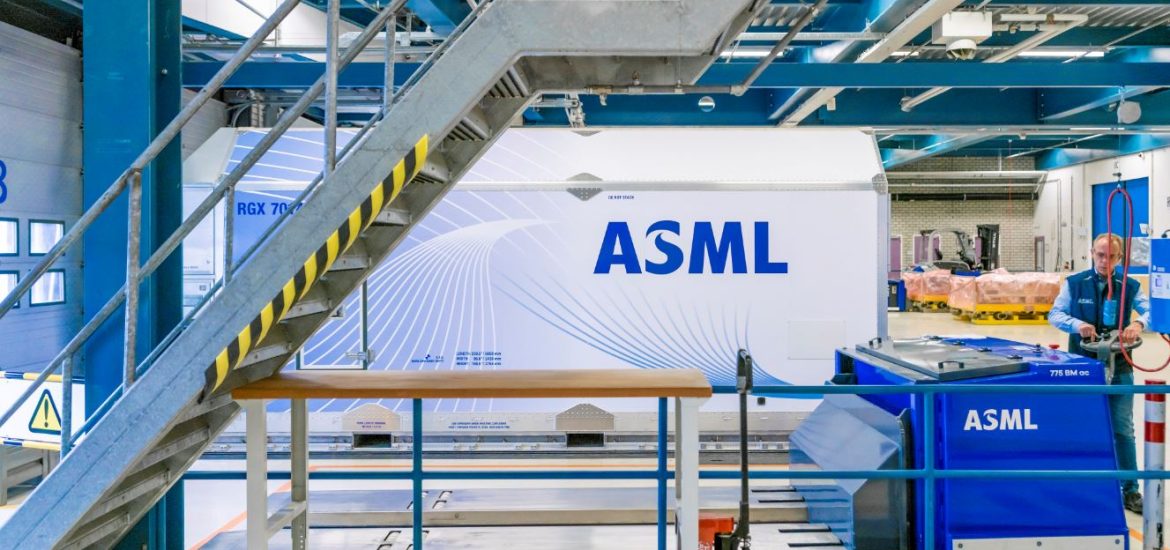

The Netherlands have opposed a proposed law in the United States to tighten trade restrictions towards China that would harm the business of Asml, the world’s leading microchip machinery company and the most valuable European company.
The law in question – known as the Match Act, from Multilateral Alignment of Technology Controls on Hardware – indeed provides for further limitations on exports of chipmaking machinery to China, aiming to hinder the technological advancement of the local semiconductor industry.
WHAT THE US MATCH ACT WOULD MEAN FOR ASML
Asml holds an absolutely central position in the global semiconductor industry and, consequently, in the artificial intelligence supply chain. It is in fact the only company in the world capable of building equipment for extreme ultraviolet (Euv) lithography, an extremely sophisticated process that, using very short wavelength light, allows the “printing” of tiny circuits on microchips.
Asml’s machinery has already been subject to US trade restrictions for years: Euv systems have never been exported to China. However, the company also produces less sophisticated equipment, such as those for deep ultraviolet (Duv) lithography. Some Duv machinery has obtained licenses for sale in the Chinese market, but the US Match Act aims to halt this trade as well.
Therefore, if the law were to be approved in the United States and also applied by the Netherlands, where Asml is headquartered – more precisely in Veldhoven – the company’s economic results could be affected: Asml expects that this year sales in China will represent 20 percent of the total.
HOW MUCH IS CHINA WORTH TO ASML?
In 2025, despite the numerous restrictions already in place, China was Asml’s single largest market: it accounted for over 30 percent of total sales.
In 2026, its share is expected to drop to 20 percent, according to company forecasts. But it could decrease even more if the US Match Act proves particularly restrictive: Chinese chipmakers not only have no alternatives to Asml’s Euv systems, but also have few options available to replace its Duv machinery.
THE NETHERLANDS’ OPPOSITION
The Dutch Minister of Commerce, Sjoerd Sjoerdsma, explained to parliament that the US Match Act “could prevent companies from providing maintenance or support services even for machines already delivered.” What worries the Dutch government – which, however, has previously aligned with US restrictions on the sale of Asml’s advanced machinery – is above all the scope of the law and its extraterritorial nature: it applies to companies headquartered in countries other than the United States.
“The starting point for the Netherlands is that every country is responsible for its own laws,” the minister declared.




