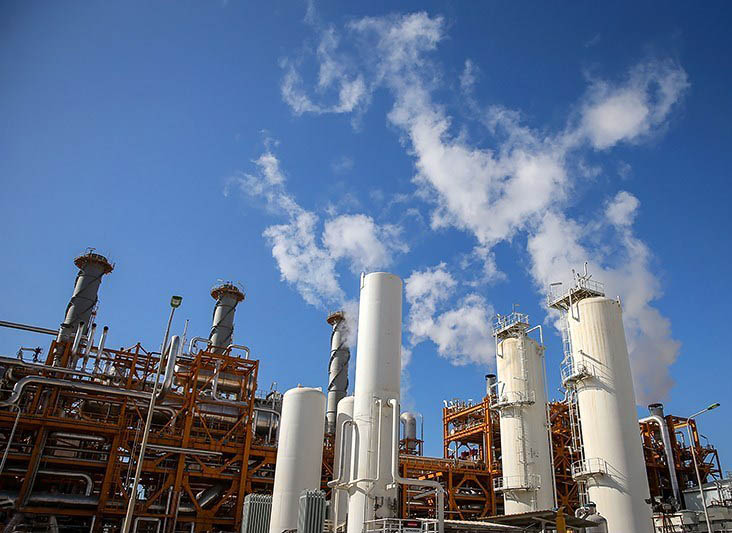

While the world questions the consequences of the closure of the Strait of Hormuz and the resulting reduction in gas supplies, a paradox emerges strongly: every year more than twice the volume of gas that passes through this strategic passage is wasted due to methane leaks and unnecessary combustions.
As highlighted by the Financial Times, which devotes a long article to the phenomenon, the International Energy Agency (IEA) has brought this contradiction to light, emphasizing how a global commitment against waste could free up significant energy resources precisely at the moment we need them most.
Natural gas waste
The Strait of Hormuz represents one of the most critical arteries for global energy trade: about 20% of global LNG, equal to 110 billion cubic meters last year, passes through it. Yet, according to the IEA, more than twice this volume is wasted worldwide every year due to inefficiencies in the oil and gas sector.
Specifically, the Agency estimates that 100 billion cubic meters of gas per year could be made available simply by reducing methane leaks from extraction, transport, and distribution operations, and another 100 billion by eliminating non-emergency flaring.
At a time when many countries struggle to find new energy supply sources due to tensions in the Middle East, these amounts of produced but unproductively used gas appear even more paradoxical.
Methane and its capture
Methane is not just any gas: it is an extremely powerful greenhouse gas, albeit with a relatively short atmospheric lifetime. According to scientific estimates, it is responsible for about 30% of global warming since the beginning of the industrial revolution to today.
For this reason, its capture and reduction represent, for many scientists, the most effective and immediate measure to combat climate change in the short term.
It is not just an environmental issue. As Tim Gould, chief energy economist at the IEA, points out to the FT, “this is not only a climate problem: there are also enormous benefits for energy security that come from addressing methane emissions and flaring, especially at a time when the world urgently seeks additional supplies.”
Technical solutions
The IEA emphasizes that many of the necessary measures are relatively simple and within the industry’s reach: repairing pipeline leaks, replacing faulty equipment, and capturing gas instead of burning it.
Although it will take time to achieve these results on a large scale, the IEA stated that “almost 15 bcm could be made available within a sufficiently short period to provide some relief to gas markets,” if countries with excess capacity and importing nations adopted “abatement measures.”
What satellite data reveals
Satellites from the International Methane Emissions Observatory of the United Nations Environment Programme (UNEP) are providing increasingly clear evidence.
In the last six months, 17 of the 50 largest methane leak events detected came from oil and gas facilities. Capturing methane from these 17 sites alone could provide about 1 billion cubic meters of natural gas – enough to heat about 750,000 average Western homes for an entire year.
Another 22 large releases came from coal facilities, often related to ventilation shafts: a source that, according to UNEP, could be mitigated at relatively low costs.
The international framework
These analyses come at a crucial moment. The IEA’s findings will be presented in Paris at a high-level methane event organized by the French presidency of the G7.
Meanwhile, in Europe there is strong pressure from fossil fuel companies and the United States to delay and weaken new gas import regulations that will come into force in January 2027, which provide for stricter obligations for monitoring and reporting methane emissions.