
The war between the United States and Israel against Iran has driven the price of oil up to $100 a barrel as early as March, generating extraordinary profits for large oil and state-owned companies.
According to an exclusive analysis conducted by Global Witness using data from Rystad Energy and reported by the Guardian, the top 100 companies in the sector earned over $30 million an hour in unearned profits in that single month alone, totaling $23 billion. If the price stabilizes around that figure, the total gain for the year could reach $234 billion.
This is money coming out of the pockets of households and businesses, while some governments reduce fuel taxes and lose public revenue.
The situation has reopened the debate on an extraordinary tax on war profits and refocused attention on global dependence on fossil fuels.
The price surge and the calculation of war profits
The conflict pushed the barrel to an average of $100 in March, compared to $70 previously. By comparing the cash flows generated from extraction at these two prices, analysts estimated an extra $23 billion for March alone.
Oil and gas supplies will take months to return to pre-conflict levels. If the price remains high, the sector will accumulate another $211 billion by the end of the year.
The calculations are based on Rystad Energy’s UCube database, which accounts for field-by-field production, operating costs, taxes, and royalties. These are therefore net profits, after expenses and charges.
Who profits the most
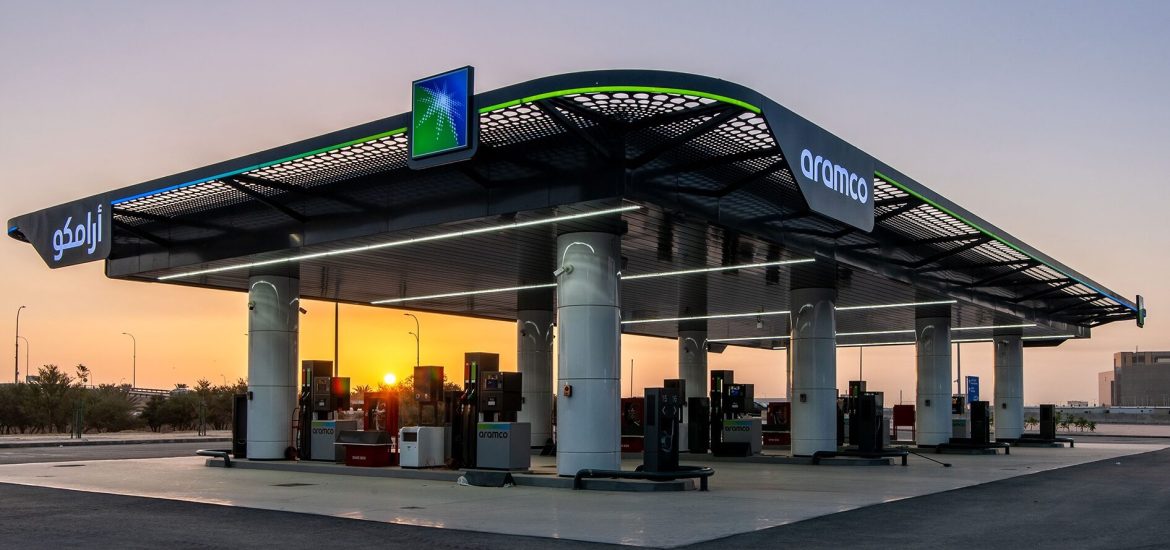
Saudi Aramco is by far the biggest winner: it could earn an extra $25.5 billion in 2026 at a constant price of $100. The Saudi state-controlled company has already accumulated enormous profits in recent years.
Following are three Russian companies — Gazprom, Rosneft, and Lukoil — which would share $23.9 billion. The war raised Russia’s daily oil revenues to $840 million in March, 50% more than in February, directly fueling Moscow’s budget for the war in Ukraine.
ExxonMobil expects about $11 billion, Chevron $9.2 billion, and Shell $6.8 billion. All these companies have seen their stock market value rise significantly since the conflict began.
The consequences for households, businesses, and public budgets
The price increase has been passed directly on to consumers: more expensive gasoline, diesel, and bills.
Dozens of countries, including Italy, Australia, South Africa, Brazil, and Zambia, have lowered fuel excise taxes to provide immediate relief, but at the cost of losing revenue intended for public services. The European Union alone has seen its fossil fuel bill rise by €22 billion since the war began.
The result is a double wealth transfer: from citizens’ pockets to companies’, and from public budgets to oil companies’ accounts.
The push for a war profits tax
Pressure to introduce a windfall tax on exceptional gains has grown rapidly.
On April 4, finance ministers from Germany, Spain, Italy, Portugal, and Austria called on the European Commission to act, arguing that “those who profit from the consequences of the war must contribute to easing the burden on citizens.” According to them, such a tax would allow financing temporary aid without further burdening public accounts.
The debate is open and reflects the widespread perception that war profits are not deserved gains.
Voices from the sector and experts
Representatives of contacted companies — Saudi Aramco, Shell, TotalEnergies, ExxonMobil, Chevron, Gazprom, and others — chose not to comment on these figures to the Guardian. Independent analysts, however, are clear.
Patrick Galey of Global Witness emphasized that global crises continue to translate into record profits for majors while ordinary people pay the price.
Jess Ralston of the Energy and Climate Intelligence Unit reminded that this crisis once again demonstrates the costs of dependence on volatile sources and that only renewables can guarantee stable energy security.
Beth Walker of E3G and Maria Pastukhova urged governments to use tax revenues to accelerate the transition to clean energy, rather than increasing fossil fuel production.
Long-term lessons
The director of the International Energy Agency, Fatih Birol, called this event “the biggest shock ever seen in the global energy market.”
The UN climate chief, Simon Stiell, warned that dependence on fossil fuels is replacing national security with subjugation to markets and geopolitical chokepoints.
UK data is emblematic: in March alone, wind and solar avoided gas imports worth £1 billion, while from 2010 to 2025 wind has saved consumers about £100 billion.
As long as transport, heating, and industry remain tied to oil and gas, every importing country will remain exposed to international turbulence, regardless of where its fossil fuels come from.
In summary, the war in Iran has brought to the forefront an uncomfortable truth: the fossil fuel-based energy model transfers wealth from citizens to producers every time a crisis breaks out. The alternative indicated by almost all experts consulted is one: accelerate the transition to renewables to reduce both costs and geopolitical vulnerability.