

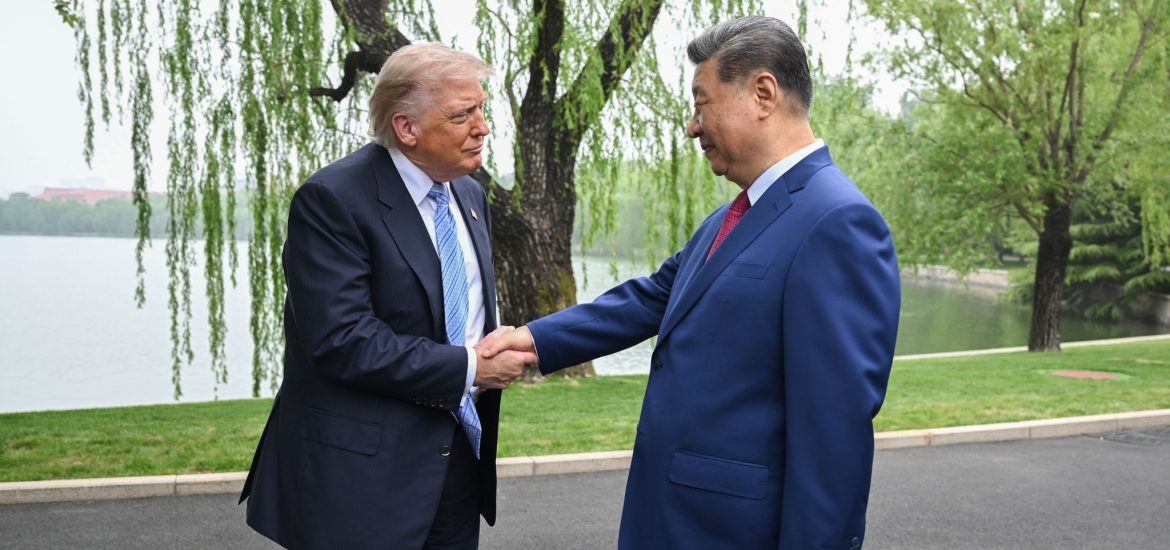

TRUMP-XI BILATERAL: TAIWAN, TRADE AGREEMENTS AND TECHNOLOGY SECTOR
Last week ended with global stock indices on hold, awaiting constructive developments from the Trump-Xi bilateral on the Middle East stalemate. However, such developments did not materialize due to Beijing’s desire to focus on rebalancing relations between the two powers, as demonstrated by the centrality of Taiwan during the bilateral as an essential element to ensure a future of stability and peaceful coexistence between the two countries. US trade agreements took a back seat, highlighting the current weakness of the US negotiating position: an agreement for agricultural imports worth at least $17 billion over the next three years (in the five years prior to Trump’s inauguration, the annual average was $30 billion), an order for 200 Boeing aircraft (although rumors suggested a purchase of 500 units), and other minor agreements across various industrial sectors.
Moreover, the Trump administration opened the sale of Nvidia’s H200 chips – among the most advanced for AI model training – to ten Chinese tech companies, including Alibaba, Tencent, and Bytedance. This news, while supporting the sector’s stock market performance, was received lukewarmly by Chinese counterparts, who are more interested in developing the chip supply chain and gaining access to technology for their production than in relying on US production for training their models. Finally, the US mention of rare earth talks was timidly positive.
US MACROECONOMICS: INFLATION, PRODUCER PRICES AND CONSUMPTION
The lack of light at the end of the tunnel in the Iranian conflict has pushed oil prices higher, driving the upward movement of government yield curves based on expectations of incrementally rising inflation.
On the macroeconomic front, the week saw the release of US consumer and producer price data for April. The main focus was on the former (overall index +3.8% vs +3.8% expected, “core” index +2.8% vs +2.7%), which showed a positive contribution from energy-related items (such as gasoline and airfares), but also a cooling in tariff-exposed goods as well as in the real estate sector, amid rising mortgage rates. Among IT-related goods, a sequential increase was recorded reflecting supply chain tensions for components due to investment demand in AI.
The producer price data was also very strong (+6.0% year-on-year vs +4.8% expected), with the “core” figure at +5.2% vs +4.3% expected: logistics contributed the second most after energy, marking the transmission of effects along the production value chain. The retail sales data was less significant, overall in line with general readings and slightly better for the so-called “control group” (+0.5% month-on-month vs +0.4% expected), with a slight upward revision of the previous figure: an indicator, for now, of solid demand resilience despite increasingly significant gasoline prices in US household budgets.
FED AND GOVERNMENT YIELD CURVE UNDER PRESSURE
This week, the US Senate confirmed Kevin Warsh as the new Fed governor. Warsh has always been a strong supporter of reducing the Fed’s balance sheet, a sensitive topic amid pressure on the longer end of the US government yield curve: pressure that intensified during the week, with less-than-satisfactory results from the 3-, 10-, and 30-year auctions. The 30-year auction recorded the highest yield at auction, surpassing the psychological 5.0% threshold by a few basis points, an event not seen since 2007 and likely raising the attractiveness level for these securities among pension funds and insurance companies, historically major buyers of long-term paper.
EUROPE AND ITALY: GDP CONFIRMED, SPREAD STABLE
In Europe, there is a generalized rise in sovereign yields following the trend of the US curve. The second reading confirmed Eurozone first-quarter GDP growth, showing a year-on-year advance of +0.8%, albeit amid downward revisions compared to expectations in major countries.
In Italy, the latest Bank of Italy report highlighted a growth in public debt to €3,139 billion, with foreign holdings increasing to 35.4% of the total in February, up from 34.8% in January. The spread remained relatively stable, benefiting from the rise in German government yields amid debate over increasing federal spending to support measures mitigating the impact of the energy shock on German households.
WEEKLY FOCUS
This week will be lighter on macroeconomic data, with the only significant release being the PMI (Purchasing Managers Index) for services and manufacturing in the US and Europe. The main focus will instead be on Nvidia’s quarterly earnings, in the context of recent stellar semiconductor sector performance and investments related to AI infrastructure, as well as on the release of the Fed’s April minutes, in which, besides the “usual” Miran, three members expressed opposition to the accommodative tone of the statement.




