

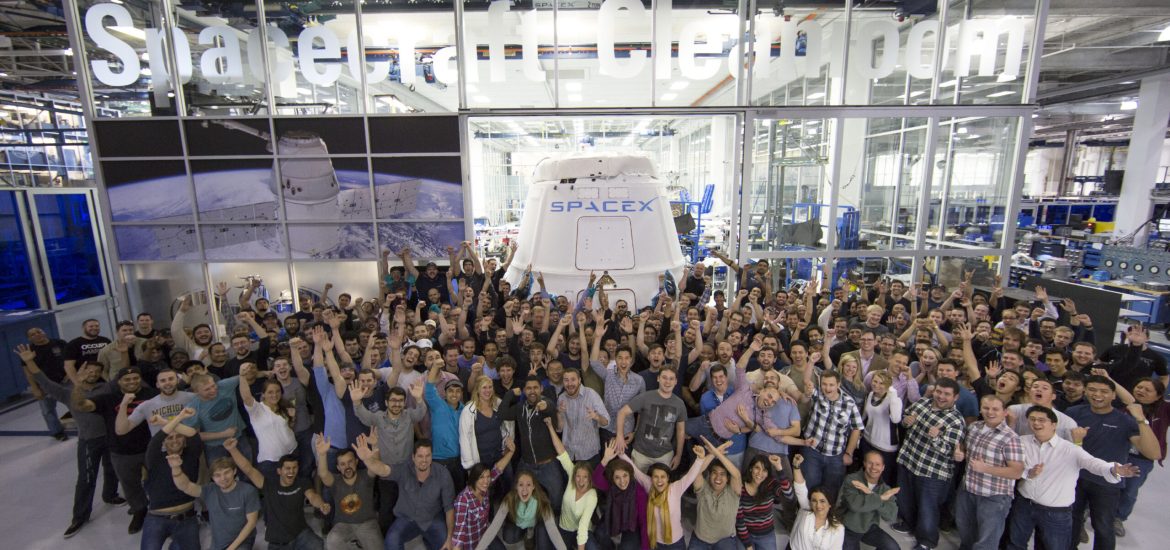

As Elon Musk prepares to potentially become the first trillionaire in history, the public listing of his creation SpaceX is not just the biggest debut ever for a company.
It is above all an extraordinary wealth creation machine that will radically transform the lives of thousands of engineers, technicians, workers, and professionals who believed in the company when it was still a risky startup, with rockets that exploded and a future far from certain.
An article from the New York Times tells this story through the experiences of former SpaceX employees who, thanks to stock options accumulated over the years as part of their compensation, are about to cash in amounts that will forever change their lives, their families, and their future prospects.
AN UNPRECEDENTED IPO
SpaceX’s listing is shaping up to be an event of epic proportions in every respect. It is the largest IPO ever for the world’s dominant space company, led by the richest man on the planet.
SpaceX will begin trading publicly today under the ticker SPCX. As reported by the New York Times in another article citing a company statement, SpaceX confirmed that the IPO price was set at $135 per share and that it will sell over 555 million shares. This means SpaceX will raise about $75 billion from the offering, reaching a valuation of $1.77 trillion.
For comparison, the expected valuation is five times higher than General Electric’s market capitalization.
With these numbers, SpaceX will shatter the IPO record previously set by Saudi Aramco. The Saudi state oil company was valued at $1.7 trillion and raised more than $29 billion when it went public in 2019.
Musk is set to become the first trillionaire in history, while friends, Silicon Valley venture capitalists, and private investment funds will cash in billions.
However, what makes this deal truly unique is not only the wealth it will generate at the top but the extraordinary redistribution of value toward employees at all levels.
A RAIN OF MILLIONS FOR EMPLOYEES
SpaceX currently has about 22,000 employees and hundreds of former workers who have come and gone over the years.
Many of them received shares as an important component of their compensation, working often under very tough conditions: grueling shifts at launch sites, entire days locked in Spartan offices within the South Texas industrial complex.
According to an analysis by Hill.com, a San Francisco investment platform specializing in private stocks, over 4,400 current and former employees will become millionaires thanks to the IPO.
Of these, about 400 are expected to reach or exceed $100 million. A very rare wealth distribution: as Andrew Benson, founder and CEO of Hill.com, points out, usually in IPOs only founders become billionaires. Here, however, hundreds of ordinary people will reach extraordinary wealth thresholds.
TREVOR HISE’S CHOICE
In 2011 Trevor Hise, fresh out of college, faced a classic crossroads. His parents strongly pushed him toward a stable job at General Electric, a symbol of security and reliability. Instead, he had secured an internship at a young startup that deeply excited him: Elon Musk’s SpaceX.
Against all family advice, he decided to stay and worked there full-time for the next twelve years as a launch engineer.
Today, at 37, he owns more than 100,000 shares of the company. With the expected listing, his package is worth at least $13.5 million. The former employee comments in disbelief on “the magnitude of all this,” while considering himself now a privileged semi-retiree.
His story is indicative of how a seemingly risky decision can pay off beyond all imagination.
EMBLEMATIC STORIES
One of the most significant stories is that of Gavin Petit, now 42, who joined SpaceX in 2012 as a launch engineer.
At the time, he received several thousand shares at $13.80 each, plus a base salary of $80,000. Instead of cashing in bonuses, he repeatedly chose to convert them into more shares – a move considered very risky during a period when rockets regularly failed and the company’s fate seemed uncertain.
This also entailed the obligation to remain with the company for at least five years for the shares to fully vest.
Over the years, Petit sold only a portion of his shares during semi-annual liquidity windows, just enough to pay off the mortgage on his Denver home. Today he owns more than 50,000 shares, enough to make him a multimillionaire.
Having left SpaceX in 2023 for another space startup, Petit calls this IPO “the Coca-Cola or Google IPO of my generation.” “I was incredibly lucky to get into that mechanism,” he emphasizes.
Not everyone had the same foresight. Some former employees, convinced that SpaceX would never go public – especially in light of Musk’s comments against public companies and their quarterly disclosure obligations – sold their shares very early or, according to rumors among workers, even traded them for simple restaurant gift cards like Chili’s. Today they live with deep and constant regret.
Others, like Helvin Bacareza, 40, who joined the South Texas site in 2020 as a global supply manager, left after only two years. Bacareza still accumulated a “substantial” stock package and laughs when asked if he sold any: “I’m not an idiot!”.
He intends to hold onto them even after the listing, despite the time restrictions SpaceX will impose on employees as per usual practice.
AN EXTRAORDINARY EVENT
In summary, concludes the New York Times, SpaceX’s listing is not just a major financial event or a technological triumph. It is concrete proof of how an ambitious vision, years of dedication, and a bit of luck at the right moment can transform ordinary lives into stories of wealth and personal fulfillment.
For many of these current and former employees, working on Musk’s space dream has turned into the winning ticket of an economic lottery that few could have imagined at the start of their journey.




