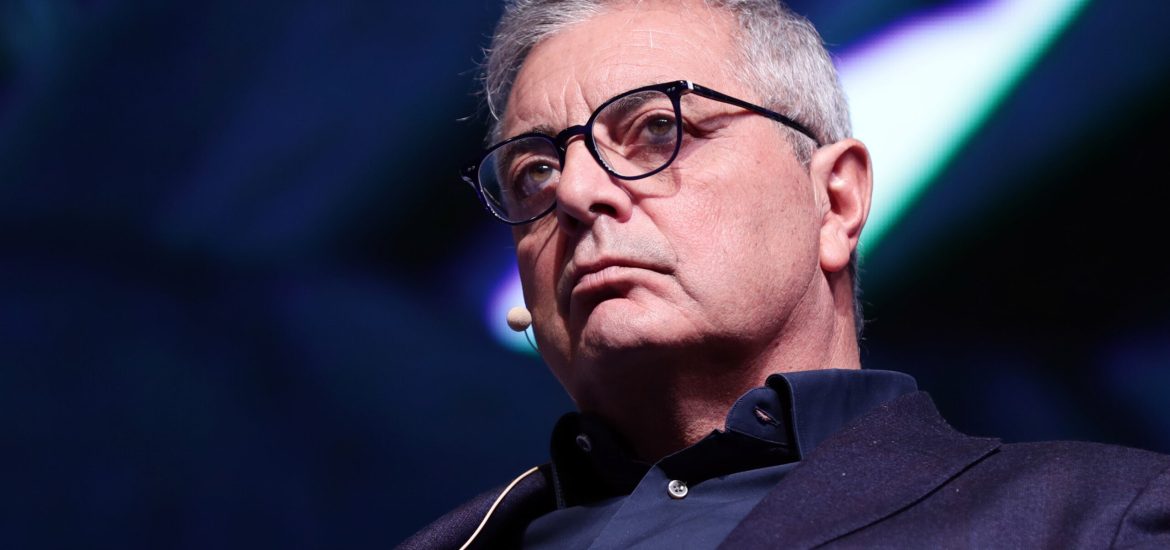

“When the governor states that the high capital endowment of the banking system opens up opportunities for new national and cross-border mergers, I read it as a substantial green light for new extraordinary operations and I believe I am interpreting it correctly.” This was said by the Fabi General Secretary, Lando Maria Sileoni, commenting live on Rai Radio1 on the final remarks of the Governor of the Bank of Italy, Fabio Panetta. “Panetta – he added – highlights how the capital strength of banks can promote new mergers and contribute to building a stronger, more competitive European banking market capable of competing with major international players. It is a mission consistent with the path of European financial integration. However, every extraordinary operation cannot and must not be evaluated solely through capital ratios and industrial synergies. There is also another dimension that often remains in the background: the employment and social impact of any mergers. Behind every consolidation operation, the issue of redundancies, job quality, and the social role that the banking system must continue to play remains open. These aspects must carry the same weight as economic and financial evaluations.”
“When we talk about the purchasing power of families, we must remember that there are about 5.6 million people still waiting for the renewal of the national labor contract,” said Sileoni: “Alongside price stability, the role of investors and consumers, we must also consider – he added – workers, because the purchasing power of families inevitably depends on wages. Contracts must be renewed on time. In the banking sector, where I work, despite thousands of redundancies agreed with banks in industrial plans and all implemented through voluntary retirements, we have hired over 40,000 young people. At the most delicate moment, we managed to guarantee new employment also thanks to the contribution of a fund financed not only by banks but also by bank workers. This example should be followed by other sectors: some do, others don’t. The governor’s reflection encourages companies to hire young people and train them. Only this action can guarantee a better future for our country, which already has many problems to face.”
No criticism of the leadership of the Institute on Via Nazionale, on the contrary: “I believe the governor represents a figure of great institutional balance. In times of uncertainty, he has brought back to the center a principle often forgotten: economic stability is not an end, but a tool to guarantee growth, trust, and cohesion,” emphasized the Fabi General Secretary: “Governor Fabio Panetta – he added – grasps a crucial point: global growth has shown a surprising capacity for resilience, but a crisis in the Strait of Hormuz could quickly change the entire scenario. When a significant share of the world’s oil and gas passes through there, it is not only the price of energy at stake, but the cost for families, the competitiveness of businesses, and economic stability. For this reason, peace today is not only a political and moral value, but also an economic necessity. Today, there are no distant conflicts: a crisis in the Persian Gulf can translate into higher bills for families and businesses. Energy security has become a matter of economic policy, but also and above all of social justice. The real lesson of the Hormuz crisis is that energy independence is no longer just an industrial issue, but a matter of economic sovereignty. The more a country depends on events happening thousands of kilometers away, the more families, businesses, and investors become vulnerable. Wars are fought on military fronts, but often the bill is paid from the pockets of citizens and investors.”