


Higher wages, new protections on artificial intelligence, strengthened welfare, and a rejected attempt to modify the framework of classifications and seniority classes. After a long negotiation, during the night between May 12 and 13, the unions and Ania (National Association of Insurance Companies) signed the proposed renewal of the national collective contract for the insurance sector, a sector that in recent years has continued to grow both in premium collection and employment. The agreement concerns about 50,000 employees in the sector and provides for an average wage increase of 280 euros per month for the fourth level, seventh class (the average reference profile of the contract), equal to an 11.5% increase, plus a one-time payment of one thousand euros, of which 550 euros in cash and 450 euros in welfare.
The new contract will be valid until May 31, 2028. The increases will take effect in three installments: 100 euros from January 1, 2026, another 100 euros from January 1, 2027, and 80 euros from January 1, 2028. The first installment will be paid with arrears in July 2026.
THE AGREEMENT BETWEEN INCREASES AND NEW PROTECTIONS
The agreement comes at the end of a negotiation described as “intense” by the trade unions and characterized, especially in the first phase, by strong differences between the parties’ requests. In the end, however, both the unions and the insurance companies’ association claimed the result.
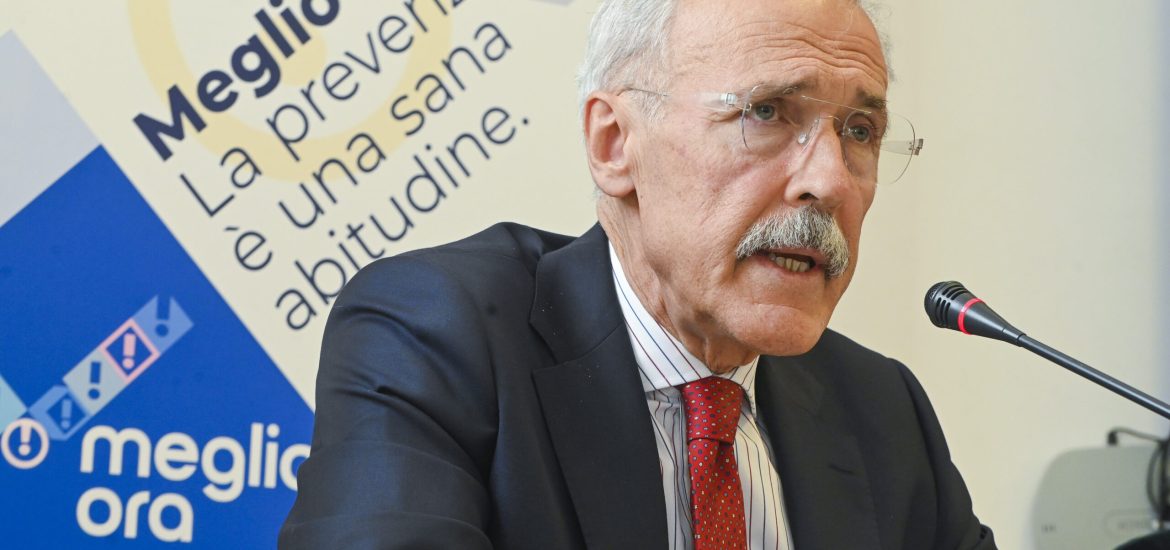
For Giovanni Liverani (in the photo), president of Ania, the new contract represents “a great result of collaboration in the sector with the social partners,” achieved “in a complex macroeconomic context of great uncertainty.” Liverani spoke of an agreement that guarantees “a significant improvement in the economic and regulatory part” and that provides “planning certainty to companies in the entire sector.” According to the president of Ania, the insurance sector “confirms itself as a very powerful tool of protection and welfare for Italian families and businesses and sees its collaborators as one of its main strengths.”
The unions also expressed satisfaction, albeit with different emphases. Antonio Zanelli, national secretary of First Cisl, emphasized that “with the economic increase in wages we have gone well beyond the primary goal of protecting purchasing power,” also claiming to have rejected “the worsening employer requests on institutions such as seniority classes and classifications.”
For Fisac Cgil, on the other hand, the central point of the agreement was to avoid a “dismantling” of the national contract. National secretary Giacomo Sturniolo explained that the renewal allowed “to defend the wages of female and male workers but above all the national contract against the attempts by the other party to impose worse conditions on young people.”
Uilca, for its part, defined the new contract “a result of great value, political and union, capable of combining innovation, rights, and wage growth.” According to national secretary Emanuele Bartolucci, the agreement represents “a signal of stability, responsibility, and vision for the future.”
THE ISSUE OF YOUNG WORKERS AND SENIORITY CLASSES
One of the most delicate points of the negotiation concerned seniority classes and the treatment of new hires. According to the trade unions, Ania had proposed a new table with only eight seniority classes for new entries and a slower progression between classes.
A change that, according to the unions, would have penalized especially the younger generations and created a two-tier system within the sector. In the end, that proposal was withdrawn.
Fisac Cgil explicitly spoke of defending “intergenerational equity,” while First Cisl claimed to have successfully rejected the requests considered worsening.
The intervention on professional classifications was more limited. The only change concerns greater temporary flexibility between the fourth and fifth levels. Further requests made by the companies were rejected.
ARTIFICIAL INTELLIGENCE, WELFARE, AND THE RIGHT TO DISCONNECT
Among the most innovative elements of the new contract is the protocol on artificial intelligence. The parties signed a joint declaration establishing that the use of AI must take place exclusively “to support” human work.
The contract also introduces joint company committees dedicated precisely to managing technological transformation processes.
For Zanelli of First Cisl, the shared declaration “clarifies that artificial intelligence must be exclusively in support of female and male workers.” Uilca also emphasized transparency, training, and job protection in digitalization processes.
The renewal also strengthens a series of regulatory protections. Interventions are planned on health, fragility, inclusion, equal opportunities, work-life balance, and the right to disconnect. On the parenting front, additional leave is granted for fathers, while protection for disabilities and sick leave is expanded.
Regarding working hours, the contract recognizes an additional six hours of leave compared to the eight already existing.
Particular attention was also given to production organization, contact centers, and insurance producers. For the latter, an additional economic increase of 7% on the first level and 3% on the second is provided, along with measures dedicated to fragile situations.
The text also includes a commitment on insurance outsourcing, with the declared goal of combating contractual dumping phenomena.
THE WEIGHT OF A SECTOR THAT CONTINUES TO GROW
The contract renewal comes at a positive phase for the Italian insurance sector. According to Ania data, in 2025 the total premium collection reached 181.9 billion euros, up 7.8% compared to the previous year.
The Life branch rose by 8.3%, reaching 130.8 billion, while the Non-Life sector grew by 6.5% to 51 billion. The overall incidence of premiums on GDP rose to 7.2%.
The market was driven especially by products related to protection and supplementary pensions. Unit Linked policies grew by 19%, while pension funds recorded a jump of 48.1%. The health sector (+11.6%) and coverage linked to catastrophic risks also saw strong growth.
According to Liverani, the growth in premium collection reflects “an ever-increasing level of protection for Italian families and businesses against various types of risks.” The president of Ania recalled that in the Non-Life sector alone, companies paid almost 40 billion euros in claims, managing over 18 million cases.
The sector also shows financial solidity. The average solvency ratio stands around 259%, more than double the minimum required levels.
Employment has also started to grow again. In 2024, insurance sector employees reached 46,918, an increase of 0.5% compared to the previous year and at the highest levels of the last decade.
Women now represent over 48.5% of the total workforce, while more than half of employees hold a degree or doctorate.
THE CHALLENGE OF TECHNOLOGICAL TRANSFORMATION
Behind the contract renewal lies the profound transformation that the insurance sector is undergoing.
Cyber coverage is growing, supplementary health policies are increasing, and business related to climate and catastrophic risks is strengthening.
Ania itself highlights how Italy remains underinsured compared to the main European economies, especially regarding natural disasters and cyber protection.
Now the proposed agreement must be submitted to workers’ assemblies scheduled in the coming weeks.




