

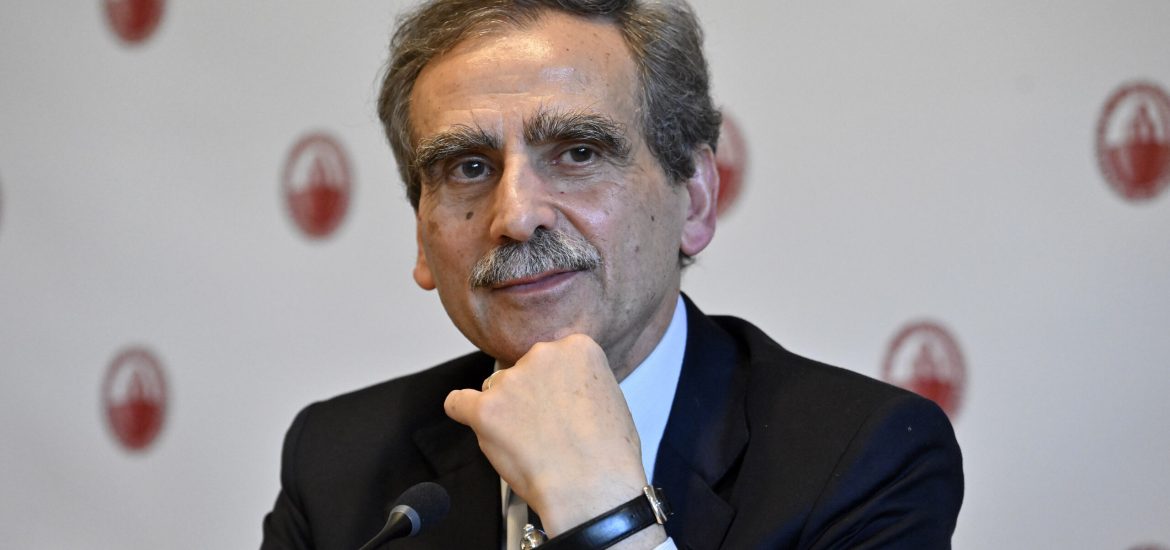

Another point in favor for the CEO of Banca Monte dei Paschi di Siena Luigi Lovaglio, who not coincidentally assures that “uncertainty is behind us.” After weeks marked by tensions, Monte closes the first quarter of 2026 with results above expectations and with a market that, after a negative start, ends up rewarding the stock along with that of Piazzetta Cuccia. At Piazza Affari, in fact, Mps quickly reversed course to rise by +2%, while Mediobanca gained almost 2%, a sign that investors have read the quarterly numbers and especially Lovaglio’s strategic messages as confirmation of the industrial project’s resilience.
The central point, for the Lucanian banker, is that the phase of political and corporate battle is considered closed. “The message is simple, uncertainty is behind us, now the focus is on strategic execution,” he told analysts, reiterating that “integration with Mediobanca remains central.”
RESULTS ABOVE EXPECTATIONS BUT PRO FORMA COMPARISON WEIGHS
The group closed the first three months of the year with a net profit of 521 million euros, above the analysts’ consensus of 429 million. The figure grows compared to the 413 million recorded in the first quarter of 2025, when Mediobanca was not yet consolidated. The comparison with last year’s pro forma figure, which already simulated the inclusion of Piazzetta Cuccia, is more complex: in that case, the profit was 692 million. It is precisely on this aspect that Mps insists, explaining that the correct comparison should be made especially on pre-tax profit, which rose to 911 million, up 6.7% year on year and 15.6% compared to the fourth quarter of 2025.
The difference, according to the group, lies mainly in taxation. Income taxes recorded a charge of 294 million, also influenced by the tax increase introduced with the budget law. Without the contribution attributable to Mediobanca, the quarter’s tax burden would have been 169 million, compared to the tax benefit of 16 million recorded a year ago thanks to the revaluation of deferred tax assets (Dta).
Revenues rose to 1.96 billion euros, up 2.9% year on year and 3% from the previous quarter. The figure was supported both by net interest income, which increased by 1.9% quarter on quarter, and commissions, which grew by 2.8%, with an acceleration in the wealth management and advisory component of 7.6%.
Net operating income reached 947 million, up 3.4% from 2025 and 9.5% from the previous quarter, thanks to revenue dynamics, risk cost holding at 42 basis points, and cost management which the group continues to define as “disciplined.” Operating costs fell by 3.1% compared to the previous quarter, while the cost income ratio improved to 44%.
On the commercial front, loans grew by 1% quarter on quarter and 5.2% year on year, driven by mortgage lending to households and consumer credit. Total deposits reached about 290 billion, an increase of over 16 billion compared to a year ago. Gross non-performing loans fell to 3.7 billion, with a gross Npe ratio of 2.5% and net at 1.3%.
Capital remains one of the group’s strong points. The Cet1 ratio stood at 15.9%, compared to 16.2% at the end of 2025, remaining well above the capital requirements set by the ECB, with a margin of about 650 basis points. The capital figure remains robust even with the assumption of fully distributing profits to shareholders.
MEDIOBANCA REMAINS THE CENTER OF STRATEGY
The real game, however, continues to be played on integration with Mediobanca. Lovaglio repeatedly stated that the dossier is the heart of the new Mps and that the entire management machine is focused on executing the plan.
“Governance is fully consolidated, priorities are aligned, and we have a strong orientation towards achieving objectives,” explained the manager, describing the new board as “composed of highly qualified professionals with complementary skills.”
Lovaglio also confirmed the operation’s calendar: after the boards’ approval of the merger project and exchange ratio on March 10, the steps related to the demerger will take place between May and June, while the shareholders’ vote is expected in the third quarter. The goal remains to complete integration by the end of the year.
Meanwhile, the group claims to have already “secured” 30% of the synergies planned for 2026. The final target remains that announced by the plan: 700 million in synergies by 2028.
For Lovaglio, most synergies will come from the traditional commercial bank, i.e., households and businesses, which should generate about half of the expected benefits. Another 20% should come from corporate activities, thanks to the combination of Mps’s lending strength and Mediobanca’s advisory services. The rest will be mainly linked to asset management and private banking.
“We are beginning to see the first benefits from synergies,” emphasized the CEO, highlighting how Mediobanca recorded a net profit of 323 million and a pre-tax profit of 447 million in the quarter, up 19% from the previous quarter.
GENERALI, ANIMA AND THE BANKING RISIKO
Another key issue is the stake in Generali, which is destined to remain with the future Mediobanca Spa after the integration operation.
Lovaglio ruled out, at least for now, sale scenarios. “We are so focused on the integration process with Mediobanca that I haven’t even thought about what scenario would be plausible or logical to sell the stake in Generali,” he told analysts.
The CEO reiterated that the Lion is “nice to have,” both for the economic contribution – 130 million in the quarter – and for possible future operational partnerships. A statement that the market also read as an implicit opening to a possible reshuffle of insurance alliances after the expiration of the joint venture with Axa in 2027. It should not be forgotten, in any case, that in financial jargon an asset defined as “nice to have” can be considered valuable to keep, but also attractive and to be leveraged at the right time.
On the Anima dossier, Lovaglio assured that the alliance will continue even after integration with Mediobanca. “Anima is a strategic partner for us and we plan to carry on this partnership,” he explained, specifying that there is no competition with Mediobanca Sgr’s offering.
In private banking, months of uncertainty about the Mediobanca operation led to the departure of several wealth managers. However, Lovaglio assures that “since mid-April the situation has quickly normalized,” with the return of client trust, network stabilization, and resumption of commercial activity. The group has also restarted recruiting senior bankers, with the first hires expected as early as next quarter.
On the banking risiko, finally, Lovaglio did not hide that sector consolidation will continue. “There will be other phases of consolidation and it’s nice to be in our position because we are the main players at the moment,” he observed. But immediately after he clarified that “at this stage we want to focus on completing the integration process” and on fulfilling the promises made to the market.
DIVIDENDS, BUYBACK AND GOVERNANCE
On shareholder remuneration, Monte confirms a very generous line. Lovaglio assured that the 2026 dividend will be “in line with this year’s” and that the overall remuneration planned by the plan, amounting to 16 billion between dividends and buybacks, remains confirmed.
The possibility of introducing an interim dividend already this year remains open. The decision will come with the half-year results in August. The share buyback already announced in the industrial plan is confirmed.
Meanwhile, the board meeting to approve the results also verified the requirements of the directors appointed by the April 15 shareholders’ meeting, a delicate step after recent tensions culminating with the departure of Fabrizio Palermo. According to the bank’s communication, all board members are independent except for Lovaglio himself.
Also on the table remains the so-called Danish Compromise regarding the Generali stake. Mps has submitted a query to supervisory authorities and estimates a potential benefit of about 50 basis points of Cet1, but specifies that this positive effect has not been included in the plan’s projections.
For now, however, the message coming from Monte is clear: no new adventures. First, the Mediobanca project must be completed.




