

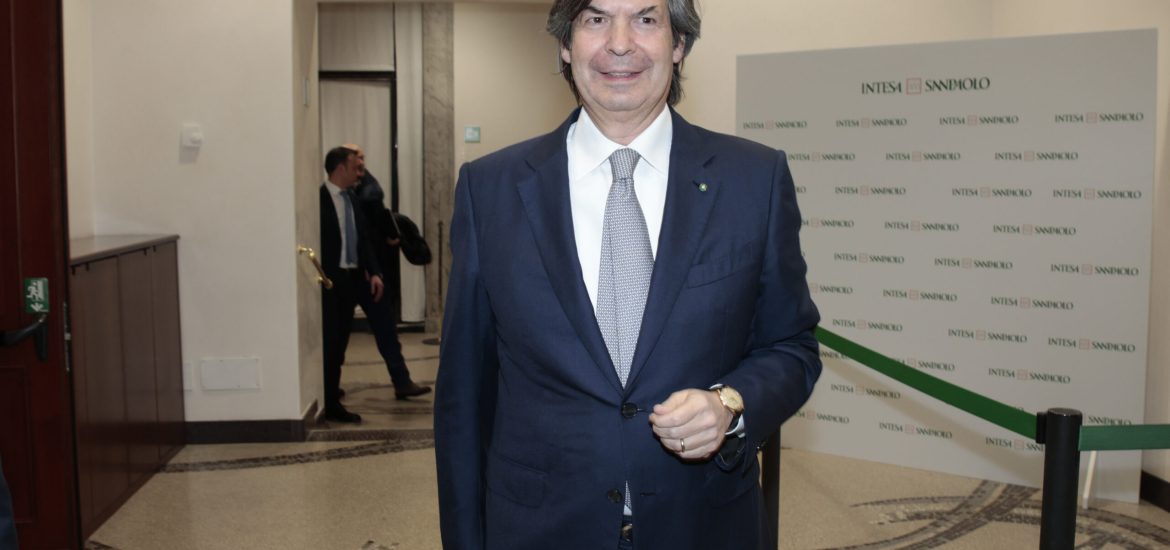

Intesa Sanpaolo’s interest in the Spanish Singular Bank opens a new direction in Carlo Messina’s (pictured) European strategy, while in the continental banking sector cross-border mergers continue to face political and regulatory obstacles, as demonstrated by the case of UniCredit’s bid for Commerzbank challenged by the German government. The dossier was first revealed by the Financial Times, which reported that the Italian group has already started due diligence on the private bank based in Madrid and is preparing a formal offer to enter the race opened by the American fund Warburg Pincus, the controlling shareholder of the Spanish institution.
INTESA’S SPANISH PLAY
The operation is still in a preliminary phase, but the perimeter is now defined. Warburg Pincus, which controls about 93% of Singular Bank, started the sale process of the stake at the end of last year, assisted by Jefferies. The remaining 7% is held by the management led by Javier Marín, former CEO of Santander and a key figure in the bank’s transformation in recent years.
The US fund is aiming for a valuation around 300 million euros, although the proposal under study by Intesa Sanpaolo would be lower than the seller’s expectations, according to sources heard by the Financial Times. Other parties are also in the running, including the Dutch ING, some Spanish banks, and in recent weeks Abanca and Revolut have also been approached.
For Intesa Sanpaolo, this would be the first significant real expansion into the Spanish banking market. The group has been present for years in the Iberian Peninsula in corporate and investment banking, especially in the syndicated loans segment and assisting Italian companies, but it does not yet have a local retail or wealth management platform. The potential acquisition of Singular would therefore represent a shortcut to directly entering the Spanish private banking market with an already operational structure and a consolidated client base.
MESSINA OUT OF THE ITALIAN RISIKO
The move also confirms the strategic line repeatedly emphasized by Carlo Messina over the past year and a half: to stay out of the Italian banking risiko and focus resources on organic and selective growth abroad. After the wave of consolidation that involved the Italian banking system – from the Mps-Mediobanca operation to the failed attempt by UniCredit on Banco Bpm – Intesa chose not to participate in the major domestic deals, also due to antitrust constraints arising from the shares already held in the Italian market.
In the new industrial plan presented in February, the group clearly indicated the European direction of the Isywealth Europe project, which aims to strengthen wealth management in Spain, France, and Germany through targeted acquisitions, hiring financial advisors, and developing digital platforms. As Reuters recalls, Intesa plans to hire over 1,200 financial advisors abroad and invest about 200 million euros to build the new European hub for asset management.
It is no coincidence that in the same hours when the spotlight was on Singular, the group announced the launch of Fideuram Direct in Belgium and Luxembourg, accelerating its international positioning in digital private banking.
WHO IS SINGULAR BANK
Founded in 2014, Singular Bank is a Spanish private bank focused on asset management and high-net-worth clients. In 2021, the group made a significant leap by acquiring the Spanish wealth management activities of UBS.
The institution manages about 18 billion euros in assets, up 15% in the first quarter of 2026. The threshold approaches 20 billion when including administered assets and placed products.
The financial statements show a bank still relatively small compared to large European groups but rapidly growing. Singular closed 2025 with a net profit of 1.7 million euros, while in the first quarter of 2026 the profit was about 1.04 million. Estimates for the entire fiscal year indicate a net result close to 10 million euros, signaling a progressive acceleration in profitability.
The ownership structure remains highly concentrated: Warburg Pincus controls almost the entire capital after the investment made in 2019, when the American fund acquired the platform with the goal of building an independent operator in Spanish private banking.
ASSET MANAGEMENT, PRIVATE EQUITY AND ADVISORY
One of the elements that make Singular interesting for Intesa is the strong integration between private banking, asset management, and alternative activities. Through Singular Asset Management, the group manages a very wide range of bond, multi-asset, equity, and alternative funds. The company’s quarterly report shows an offering ranging from conservative fixed income funds to global equity strategies and private equity.
Among the flagship products is Sigma Internacional, a global fund focused on stock selection, which in the first quarter of 2026 recorded a performance of 5.78% and an annualized return of 13.89% since its inception in 2021. The fund has nearly 3,900 subscribers and manages assets exceeding 69 million euros.
Singular has also developed a significant platform in private equity and alternative investments. Quarterly documents show vehicles dedicated to international buyouts, infrastructure, private credit, and dual-use technologies linked to defense, cybersecurity, and artificial intelligence. Among the most relevant funds is Hyperion Fund, which has raised over 150 million euros from public and private investors to invest in European companies active in aerospace, AI, and cybersecurity sectors.
In addition to asset management, Singular operates in financial advisory and services for private clients.
A MODEL COMPATIBLE WITH INTESA
For the group led by Messina, Singular would represent a target consistent with the model already built in Italy around Fideuram, Eurizon, and insurance activities. The Spanish bank would therefore integrate with Intesa’s profile, strongly oriented towards wealth management and insurance.
The interest comes at a time when many European banks are trying to strengthen the most profitable activities, now that the effect of high rates on accounts is beginning to ease. Hence the growing focus on asset management, private banking, and advisory services: activities characterized by more stable fees and lower capital absorption.
For Intesa, which today has a market capitalization of about 97 billion euros and is the largest Italian bank by assets, the operation would be modest in size but of strong strategic value. And it would above all be a way to strengthen itself in a market – the Spanish one – considered among the most interesting in Europe for private wealth growth and wealth management development.




