

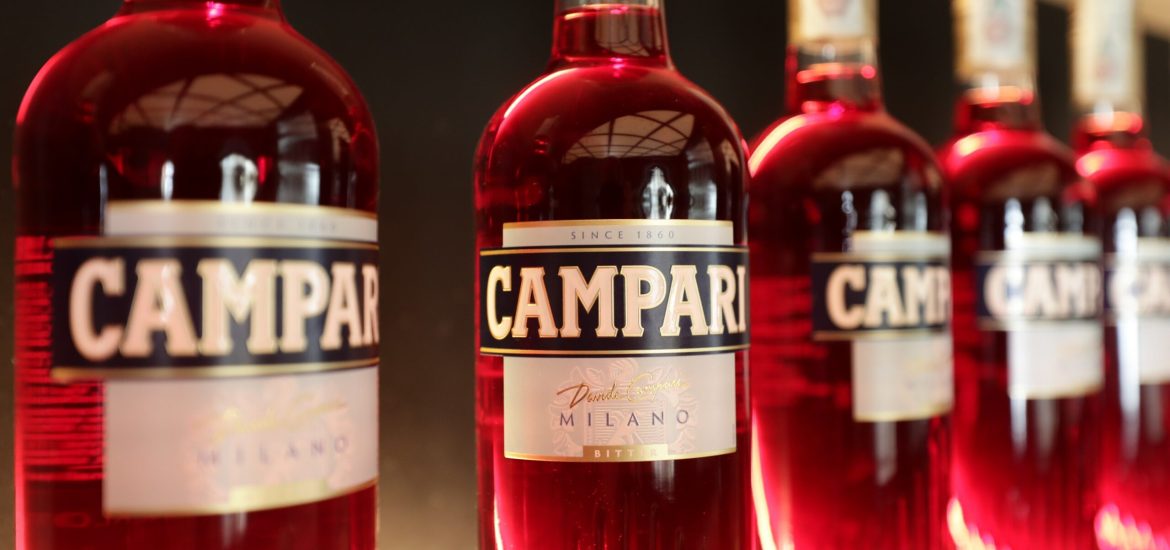

A “solid” start to the year, but not enough for the market. The first quarter 2026 results of Campari show positive organic growth, but fall short of analysts’ expectations and trigger an immediate reaction on the stock market: the stock loses over 11%, sliding to the bottom of the Milan stock exchange. A clear rejection, reflecting more the market’s expectations than the industrial dynamics of the group, but also signaling how complex the spirits sector has become.
Sales stood at 643 million euros, down 3.4% on a reported basis, against a consensus of about 651 million. Supporting the numbers was organic growth of +2.9%, but significantly weighed down by disposals (-2.2%), such as the sale of Cinzano, and currency headwinds (-4.1%) linked to the weakness of the dollar.
ORGANIC GROWTH THAT IS NOT ENOUGH FOR THE MARKET
The figure the management emphasizes is organic growth: +2.9% in the quarter, with widespread growth in 18 markets, results above the sector average, and increasing market shares in consumer sales. But the market looks elsewhere: at the quality of growth, its sustainability, and especially the comparison with expectations.
The geographic snapshot shows a group still expanding, but with evident asymmetries. Europe grows by 1.9%, North America by 2.2% despite difficulties, while emerging markets accelerate to +12.7%, confirming themselves as the real locomotive. Asia Pacific is weaker, down 1.6%, penalized mainly by the collapse of travel retail linked to geopolitical tensions.
In other words, Campari is growing, but in a non-linear way and, above all, less than investors expected. Hence the sharp reaction on the stock market.
THE US ISSUE: INVENTORIES, CONSUMPTION, AND SIGNS OF SLOWDOWN
It is especially in the United States that the gap with expectations is played out. Here the group deliberately reduced inventories of non-priority brands, with an impact of about 10 million euros that “will not be recovered,” as explained by CEO Simon Hunt, but offset by strong growth of key brands like Aperol.
A move consistent with the key brand strategy, but which in the short term affected revenues. According to analysts, it is precisely this “targeted inventory optimization” that explains much of the gap versus consensus, along with temporary effects in Europe related to order timing and negotiations with retailers.
Behind the choice, however, there is also a broader picture: the American spirits market is slowing down. Demand appears weaker, due to inflation and a climate of greater caution in consumption. Hunt himself admits that “there will probably be a further cooling of consumer spending,” especially in the United States, and that the context remains uncertain.
Not only that: in the US, the issue of tequila and more generally premium spirits weighs as well, with signs of saturation and high inventory levels throughout the sector. A problem affecting all global giants and forcing a revision of commercial strategies.
INFLATION, LOGISTICS, AND GEOPOLITICS: THE CONTEXT BECOMES MORE COMPLEX
External factors also contribute to complicating the picture. The crisis in the Middle East has hit the global travel retail channel, i.e., sales in airports and duty frees, with a 13.5% drop, while inflation continues to impact operating costs.
“The main cost area we are observing concerns gasoline and diesel costs from a logistics perspective,” explains Hunt. An element that fits into a broader chain of pressures, although the group benefits from long-term contracts on raw materials such as glass.
Added to this are US tariffs, which according to the company will have an impact of about 30 million euros on the year, and currency fluctuations, which continue to weigh on the accounts.
THE WEIGHT OF STRATEGIC CHOICES: CINZANO AND THE PORTFOLIO SHIFT
Another key element of the quarterly report is portfolio rationalization. The sale of non-priority brands, including Cinzano, generated a perimeter effect of -2.2% on sales.
This is a choice consistent with the strategy announced by the group: fewer brands, but stronger, with greater focus on aperitifs and higher-margin products. A strategy that, in the medium term, should improve the quality of growth, but which inevitably weighs on the numbers in the short term.
“We started 2026 with a solid performance,” claims the CEO. And this “thanks to the implementation of the strategy focused on a smaller number of initiatives, but with greater strategic impact.”
GUIDANCE CONFIRMED, BUT WITH MORE UNCERTAINTIES
Despite difficulties, Campari confirms guidance for 2026, with organic growth around 3% and margins expected to improve in the second half of the year, also thanks to cost containment. But the path is weighed down by US tariffs (about 30 million) and the effect of disposals, which subtract about 70 million in revenues and 30 million in operating profit.
The key will be seasonality: the first quarter remains the weakest of the year, and the group plays much of the game in the following months. It is there that Campari aims to regain momentum, leveraging expansion in emerging markets, the good performance of ready-to-drink and new formats, and the recovery of out-of-home consumption.
“What we are trying to do is balance the risks we see for the rest of the year with the opportunities,” Hunt explained.
However, there remains greater caution on the margin front, with analysts beginning to revise profitability estimates for the first half.
CHINA, EMERGING MARKETS, AND NEW CONSUMPTION: WHERE THE GAME IS PLAYED
While the United States show signs of fatigue, it is in emerging markets that Campari finds momentum. Brazil and Argentina drive growth, while in Asia the picture remains two-speed: China continues to be weak on the premium consumption front, but other markets in the region, including India and those served through local partners, show solid growth.
The Chinese theme is crucial for the entire sector. The slowdown in the economy and policies to contain alcohol consumption are weighing on demand, especially for high-end products. A dynamic also reflected in the cognac segment, already struggling globally.
A SECTOR IN TRANSFORMATION (AND UNDER PRESSURE)
The Campari case fits into a broader picture of transformation in the alcoholic beverages and spirits industry. In recent years, the sector has seen a structural slowdown in consumption, especially in mature markets, and a change in consumer habits, increasingly oriented towards healthy or non-alcoholic alternatives.
The numbers are telling: the main global groups have accumulated inventories worth about 22 billion dollars, while the sector has burned over 800 billion in stock market value in recent years. Alcohol consumption in the United States is at historic lows, while Millennials and Gen Z show increasingly limited interest in traditional spirits.
In this context, even the giants are struggling. Pernod Ricard issued a warning, estimating an annual sales decline between 3% and 4%, and even explored a possible merger with the American Brown-Forman (group controlling Jack Daniel’s), which later failed: a clear sign of a sector seeking new dimensions and synergies to face the crisis.
As for Campari, for now it confirms its course, but the market demands stronger signals already in the coming quarters.




