

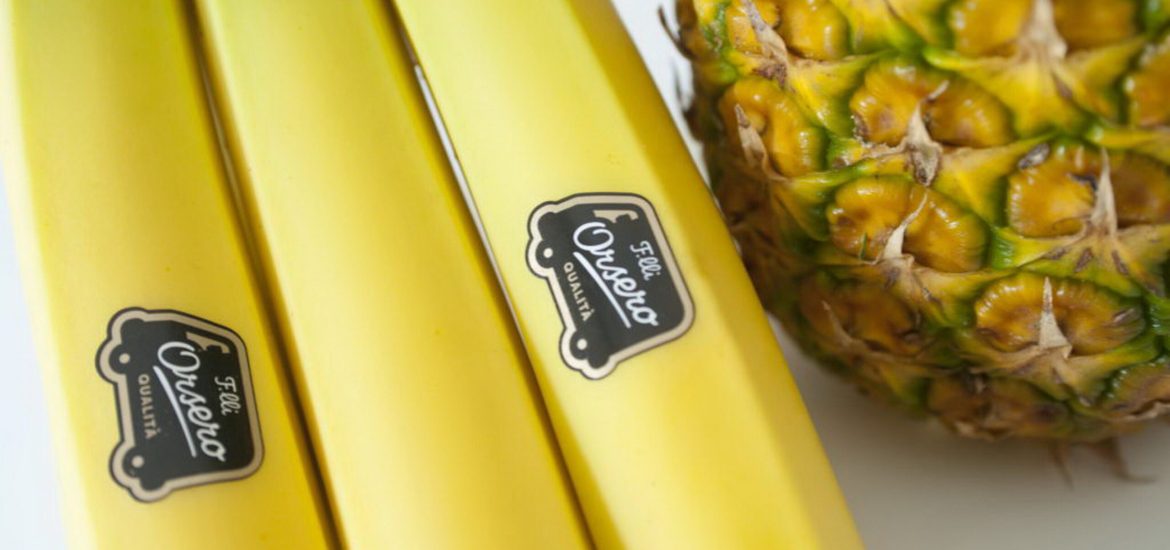

Bananas slow down. Kiwis, berries, and exotic fruit instead pull ahead. And so the first quarter of 2026 for Orsero closes with growing revenues but profits and margins under pressure, due to the slowdown in the shipping division, bad weather in the North Atlantic, and some operational hiccups along the logistics chain. For the Orsero family group, however, the glass remains half full: turnover rises, cash improves, and distribution continues to run on higher value-added categories.
REVENUES RISE, BUT MARGINS TIGHTEN
The numbers tell a tale of a two-speed quarter. On one hand, net revenues grew by 2.5% to 389.2 million euros compared to 379.6 million in the same period of 2025. On the other, net profit fell by 12.5% to 6.5 million, while adjusted EBITDA stood at 20.8 million, down by 3.4%. Operating profitability also declined: the margin dropped from 5.7% to 5.3%.
The picture is of a group that continues to grow in volumes and turnover but must deal with higher logistics costs and a business – refrigerated maritime transport – less bright than a year ago.
DEBT DOWN AND MORE CASH
While profits and margins slow, encouraging signals come on the financial front. The net financial position improves and decreases from 116.1 to 103.8 million euros. Even more marked is the decline in the figure net of leasing effects, which fell from 49.7 to 37.5 million.
The main driver was strong operating cash generation and favorable working capital management, contrary to the traditional seasonality of the first quarter. Liquidity also grows: available funds rise from 77.7 to 85.5 million euros.
THE WEIGHT OF BANANAS AND THE DRIVE OF “PREMIUM” FRUIT
There is a trend that clearly shows where the group is heading. Orsero remains one of the main European operators in banana and pineapple importation, but for some time now it has increasingly focused on categories considered “premium”: kiwi, berries, avocado, and exotic fruit.
And it is precisely there that the best results come. The distribution business unit, which represents the heart of the group, recorded revenues of 367.6 million euros, up 2%, with adjusted EBITDA rising 3.6% to 16.2 million.
The driver was the “price/mix effect” together with volume increases in higher value-added categories. In other words: Orsero sold more profitable products with better average prices. Bananas, instead, slowed down.
This signals a transformation that has been ongoing for years and aims to reduce dependence on the traditional business. Also because bananas remain a huge but very competitive market, with tighter margins and strong exposure to logistical and climatic fluctuations.
SHIPPING UNDER PRESSURE BETWEEN ATLANTIC AND MAINTENANCE
The problems mainly come from the sea. The shipping division, which manages refrigerated maritime fruit transport, did slightly increase revenues to 29.1 million euros, but saw adjusted EBITDA fall from 7.9 to 6.9 million.
The slowdown is linked to a mix of factors: fewer bananas transported, ships less loaded than expected, extraordinary technical interventions, and difficult weather conditions in the North Atlantic, which raised operating costs and slowed route regularity.
A problem far from marginal for a group that has built part of its strength precisely on vertical integration of the supply chain, from sourcing to transport and distribution. Orsero is indeed an integrated logistics operator that directly controls an important part of the cold chain and maritime connections between Latin America and the Mediterranean Europe.
WHO ORSERO IS TODAY
Today the group generates about 1.7 billion euros in annual turnover, markets about 860,000 tons of fruit and vegetables, and employs nearly 2,400 people. It is present in Italy, France, Spain, Portugal, Greece, Mexico, Costa Rica, and Colombia.
Activities range from fresh fruit and vegetable import and distribution to refrigerated maritime transport. The model is vertical integration: sourcing, navigation, ripening, logistics, distribution, and marketing.
The main share of turnover comes from fruit and vegetable distribution, which accounts for over 95% of the business. The rest is mainly linked to shipping.
ORSERO DEFENDS THE ACCOUNTS, AMID GEOPOLITICAL UNCERTAINTY AND PREMIUM PRODUCTS
Raffaella Orsero and Matteo Colombini, the group’s CEOs, nevertheless speak of “positive results, in line with expectations.” They especially emphasize the strategy of focusing on higher value-added products.
The two managers underline that, despite “the ongoing geopolitical uncertainty,” the business model continues to deliver “steady growth.” They also highlight new supply chain projects, such as the exclusive agreement for the distribution in Europe of Madagascar lychees.
Then there is the logistics issue. Orsero is continuing to invest in the European distribution network. In April, the group acquired a warehouse and a stall in the wholesale fruit and vegetable market of Vigo, in northern Spain. The goal: to strengthen commercial presence in the Iberian Peninsula, which already today represents over a quarter of the group’s turnover.
THE DIFFICULT YEARS BEHIND
The Orsero group was founded over half a century ago from the initiative of the Ligurian family active since the 1940s in the fruit and vegetable trade. In the 2000s, the company went through a very complicated phase. After the death of founder Raffaello Orsero, the group embarked on a phase of expansion outside the core business, into real estate, airports, and other activities later considered non-strategic. Added to this were the high debt and legal issues related to the Carige case.
From there began a long restructuring culminating in a return to focus on fruit and vegetables, stock market listing, and consolidation of international presence.




