

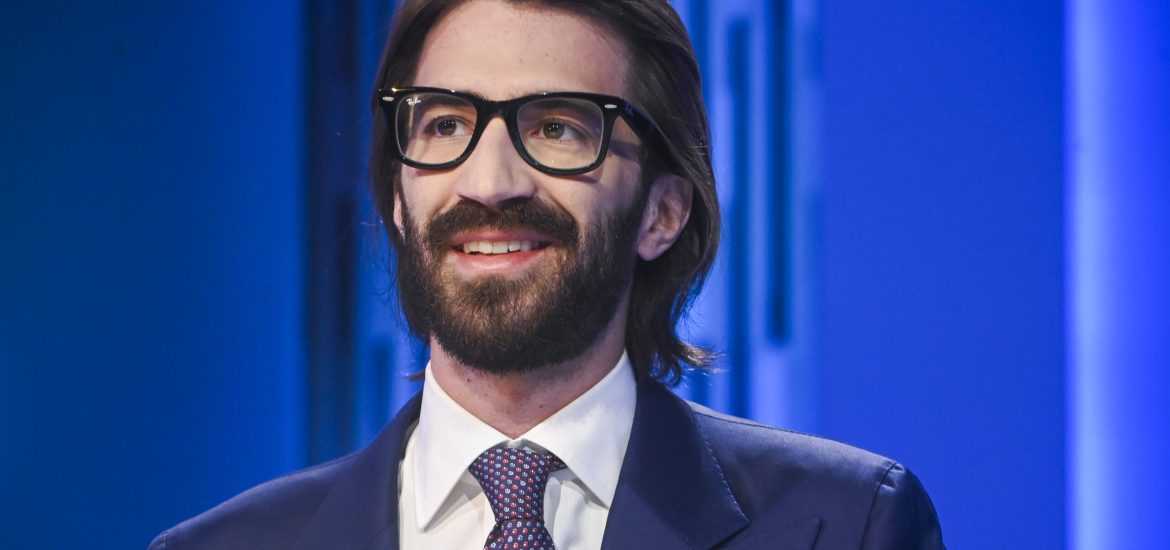

Four years after Leonardo Del Vecchio’s death, the family safe reemerges from the freezer. The agreement between Leonardo Maria Del Vecchio and his siblings Luca and Paola unlocks a game stuck amid cross vetoes, lawsuits, and mistrust. But the restructuring is not just a succession story: it is a financial operation worth over 10 billion that redefines the power dynamics within Delfin and, above all, opens a new phase in the relations between the holding company, banks, and the Italian financial system.
THE SHARES: FROM EIGHT EQUAL PARTNERS TO A DOMINANT (BUT NOT SOVEREIGN) SHAREHOLDER
The settlement point is clear: Leonardo Maria Del Vecchio acquires 12.5% from Luca and 12.5% from Paola, totaling 25%, thus rising to 37.5% of the holding. The total price of the operation is around 10 billion, about 5 billion each, with an implicit valuation of Delfin around 40 billion, against assets nearing 45 billion.
The heirs’ geography changes radically. It goes from eight partners all equal at 12.5% to six partners, with only one above the threshold. Remaining in the capital are Claudio and Marisa (children of the first wife Luciana Nervo), Clemente Del Vecchio (son of the partner Sabina Grossi), Nicoletta Zampillo (second and fourth wife of the founder), and Rocco Basilico, son of Zampillo and Paolo Basilico. All at 12.5%. Only Leonardo Maria breaks the balance.
It is a “simplification,” as defined by Delfin’s chairman and EssilorLuxottica’s chairman and CEO Francesco Milleri, but not a takeover. The governance remains as designed by the founder: heavy decisions still tied to strong majorities, centrality of the board, distrust of premature moves. Not by chance, the strengthening to 37.5% does not allow autonomous decisions but enables influence on key choices, starting with dividends.
THE ASSETS: INSIDE DELFIN THERE IS A PIECE OF EUROPEAN CAPITALISM
To understand the scope of the operation, one must look inside the safe. Delfin controls 32.4% of EssilorLuxottica, an untouchable asset and the industrial heart of the group. But alongside this is a substantial financial portfolio: 17.5% of Mps, about 10% of Generali, 2.7% of Unicredit, 28.1% of Covivio.
At current values, these holdings alone are worth about 15 billion. The total assets of the holding are estimated between 40 and 45 billion. Added to this are reserves accumulated over the years between 5 and 7 billion.
It is not just a family holding. It is an important node of Italian and European capitalism, with direct influence on banks, insurance, and industry.
DIVIDENDS: FROM BRAKE TO FINANCIAL LEVERAGE
A turning point of the operation is not the stake, but the change in the bylaws. For years Delfin has distributed at most 10% of profits. A choice consistent with an accumulation and stability logic, but which effectively compressed flows to shareholders.
Now the cap rises to 80% for three years. This is the step that makes everything else possible.
In 2026 the holding will collect over 1.5 billion in dividends: about 600 million from Essilux, 455 million from Mps, 248 million from Generali, 128 million from UniCredit, and over 100 million from Covivio. With the new scheme, about one billion can be distributed to shareholders.
Leonardo Maria, with 37.5%, will receive about 400-450 million per year. A figure that matches the need to pay interest on the debt. This is where succession becomes financial engineering. Without dividends, the operation would not stand.
THE DEBT: A 10-11 BILLION LEVERAGE THAT CHANGES EVERYTHING
To buy the siblings’ shares, Leonardo Maria borrows about 10 billion, plus about 1 billion to refinance the debt of his Lmdv Capital.
The financing is structured as a bridge loan, with a duration between 18 months and two years and rates between 4% and 5%. Translated: between 400 and 500 million in annual interest.
The mechanism is straightforward but delicate. Dividends serve to pay the interest. But the principal remains to be repaid.
And here all uncertainties emerge. The options on the table are several: refinancing the debt on better terms, using Delfin’s reserves, distributing large dividends, or extraordinary operations such as listing the holding or selling some stakes.
There is also the issue of guarantees. The pledge on the share package – that is, the 37.5% – is one of the central elements of the operation. It means that, in case of difficulties, the banks would have direct leverage on the safe.
THE BANKING SYSTEM: WHO FINANCES, ORIENTS
The role of banks is decisive. The main pool includes UniCredit, Bnp Paribas, and Crédit Agricole, with possible entries of other institutions such as Banco Bpm, Goldman Sachs, Deutsche Bank, and Société Générale, according to Sole 24Ore.
The scheme rests on three pillars: higher dividends, pledge on shares, and greater flexibility in portfolio management.
One of the most sensitive points in this regard is the presence of French banks. As Walter Galbiati writes in Repubblica, “nothing against EssilorLuxottica possibly leaning more towards France, but with Bnp and Crédit Agricole among the lenders it is more likely to happen. With the risk of distancing from Italy one of the few international giants it owns.”
A comment that well captures the stakes. The financing is not neutral: it can influence industrial choices and geopolitical arrangements.
Not by chance, the operation has also attracted political attention, so much so that it triggered a parliamentary question by the M5S, asking not only about the sustainability of dividends but also the role of Unicredit and Crédit Agricole.
DELFIN AND THE BANKING RISIKO: AN INCREASINGLY TIGHT FIT
The restructuring arrives while the Italian financial system is in the midst of a new consolidation phase.
Mps is at the center of aggregation hypotheses, with Banco Bpm as a possible partner. Generali remains central to the balances between Siena itself, through Mediobanca, Unicredit, and other strong shareholders. The group led by Andrea Orcel watches all moves and has already built its own position in the Leone.
In this scenario, Delfin is everywhere. It is the largest shareholder of Mps with 17.5% and has already shown it can influence choices, as in the decisive vote for confirming Luigi Lovaglio. It holds about 10% of Generali, where it intersects the position of Mediobanca and the growing one of Unicredit, and where a key game is played on the balances of the Leone. It is also present in Piazza Gae Aulenti with 2.7%, just as Andrea Orcel’s bank closely follows both Generali and possible moves on Mps. In practice, Delfin sits simultaneously at all the risiko tables: Siena, Trieste, and Milan. And every maneuver – staying, strengthening, or even just lightening – can shift the balances among banks, insurers, and major shareholders.
The debt contracted by Leonardo Maria introduces a new element: pressure to generate cash. Officially the line remains not to sell strategic assets and to support the growth of the investees. But the market already thinks differently.
It is no coincidence that selective disposals or more active portfolio management are openly discussed.
MILLERI’S ROLE AND THE LINE OF CONTINUITY
In this complex balance, the figure of Francesco Milleri remains central. Chairman of Delfin and CEO of EssilorLuxottica, he is the continuity point with the founder’s vision.
He supports the “simplification” of the shareholding structure, reiterates that the optics giant remains the untouchable asset, and always maintains a cautious line on financial holdings: nothing is excluded, but everything must go through the board.
LEONARDO JR: STRONGER, BUT WITHIN A MORE COMPLEX SYSTEM
In the end, Leonardo Maria Del Vecchio emerges victorious from the long family showdown. He becomes the reference shareholder, takes home 37.5%, and sets a direction for the holding. But he does so within a system more complex than before. More debt, more banks, more constraints.
And above all with a reality that remains collective: Delfin is not a personal company, it is a family construction with rules designed to avoid excessive concentrations.
The result is a new balance: less deadlock, more movement, but also more exposure.




