



An article by Financial Times data journalist John Burn-Murdoch proposes a captivating and convincing thesis because it intersects with all our superficial beliefs about the ills of our time: the birth crisis is, in some way, the fault of the spread of smartphones.
Our social interactions are mediated by a screen, and this reduces the number of children; the few who are born soon become dependent on screens, and humanity is heading towards an unconscious extinction, anesthetized by TikTok videos and Instagram reels.
In the charts developed by John Burn-Murdoch, an acceleration of demographic decline is noticeable after the introduction of smartphones, which occurred at different times but still in the 2010s of this century. Could the explanation be that simple? Are we going extinct because of phones?
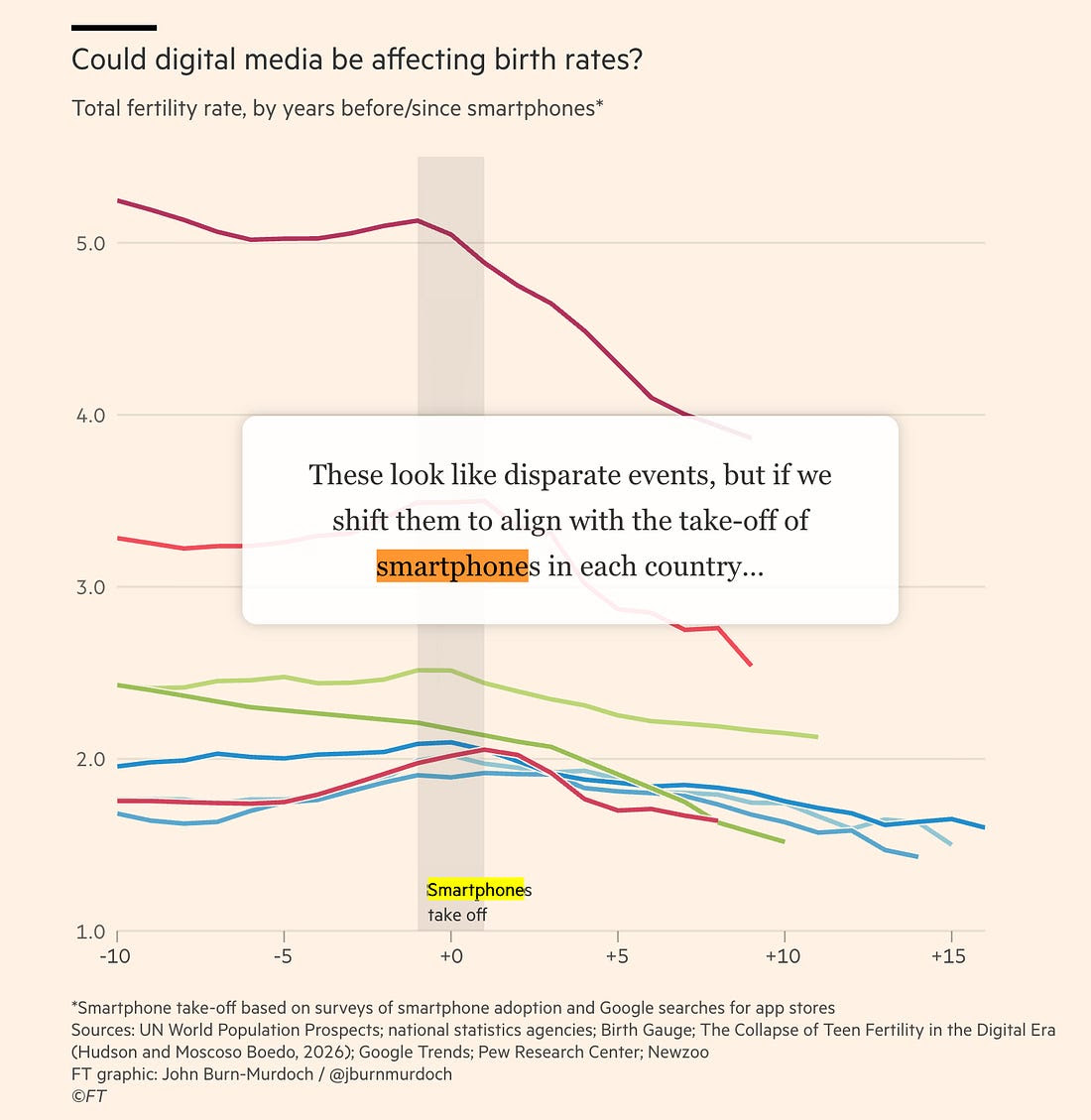
Demographer Jesús Fernández-Villaverde from the University of Pennsylvania, who is also cited in the Financial Times article, in a comment on X urges not to overstate the summary: taking the case of Italy, it can be estimated that without smartphones Italy’s fertility rate in 2025 would have been 1.24 instead of 1.14. A marginal difference.
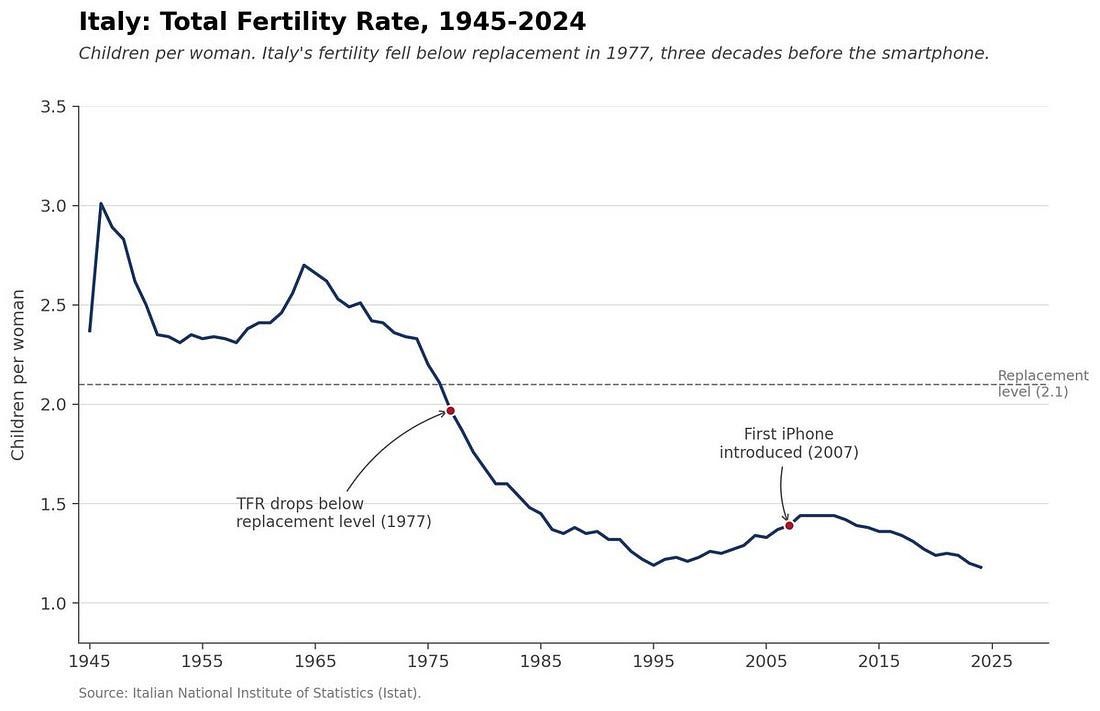
The spread of smartphones may have accelerated the demographic crisis, but it is certainly not the only determinant.
The variables explaining the demographic winter, as we now know, are many: it is not only the fault of the lack of public services and nurseries. There is the decline in infant mortality (in the past more children were born because many died), the increase in housing costs which reduces both space for large families and resources to support them. And then the uncertainties about the future, the crisis of marriages and stable relationships which continue to be a type of relationship associated with higher fertility.
But there is also a change in expectations of potential parents about their lives and careers, and also towards children, who in rich countries require more attention and investment than in the past. Women today face a higher opportunity cost in becoming mothers in the sense that, despite many limitations and inequalities, they have more job opportunities than in the post-war period but still face a negative impact of pregnancy on their careers.
In short, having children has become more costly also in terms of potential income foregone, especially for women.
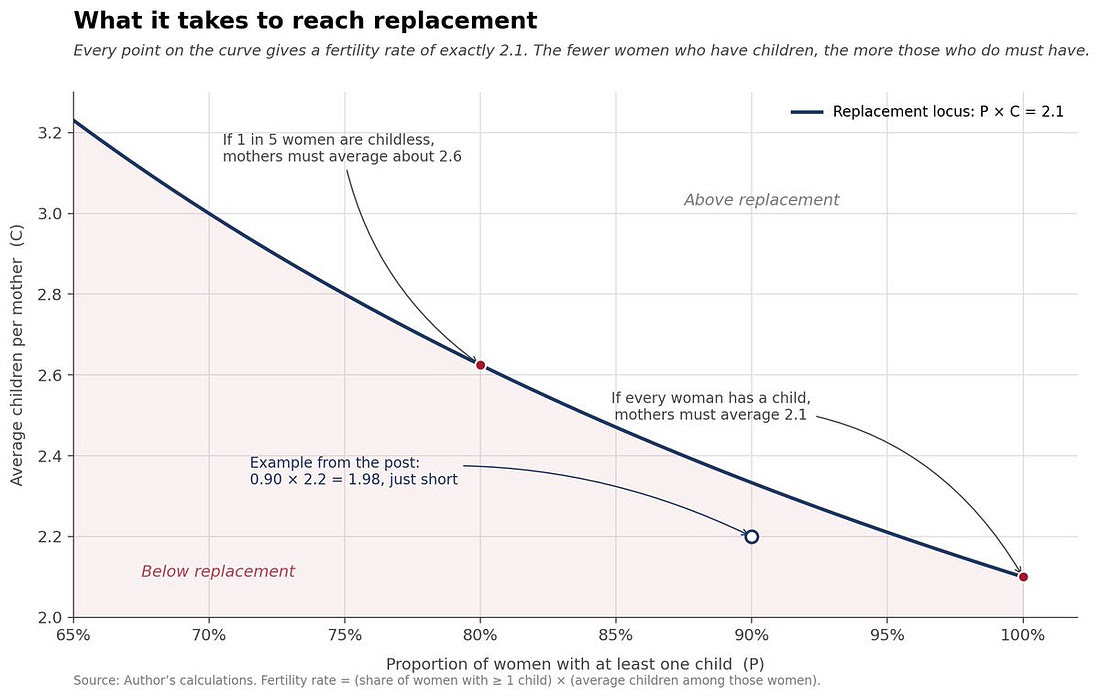
Jesús Fernández-Villaverde observes that smartphones and social media can at most accelerate deep trends already underway. The real problem is that “modernity, in its current form, is incompatible with a fertility level equal to that necessary to stabilize the population.” Which is 2.1 children per woman.
But if infant mortality is higher, as in poor countries, or if many women remain childless, as in rich countries, then many more children per woman are needed. Since in Italy there are at least 23 percent of women who end their reproductive period without children, almost one in four, the others would have to have many more children to compensate, over 3 children per woman.
Since there are fewer and fewer women, the problem is destined to worsen. And this also affects the country’s growth potential: if in the future there are fewer people, those remaining will have to become more productive or GDP will shrink and so we will all be poorer.
However, happy degrowth is not an option, because the population not only decreases but also tends to age, and therefore a lower GDP also means less tax revenue and fewer savings to finance the high expenses caused by a longer elderly age, during which years in good health increase but also those in which help is needed.
The bulk of the political debate focuses on how to reverse the trend, that is, how to have more births. And on the ethnicity of those children, whether they should be indigenous or children of immigrants, as if it were so easy to set clear distinctions.
Even if the most effective demographic policy with miraculous effects were discovered – and it does not seem there are any available – the economic and social effects would be seen in twenty to thirty years.
(Excerpt from the blog Appunti by Stefano Feltri)


