

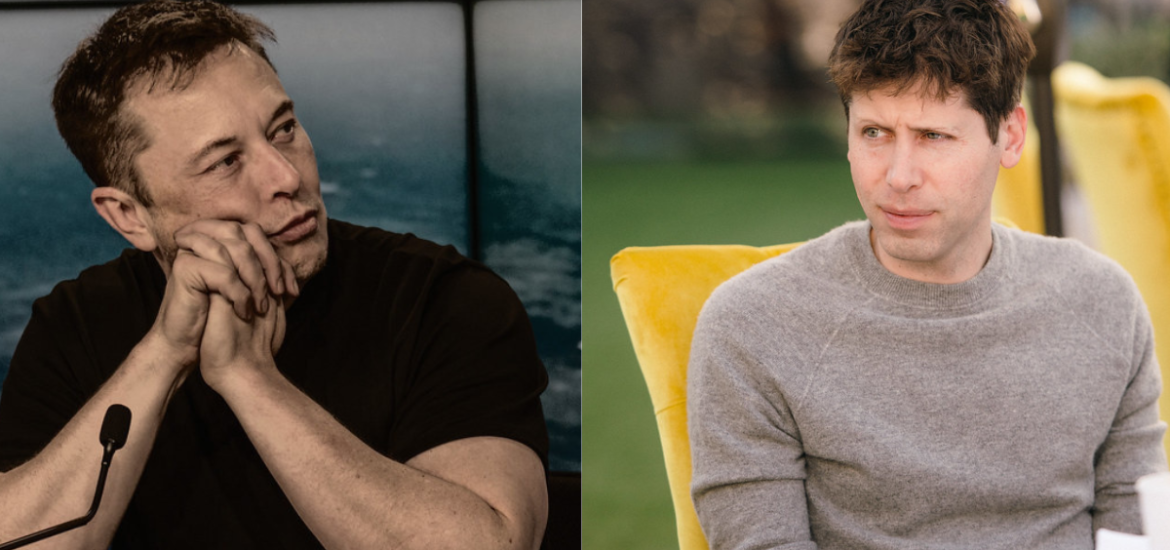

It was supposed to be the trial of the century, capable of rewriting the development trajectory of artificial intelligence, but instead it was the trial of the month. Meaning the hearings lasted only a few weeks, final arguments on Friday, verdict on Monday: Elon Musk lost, Sam Altman of OpenAI won.
Nothing will change, Musk’s attempt to sabotage OpenAI’s stock market listing failed, his request to dismantle the for-profit entity that has effectively replaced the original non-profit lab was rejected, as was the request to oust Altman, CEO of OpenAI, along with chairman Greg Brockman.
The jury ruled that too much time had passed since the events – the break between Musk and Altman dates back to 2018 – and therefore Musk’s claims violate the “statute of limitations,” in Italian we would say they have expired.
The jury took just two hours to decide and Judge Yvonne Gonzalez Rogers promptly accepted the non-binding recommendation of the jury and closed the case with Musk’s defeat.
Everything as before. Or maybe not.
Because the trial that took place before the court in Oakland, California, was nonetheless a useful moment of collective reflection on the origin and prospects of artificial intelligence in terms of business, incentives of the protagonists, market pressures.
Let’s be clear: on the merits Musk was certainly right. Meaning that OpenAI, as the name says, was born to be a lab developing artificial intelligence openly, in the interest of all humanity, free from any market demands.
The drive for innovation was supposed to be the desire to lay the foundations for new progress, not to reward shareholders or make the founders rich.
Musk’s lawyers demonstrated that the idealism of the origins, assuming it was sincere, has long since vanished. Already in 2019 OpenAI began transforming into a profit-oriented entity, first with a company guaranteeing returns with a cap for investors, then into an almost traditional joint-stock company, controlled by a foundation but ready to go public. To enrich shareholders, partners, and also the founders, even though Sam Altman to date is not a shareholder.
Chairman Greg Brockman, however, noted in his diary of thoughts as early as 2017 that he dreamed of raising 1 billion dollars. Based on the current valuation, his stake in OpenAI today is worth 30 billion, the company as a whole 852. And it’s only the beginning.
Musk contributed in the initial phase with 38 million dollars as a non-repayable grant. And he gave it to a non-profit entity, not to a startup destined to go public. Therefore, he is right to claim that mandate was betrayed.
And this is a lesson of general interest: if the utopians controlling the potentially most dangerous technology in the world can break their agreements with the richest man on the planet, Elon Musk, imagine how difficult they can be to contain by public regulatory authorities or by politicians who barely understand how to use ChatGPT.
However, Sam Altman’s lawyers also easily demonstrated that Musk’s move was only instrumental to slow down a more successful competitor: in 2018 Musk left OpenAI because he would not have control of the new for-profit entity and because the other partners did not want to merge the AI company with his Tesla.
Immediately after, Musk launched the competing company xAI which quickly became known for its lack of ethical scruples and constant accusations of enabling abuse and privacy violations. Not exactly the behavior of someone thinking only about humanity’s future.
Musk did lose the trial, but paradoxically he still achieved a favorable effect: now it is clear that the artificial intelligence sector responds to market incentives, it is a technology like any other that can enable enrichment without particular safety constraints.
If OpenAI’s evolution is legitimate, then no one can contest Musk’s increasingly ruthless attempts to make his AI company profitable. And this is very valuable now that Musk is preparing to take SpaceX public, his rocket and satellite company which has absorbed both the social network X formerly known as Twitter and xAI.
Musk, as well as Altman, then achieved a more relevant but less obvious cultural victory. The entire trial, which was brief but backed by two years of complaints and investigations, centered on a premise presented as obvious, but which should instead be highly debatable. That is, that OpenAI, before pursuing profit, could truly work for the good of humanity.
Just think about it for a second to realize that this is a wishful or bad-faith promise: it is almost impossible to foresee all the social and political repercussions of the spread of artificial intelligence. Furthermore, the way neural networks at the base work prevents even programmers from knowing in advance how the algorithm “thinks,” so to speak.
Artificial intelligence is so pervasive, it touches so many nodes of personal and community life, that it is not realistic to understand everything in advance.
Does working for the good of humanity mean making all possible technologies available as soon as possible? Or favoring a very gradual spread to allow the labor market and welfare to adapt? And will the world really be safer if the United States win the competition with China to develop an AI capable of making all cybersecurity barriers irrelevant and hacking any system that encrypts information?
There is also the detail that the humanity whose progress is claimed to be desired is only that which has access to technology or can manage its impact. And the others?
But above all, what legitimacy do a few dozen people in Silicon Valley have to decide what is the good of humanity to pursue?
The fact that all these questions were not at the center of the trial but, on the contrary, it was taken for granted that those who manage the technology have only two choices, to get rich or save the world, is Musk’s real cultural victory. So he can support with even greater force his narrative of a superman who must get rich to take humanity to Mars and save it from extinction, combining market logic and eschatological promises.
The real lesson of the Musk-Altman trial, therefore, is that the problem is not the motivations of economic actors, but the amount of power they hold.
(Excerpt from Appunti by Stefano Feltri)


