


Yesterday in Washington, a trilateral framework agreement was signed between Israel and Lebanon, mediated by the United States, representing a first concrete attempt to end the fighting in the Cedar Country and to initiate a path towards restoring Lebanese sovereignty and the security of Israeli communities on the northern border.
The agreement, described by all parties as “the beginning of the beginning,” provides for the partial withdrawal of Israeli forces from two “pilot zones,” the deployment of the Lebanese army in those areas, and the initiation of a mechanism for Hezbollah’s disarmament, although the Shiite group was not a direct party to the talks and, as noted by CNBC, rejects any ceasefire proposal with Tel Aviv.
As also highlighted by the New York Times, this is still a very limited agreement, leaving sensitive issues open such as the continued presence of Israeli troops in the so-called “security zone” and the complete disarmament of the pro-Iranian movement.
The talks
The negotiations took place in the American capital, at the State Department, as part of the fifth round of direct talks between the two delegations initiated last April.
The Trump administration played a central mediation role, managing four days of intense discussions. As Axios writes, Secretary of State Marco Rubio personally intervened in the final phase, also holding phone conversations with Benjamin Netanyahu and Lebanese President Joseph Aoun to overcome the last differences.
The United States did not limit itself to facilitating dialogue but acted as true guarantors of the agreement.
The representatives and the signing of the agreement
The document was signed by the Lebanese ambassador to the United States, Nada Hamadeh Moawad, and the Israeli ambassador Yechiel Leiter, in the presence of Rubio.
As highlighted by the Associated Press, the text is trilateral and sees the US not only as mediators but also as signatories.
Both ambassadors led their respective teams in what Moawad described as a “long and difficult” negotiation, while Leiter spoke of a train put back on track after the risk of derailment.
What the framework agreement provides
As emphasized by Al Jazeera, the agreement establishes a gradual process based on concrete results. Israel will proceed with the withdrawal from two small pilot zones – one south and one north of the Litani River – allowing the Lebanese army to assume exclusive control of the territory, with inspections also by American military officers. These areas will serve as a testing ground for possible future expansions.
In parallel, Lebanon commits to extending state authority over its entire territory, proceeding with Hezbollah’s disarmament and dismantling its military infrastructure.
Israel, however, will maintain its “security zone” in southern Lebanon until every threat is eliminated.
The agreement also provides for the establishment of a US-facilitated Trilateral Military Coordination Group.
The role of the United States
Washington played a decisive role, not only diplomatic but also economic and field support.
As reported by Reuters, Rubio announced an immediate contribution of 100 million dollars in humanitarian aid, to be disbursed in coordination with the United Nations, plus 30 million to strengthen the operational capabilities of the Lebanese army.
The US also committed to facilitating the implementation of the agreement through the new military coordination mechanism, confirming its support for a sovereign and stable Lebanon, free from Iranian influence.
What is said about the agreement
During the ceremony and in the hours that followed, the main protagonists made statements reflecting both caution and hopes linked to this step.
Rubio emphasized, with words reported by CNN, that “today is a good day” and called the agreement “the beginning of the beginning,” adding: “There is much work ahead of us, we do not underestimate the difficulty of the task, but we understand its vital importance and are honored to have helped bring it to completion.”
In a subsequent written statement released by the State Department and reported by Axios, Rubio added that the agreement “establishes a clear and structured process to restore Lebanon’s sovereignty, disarm Hezbollah and dismantle its terrorist infrastructure, and allow Israel to return to its borders once this threat to its citizens is removed.”
From Lebanon, President Aoun spoke of a “first step on the road to restoring Lebanese sovereignty and territorial integrity,” hoping it will allow displaced persons to “return to their land fully liberated under the sovereignty of the Lebanese state.”
On the Israeli side, Ambassador Leiter stated that “in this results-based trilateral agreement, Iran is out, Hezbollah is out, and the road to peace between Israel and Lebanon is in,” thanking the Lebanese colleague for her demonstrated determination.
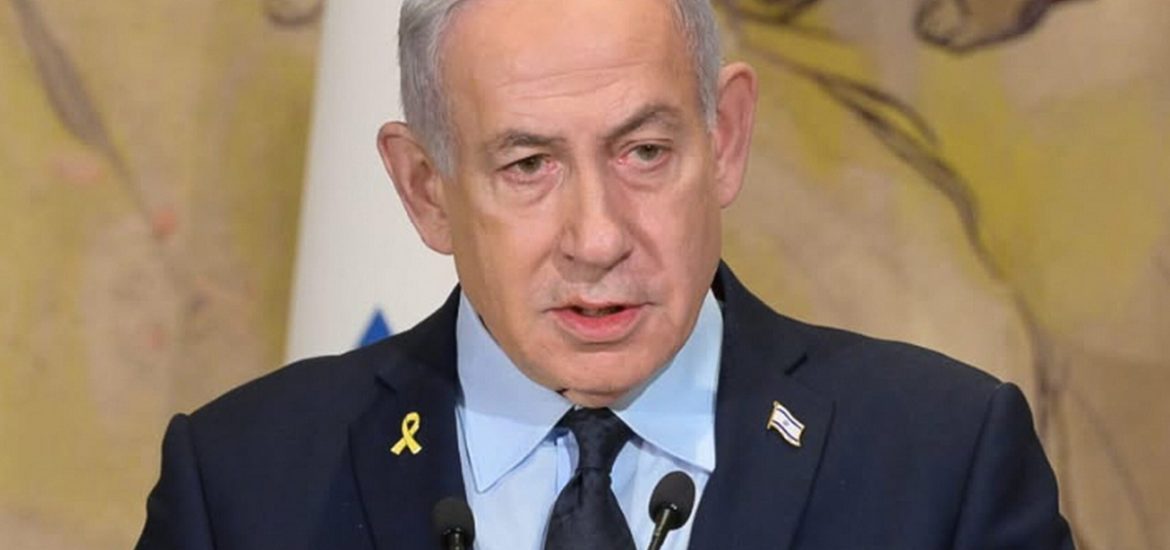
As reported by the New York Times, Netanyahu insisted that “the most important thing is that Israel remains in the security zone in southern Lebanon until Hezbollah is disarmed,” calling the agreement “a great victory” and “a hard blow to Iran.”
Of a very different tone were the words of Hassan Fadlallah, Hezbollah deputy, reported by Axios: according to the deputy, Lebanese authorities “will not be able to implement the agreement without going to a civil war,” reiterating that the group will strongly oppose any attempt at imposition on the ground.
Speaking to the pro-Hezbollah news channel Al-Mayadeen, Fadallah said, according to CNN: “Anyone who shakes hands with the enemy is a criminal like them,” doubling down.
An official of the pro-Iranian movement also cited by Axios declared that the group rejects the framework agreement, as it allows the continued presence of Israel in southern Lebanon, and that Hezbollah would not give up its weapons without an Israeli withdrawal, echoing the group’s long-standing position.


