



It would be difficult to overestimate how complex the current environment has become. Geopolitical tensions, evolving trade policies, and an unpredictable political landscape have contributed to a climate where uncertainty appears to be the norm. Although these forces can trigger sharp short-term movements, they have rarely been the determining factor in long-term equity outcomes. What tends to matter more, and what history has repeatedly confirmed, is maintaining focus on corporate fundamentals, earnings strength, and business quality, even when stock prices suggest otherwise.
WHY STAYING THE COURSE IS STILL CRUCIAL
This distinction becomes decisive when markets enter a phase of uncertainty. Disruptive phases often generate a strong impulse to react; however, history has repeatedly shown that trying to time such swings tends to be riskier than staying invested through them. In the past, markets have absorbed wars, political shocks, oil crises, pandemics, and changes in the global order, and over time, resilience has generally prevailed.
Adopting a long-term perspective means staying anchored to diversification, valuation discipline, and focusing on companies with resilient earnings, strong balance sheets, and pricing power. These are qualities that can endure well beyond short-term market noise.
BEYOND VALUATIONS
This longer-term perspective also helps clarify the valuation debate. Concerns about US valuations are understandable, especially after a period when market returns were heavily concentrated in a narrow group of large technology companies. The dominance of a small number of mega-cap stocks has fueled the perception of a market that is both expensive and concentrated, but valuation alone does not provide a complete picture.
Much of this premium reflects the market’s confidence in the earnings potential of US companies, particularly those tied to innovation and long-term structural growth. Artificial intelligence (AI) remains a central theme in the discussion, although its impact is unlikely to follow a linear path. Adoption usually occurs in phases, as new tools prove their relevance across all sectors of the economy.
BROADER: LEADERSHIP IS EXTENDING BEYOND A NARROW GROUP OF STOCKS
One of the most significant changes underway is that the US investment thesis is becoming broader. For a long time, returns were dominated by a narrow group of leaders, reinforced by index-related flows that naturally favor the largest index components. This dynamic proved rewarding during the leadership phase of these stocks but also means portfolios fully participate in any reversal.
The next phase could unfold differently. Beyond technology, earnings growth is increasingly spreading to materials, industrials, financials, and healthcare sectors, outlining a market whose foundations are expanding rather than contracting.
RESILIENT: THE US ECONOMY CONTINUES TO OUTPERFORM DEVELOPED MARKET PEERS
The second pillar is resilience. After the initial shock of tariffs, prospects for the United States have shifted back toward more stable growth aligned with historical trends. The economy still faces short-term questions, including geopolitical tensions, trade policy, and a softer labor market.
However, these factors are offset by ongoing AI-related investments, tax incentives supporting capital expenditures, and a regulatory environment that fosters business creation and capital spending. Compared to other developed markets, the United States remains well-positioned to sustain growth.
The weakening dollar has fueled debate, particularly where it reflects concerns about fiscal sustainability or political unpredictability. However, the deeper fundamentals of the US dollar’s leadership remain intact. Liquidity, institutional depth, and the absence of a credible alternative continue to support its central role in the global financial system, despite its dominant position coming under increasing scrutiny.
ENDURING: STRUCTURAL STRENGTHS ARE FIRMLY ESTABLISHED
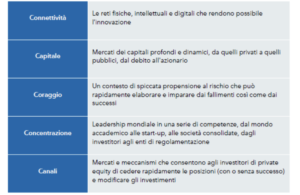
The third pillar is durability. The United States continues to benefit from structural characteristics that are difficult to replicate: deep capital markets, a strong risk culture, the ability to turn ideas into commercial outcomes, and a system that efficiently reallocates capital and talent. These qualities are encapsulated in the 5Cs of innovation and are reinforced by ongoing private investments, particularly in sectors related to digital infrastructure, automation, and AI.
INNOVATION: ONE OF THE DISTINCTIVE STRENGTHS OF THE US MARKET
The 5 Gs of Innovation
Source: Capital Group
Productivity further strengthens this thesis. The United States has maintained a significant advantage over other developed markets, supported by an economy that remains unusually adaptive and commercially dynamic. Rarely is a durable market leader based solely on sentiment. It is supported by an ecosystem that consistently generates earnings, innovation, and the ability to reinvent itself over time.
In summary, these characteristics outline a US market supported not only by solid earnings and innovation leadership but also by broader participation, economic resilience, and enduring structural strengths. Short-term risks are real and require attention, but they sit alongside deeper foundations that continue to chart the future trajectory. It is precisely these enduring strengths that remain central to America’s next phase.


