

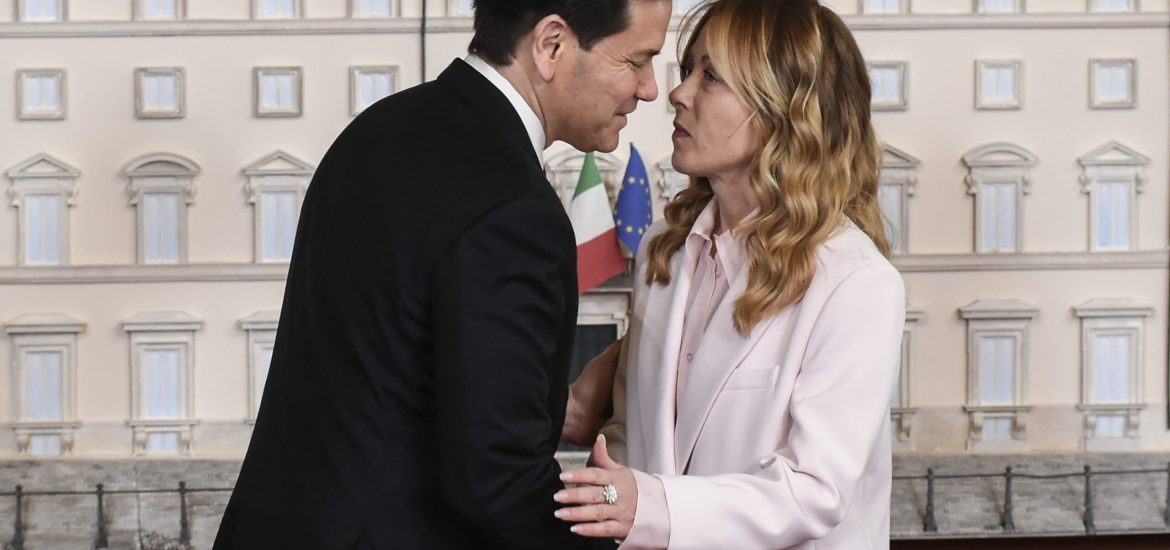

Even to those who would have preferred to ignore them, if only out of courtesy of hospitality, the American Secretary of State Marco Antonio Rubio almost seemed to flaunt the limits of his mission in Italy. More so than in the Vatican, giving the compatriot Pope a crystal paperweight and receiving an olive wood pen in return, it was at Palazzo Chigi, in the meeting with Prime Minister Giorgia Meloni, that Rubio reduced his role to a personal level. He did so, in particular, by practically avoiding the issue of reducing American troops in Italy as well as in Germany, threatened by a Trump disappointed by allies not compliant with his wars. “The president decides,” said the Secretary of State, as if he were a deputy minister, to Meloni, curious, I believe, to know more from openly dissenting positions, like others recently taken that literally shocked the friend – or ex – from across the Ocean.
Arrived in Italy, and leaving with few smiles, Rubio seemed to many observers and political analysts, as well as to his interlocutors, including naturally the Deputy Prime Minister and Foreign Minister Antonio Tajani, at the Farnesina, primarily interested in cultivating the ambition to succeed Trump at the White House at the end of his second term. Overtaking in the race the vice Vance preferred by the President of the United States because he was more aligned.
Rubio’s mission in Rome was, in short, a foreign mission aimed at internal objectives, important as they may be, of course. Also in this respect, both the Pope and the Italian government, whether the current one or the one following the congress or similar of the United States Republican Party, frankly deserved more.


