


The signs do not lie: the Indian economy is struggling. The authorities, who repeatedly expressed their ambition to make their country the third largest economy in the world, have been forced to face reality. At the end of April, the International Monetary Fund (IMF) downgraded the country to sixth place, behind the United Kingdom. This drop in the ranking of the world’s major economies is mainly explained by the historic collapse of the rupee, which reduces the gross domestic product (GDP) expressed in US dollars, on which the financial institution bases its assessments. Since the start of the American-Israeli offensive in Iran on February 28, the Indian currency has fallen by nearly 5% against the greenback.
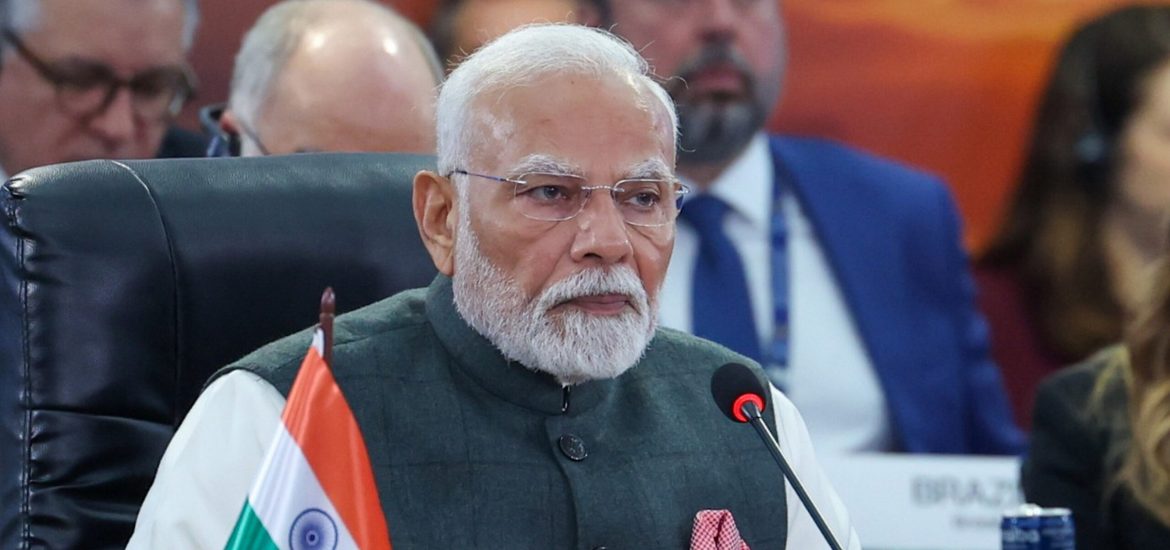
As the world’s third largest oil importer, India is especially bearing the full impact of the consequences of the blockade of the Strait of Hormuz. A sign of how serious the situation is, Indian Prime Minister Narendra Modi keeps multiplying alarmist speeches: he has urged the population to make sacrifices, particularly by limiting travel abroad or reducing oil consumption – used in large quantities in Indian cooking. […]
No one doubts that the austerity package launched at the beginning of May will continue. To reduce spending on imports, burdened by rising hydrocarbon prices, New Delhi started by imposing a tax on gold imports, then resigned itself to raising fuel prices at the pump, the first increase in four years.
Dependent on imports
In the past, no Indian government had ever openly acknowledged the severity of the economic situation. Even during the 1991 crisis, the leaders of the time refrained from doing so, while the country’s foreign exchange reserves were below 1 billion dollars, barely enough to finance fifteen days of imports. Today, India’s foreign exchange reserves amount to 697 billion dollars (600 billion euros), the equivalent of eleven months of exports, according to the Indian central bank. “The Prime Minister’s speeches focus essentially on reducing foreign currency spending and this says a lot about the weaknesses of the Indian economy, at the top of which is our trade deficit,” warns Biswajit Dhar, former economics professor at Jawaharlal Nehru University in New Delhi.
The Indian economy is primarily heavily dependent on imports, which represent 80% of its hydrocarbon supply, about 56% of its edible oil consumption, and about 30% of its fertilizer needs. The surge in fertilizer prices on international markets not only causes a loss of foreign currency for the country but also risks increasing the subsidy bill paid by the state for this purpose. Globally, their prices rose by 46% between December 2025 and April, and that of urea, the most widely used nitrogen fertilizer by farmers, doubled during the same period.
Deep roots
But the Indian energy crisis has deeper roots than the Middle East conflict. Upon taking office in 2014, the Indian Prime Minister promised to “raise the manufacturing sector’s share of GDP to 25% and create 100 million jobs in industry. Ten years later, that share stagnated at 17.3%, the same level as in 2013-2014,” emphasizes Vishal R. Choradiya, professor at Christ University in Bangalore, in an editorial published on the news site Scroll. […]
During the fiscal year ending March 31, the trade deficit has already reached a record level of 333 billion dollars, an increase of over 17% compared to the previous period. And the roughly 50% rise in oil prices since the start of the war against Iran will only weigh more heavily on the import bill. Especially since, despite the multiplication of free trade agreements with third countries, the South Asian giant’s exports are not growing.
At the same time, foreign investors are withdrawing their funds. Since the start of the war, they have sold Indian shares worth over 20 billion dollars, the fastest pace ever recorded. Net foreign direct investment in India also contracted for the fifth consecutive month in January, with capital outflows exceeding inflows by nearly 1.4 billion dollars. “Private investment in India is not taking off because demand is held back by stagnating real wages, and this is not a recent phenomenon,” says Himanshu, economist at Jawaharlal Nehru University. […]
“Superficial solutions”
India is a victim of an “economic derailment,” argues Surjit Bhalla, former IMF executive director for India, in the pages of the Indian Express. This economist believes the main responsibility lies with the government, particularly because it has limited itself to “applying superficial solutions rather than undertaking the necessary reforms to make investments in India – both for Indians and foreigners – more attractive.”
Banks and international organizations such as the IMF are revising down their growth forecasts for India. New Delhi should still record growth of about 6%, one of the most dynamic in the world; but to create enough jobs for the one million newcomers entering the labor market each month, it should reach at least 8%. Moreover, India’s per capita GDP in purchasing power parity is lower than that of Bangladesh.
“None of the engines of Indian growth are currently working and, due to the Middle East conflict, the situation could worsen,” warns Himanshu. Economists also believe that inflation, so far contained, risks rising due to the increase in hydrocarbon prices. Wholesale prices jumped to 8.3% in April, the highest level in over three years. Another sign of the war’s impact on a vulnerable economy.
(Excerpt from the eprcomunicazione press review)


