


As the war in Iran continues to disrupt global energy markets, Asian countries face a dual challenge: managing the immediate crisis of oil and gas supply and rethinking their long-term energy security.
But beyond the scarcity of hydrocarbons from the Gulf, the conflict is accelerating a much more delicate and dangerous debate: that on nuclear power.
As highlighted by the Council on Foreign Relations in a recent paper, what began as a necessity, namely reducing energy dependence, is rapidly transforming, especially in Japan and South Korea, into a deep reflection on the possibility of expanding civilian nuclear power and, prospectively, acquiring autonomous military nuclear capabilities.
The Emergency
The situation is particularly dramatic in the most dependent countries with the smallest reserves. Bangladesh and the Philippines are among those paying the highest price.
Manila has declared a national state of emergency to cope with fuel shortages, while in Dhaka the government has imposed severe rationing, heavily limiting the use of diesel and gasoline. There is a real fear that Bangladesh could become the first Asian country to run completely dry of imported fossil fuels.
These emergency measures are already causing daily hardships for the population and risks of social instability.
Japan and South Korea
Even two advanced economies like Japan and South Korea are feeling the effects of the crisis, albeit in different ways.
Tokyo has significant strategic reserves that allow it to better withstand the short term, while both countries are resorting to coal and purchasing LNG on the spot market, albeit at very high prices.
Despite this, the governments of Tokyo and Seoul are fully aware that the situation could rapidly worsen if Trump decides to intensify military operations in the Middle East.
This uncertainty is pushing the two countries to seriously rethink their long-term energy strategies.
The Return of Civil Nuclear Power
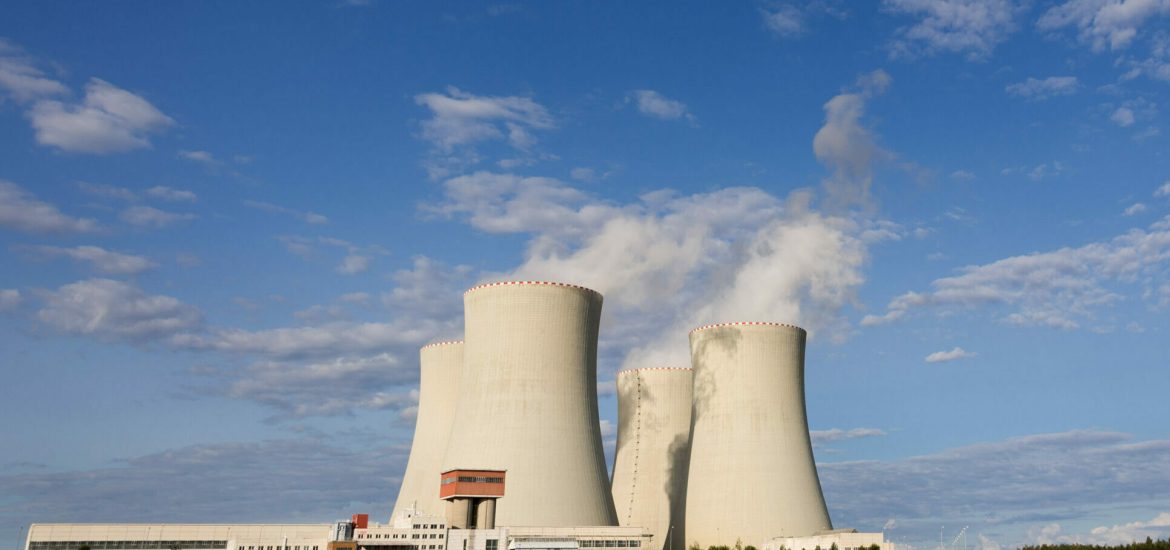
The energy crisis has strongly boosted the debate on civil nuclear power. South Korea, already one of the world’s largest producers of nuclear energy, is accelerating the expansion of its installed capacity.
In Japan, despite still strong public concerns after the Fukushima disaster, the government has made nuclear power one of the central pillars of its energy policy. Several reactors that have been shut down for years are being restarted and new constructions are planned.
Meanwhile, in Seoul, there is a strong growing demand to enrich a larger share of uranium domestically to make the civilian nuclear supply chain more autonomous.
The Debate on Atomic Weapons
The line between civil and military nuclear power, however, is thin and the debate is rapidly sliding towards more sensitive issues.
South Korea, bound by a 1974 agreement with the United States, obtained authorization at the end of last year to enrich uranium up to 20% for civilian purposes. This is still far from the level needed for weapons, but enough to trigger strong alarms.
Both North Korea and China have reacted harshly: Pyongyang called the neighbor’s domestic enrichment “a springboard towards quasi-nuclear power status,” while Beijing issued clear warnings, threatening possible retaliation.
Japan, on the other hand, has long enjoyed a condition known as “nuclear latency.” It possesses large quantities of plutonium, enrichment facilities, advanced missile technologies, and aircraft capable of carrying nuclear weapons.
In practice, it would have the capacity to produce atomic weapons within a few months if it decided to do so.
Public Opinion
In South Korea, the public mood has changed profoundly. An April 2025 survey by the Asan Institute revealed that about 76% of citizens favor developing an indigenous nuclear capability: this is the highest percentage ever recorded by the institute.
At the same time, less than half of respondents still believe that the United States would be willing to use nuclear weapons to defend South Korea in the event of an attack by Pyongyang.
Former President Yoon Suk-yeol had already publicly opened this discussion in 2023, breaking a taboo that had lasted for decades.
Geopolitical Risks
Moving towards greater nuclear autonomy, whether civilian or military, carries enormous risks.
For South Korea, it could potentially mean becoming a regional pariah, facing international sanctions or, in the worst case, seeing the United States withdraw its security guarantees.
For Japan, the backlash from China could be violent, especially at a time when tensions over Taiwan are already extremely high.
Yet, the ambivalence shown by Trump on proliferation and the growing perception that the American nuclear umbrella is increasingly unreliable are pushing both countries to seriously consider new paths.
In Japan, Prime Minister Takaichi Sanae has hinted that she might reconsider nuclear policies and push for a constitutional revision on these issues.
With Washington focused on the Middle East, Asia caught in the grip of the energy crisis, and U.S. allies increasingly skeptical about the solidity of American guarantees, the scenario of a Northeast Asia with more states armed with nuclear weapons no longer seems like science fiction.


