

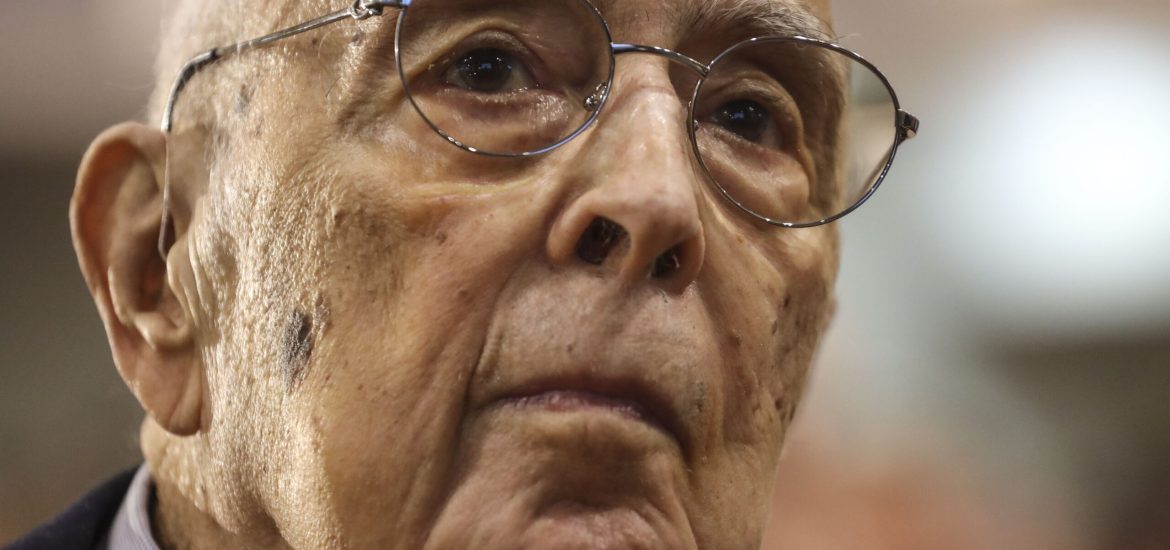

Anniversaries, whether even or odd, round or not, are frequently, if not always, spoiled by those who take something away from them or add something to them. I think of the 48 years recently passed since the assassination of Aldo Moro, on May 9, or the 20 years since the first election, on May 10, of Giorgio Napolitano to the Quirinale, where he was confirmed in 2013 and remained until 2015.
On the 48th anniversary of Moro’s death at the hands of the so-called Red Brigades, who were anything but self-styled, as some on the left tried to claim until they were disproved in il manifesto by the relentless Rossana Rossanda, who recognized them in the PCI’s “family album”; on the 48th anniversary, I said, of Moro’s death, someone wanted to apply the “lesson” of the DC president to the PD, where about twenty years ago the communist and left-wing Christian Democratic remnants merged. The secretary of the Nazareno itself, Elly Schlein, wanted to participate in one of Moro’s commemorations feeling somewhat formed by his school, albeit posthumously.
But what Schlein, and those who support her in her party structured in factions like the DC, lack is the ability to keep them united. Every now and then someone leaves the PD who would not have left the DC, which Moro boasted of knowing how to break down and recompose, always searching for new balances inside and even outside the cross-shield.
Of the 20 years since Napolitano’s election to the Quirinale, and 11 since the conclusion of his experience at the head of the State, what has been silenced, at least in the articles I have read about the celebrations, is the trait that I personally consider the most important and courageous, given the times we live in, which is his polemical relationship with the overreaching judiciary. But not for this was he penalized by the March referendum on the constitutional reform that sought to reform it.
Napolitano first noted, in 2010, the tenth anniversary of Bettino Craxi’s death on Tunisian soil, publicly lamenting, writing to the widow, the “harsh treatment without equal” reserved for him by the judiciary dealing with the widespread phenomenon of irregular, indeed illegal, party financing and, more generally, politics. Then Napolitano, always him, intercepted by phone at the Quirinale by investigators of the so-called negotiation between the State and the mafia during the season of massacres, appealed to the Constitutional Court having their attempts to not destroy the arbitrary recordings rejected. And he justified his appeal by recalling the commitment undertaken and fulfilled by his more illustrious and politically distant predecessor, the liberal Luigi Einaudi, not to allow powers and prerogatives of the president of the Republic to be tampered with or reduced by anyone, not even the judiciary.
It is perhaps also thanks to this extreme, clear defense, although contested by critics of the moment, that Napolitano earned the non-polemical but friendly nickname in Italy and even abroad, in the American press, of “King Giorgio.” Great, very great, I fear unrepeatable Napolitano.


